On November 21, the Chinese Academy of Sciences announced the results of the 2025 academician election, with three chair professors from Southern University of Science and Technology (SUSTech) Haiping XIA, Weiping LIU, and Jun LI were elected.
Haiping XIA was elected as an academician of the Chemistry Division of the Chinese Academy of Sciences, with SUSTech serving as the supporting institution for his election. Weiping LIU was elected as an academician of the Mathematics and Physics Division of the Chinese Academy of Sciences with the China Institute of Atomic Energy as the supporting institution for his election. Jun LI was elected as an academician of the Chemistry Division of the Chinese Academy of Sciences with Tsinghua University as the supporting institution for his election.
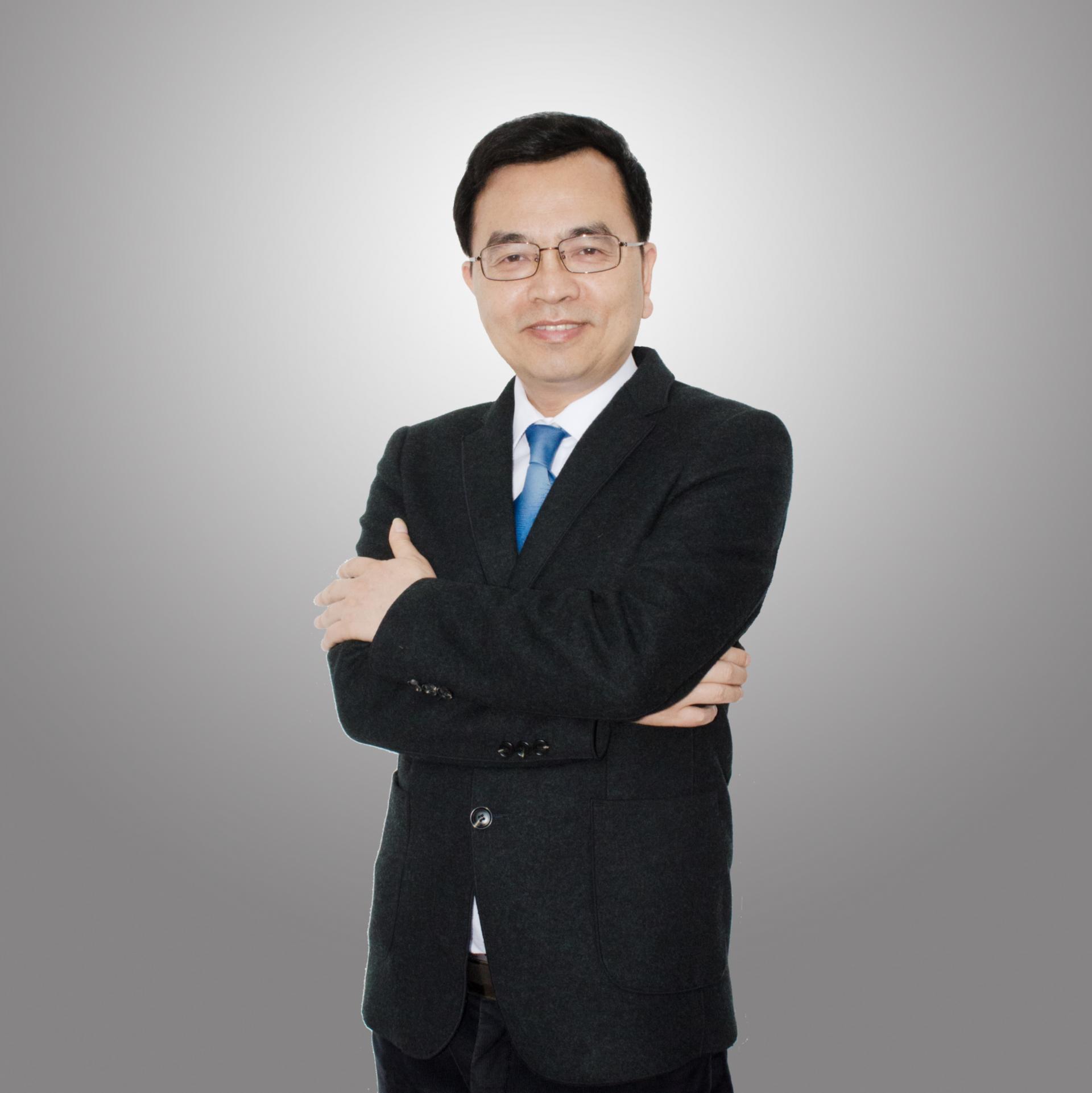
Haiping XIA, Chair Professor in the Department of Chemistry, joined SUSTech in 2018. He has received numerous prestigious honors, including the National Natural Science Award Second Class as First Completer in 2020, the Fujian Province Natural Science Award First Class as First Completer in 2018, and the Huang Yaozeng Organometallic Chemistry Award from the Chinese Chemical Society in 2016. In 2025, he was honored with both the Stoddart Science Fund Scholar Award and the Physical Organic Chemistry Award from the Chinese Chemical Society. His research achievement was selected for the “Ten Major Scientific and Technological Advances in Chinese Higher Education” in 2013. He has been recognized through various talent programs, including Shenzhen Outstanding Talent Cultivation Object in 2022, Guangdong Province “Pearl River Talent” in 2020, Fujian Province “Technological Innovation Leading Talent” in 2014, and the Ministry of Education “New Century Excellent Talent Support Program” in 2004.
Haiping XIA has dedicated his research to the core scientific challenge in organometallic chemistry: the construction of carbon-metal (C–M) bonds, consistently pushing the limits of the number of C–M bonds that can be formed. He broke the Hückel aromaticity rule by synthesizing a series of novel aromatic structural units, experimentally validating a theoretical prediction made by David P. Craig in Nature, half a century ago. This groundbreaking work led to the establishment of Carbolong Chemistry. Furthermore, he successfully embedded a metal at the center of an annulene plane, constructing a strongly aromatic metal-centered [15] annulene with D5h symmetry. This achievement set a new record for the number of C–M bonds on the equatorial plane of a transition metal and pioneered the field of Carborin Chemistry.
As groundbreaking Chinese contributed innovations, both Carbolong Chemistry and Carborin Chemistry have set multiple extreme records: achieving the smallest recorded carbyne carbon bond angle (<130°, improving the previous record by 17°) while revealing the reasons for bonding stability under extreme angular strain; successfully constructing six C–M bonds in the equatorial plane of a transition metal for the first time, expanding the scope of coordination configurations and bonding patterns; and realizing the extreme structure of “five aromatic rings sharing one atom,” and challenging conventional understanding of delocalization in aromatic systems.
Haiping XIA’s highly distinctive systematic research has expanded the concepts of aromaticity and bonding theories, opening up new interdisciplinary research directions that deeply integrate multiple fields, including organometallic chemistry, aromatic chemistry, and coordination chemistry. His achievements have not only entered the bookshelf but have also reached the market shelf, being listed in the J&K (J&K Scientific) reagent catalog for domestic and international sales. Beyond this, his work has been selected for the 2025 Guangdong Province College Entrance Examination questions.
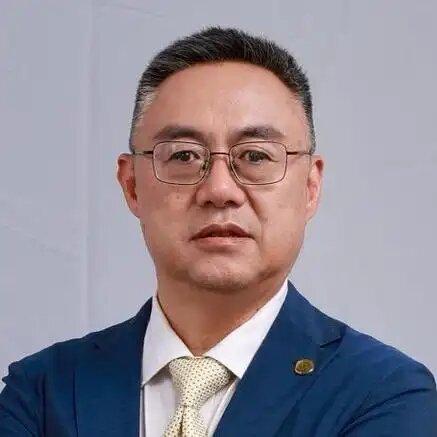
Weiping LIU graduated with a bachelor’s degree from Peking University and earned his doctorate from the Institute of Atomic Energy/German Heavy Ion Research Center. He is the chief scientist of the JUNA major project on deep underground nuclear astrophysics at Jinping. He previously served as the deputy director and researcher at the China Institute of Atomic Energy (CIAE) and spent two years each as a visiting scholar at the RIKEN Institute in Japan and the German Heavy Ion Research Center. In November 2022, he joined SUSTech as a chair professor in the Department of Physics.
Weiping LIU has promoted the development of the interdisciplinary field of experimental nuclear astrophysics in China, established both indirect and direct measurement methods for nuclear astrophysical reactions, and built the Jinping Underground Nuclear Astrophysics Experiment platform (JUNA), to bring our nuclear astrophysics field up to the international standard. He has served as the President of the Asian Nuclear Physics Association (ANPhA) and the Institute for Nuclear Astrophysics of China (CINA). He has received support from the National Outstanding Youth Fund, the Innovative Research Group, and major projects. He has been awarded the Hong Kong Qiu Shi Outstanding Young Scholars Award and the Second Prize of the National Science and Technology Progress Award. He has published over 140 papers in domestic and international journals such as PRL, PPNP, ApJ, and Nature. He has been recognized as a National Model Worker, an Advanced Individual among Returned Overseas Scholars, a National Talent of Hundreds and Thousands, and a recipient of the Government Special Allowance.
With the support of major projects from the National Natural Science Foundation of China, he successfully developed high-current low-energy accelerators and high-resolution BGO detectors, creating JUNA, the world’s highest-current ultra-low-background deep underground nuclear astrophysics experimental platform. The accelerator was completed and operational in 2020. He overcame challenges related to high-current stable operation, milliamp-level nuclear reaction target stability, and the establishment of an ultra-low background environment. Four key nuclear astrophysical reactions have been measured: gamma-ray astronomy reactions achieved the highest precision, fluorine abundance reactions reached the Gamow window, neutron source reactions comprehensively covered the astrophysical i-process, and the “Holy Grail” reaction attained the highest sensitivity. He has published PRL Editor’s Recommendation papers and a cover article in Science Bulletin, with his latest results successfully explaining the excess calcium abundance in the oldest stars, published in Nature. These achievements represent the largest exposure, the widest energy range, and the highest measurement sensitivity in international deep underground nuclear astrophysics reaction measurements.
As the first president, he co-founded the Institute for Nuclear Astrophysics of China (INAC). He built China’s first low-energy radioactive beam facility and conducted the world’s first measurement of radioactive nuclear beam transfer reaction angular distributions, completing solar neutrino reaction measurements. Through high-precision multi-excited-state experimental measurements, he resolved the challenges of sub-threshold resonances that could not be measured directly, as well as extremely small direct reaction cross sections, accurately deriving stellar main neutron source reactions and massive star evolution reactions, publishing a series of papers and review articles. He has successfully applied nuclear reaction research to nuclear data measurements and nuclear facility design.
After coming to Shenzhen, Weiping LIU set up the Center for Nuclear Physics and Astrophysics at USTC, and took charge of USTC’s key projects supported by the National Natural Science Foundation of China. He participated in the establishment of “The Joint Laboratory of NUST and CGN” and served as the director of the Academic Committee. To organize high-level academic conferences in Shenzhen, such as the INAC conference of the China Nuclear Astrophysics Federation and the first conference on nuclear celestial bodies, and to attract first-class talents and young scientists from home and abroad to work in Shenzhen. He also set up the undergraduate course of sub-atomic physics in USTC, and jointly won the grand prize of university-level teaching achievements. As chairman of the Guangdong-Hong Kong-Macao Nuclear Physics Forum, he promoted the development of nuclear science and technology in the Greater Bay Area, the establishment of an advanced energy research center, and the innovative development of advanced energy in the Greater Bay Area.
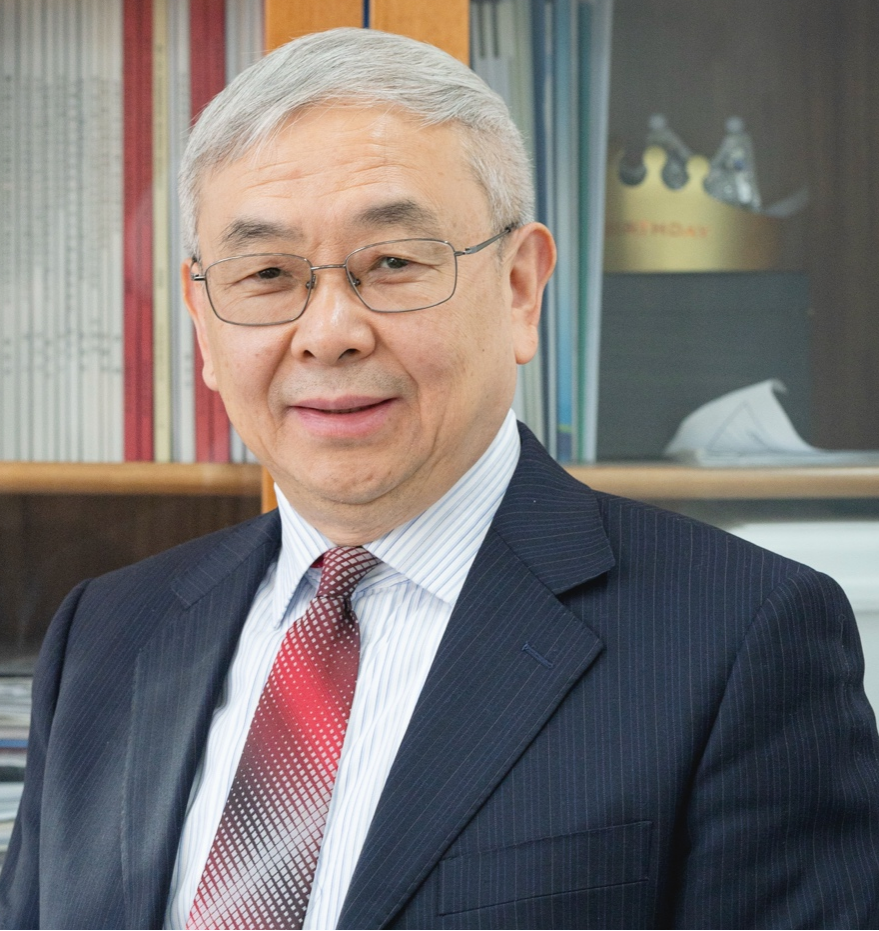
Jun LI received his Ph.D. in Physical Chemistry from the Fujian Institute of Research on the Structure of Matter, Chinese Academy of Sciences, in 1992. From 1994 to 1997, he conducted postdoctoral research at the University of Siegen in Germany and at The Ohio State University in the United States. From 1997 to 2001, he worked as a research scientist at The Ohio State University, and in 2001, he joined the Pacific Northwest National Laboratory in the U.S., where he served successively as a Senior Research Scientist and Chief Scientist. In 2004, he was recruited by Tsinghua University under The Hundred Talents Program as a professor in the Department of Chemistry, and was appointed a Changjiang Scholar by the Ministry of Education. In 2005, he received the National Science Fund for Distinguished Young Scholars. He was awarded the Second Prize of the National Natural Science Award in 2018, elected as a Fellow of the American Association for the Advancement of Science in 2010, and became a Fellow of the Chinese Chemical Society in 2020. In 2018, he was invited to join SUSTech to help establish the Institute of Theoretical and Physical Chemistry within the School of Science, concurrently serving as a chair professor in the Department of Chemistry, making significant contributions to the department’s teaching and research work.
For more than 40 years, Jun LI has mainly engaged in research in the fields of relativistic quantum chemistry, computational chemistry of rare earth and actinide heavy elements, and theoretical catalysis chemistry. He has currently published over 600 SCI papers, including more than 170 papers in top international journals such as Science, Nature and its subsidiaries, PNAS, Angew. Chem., and JACS, with a total of over 70,000 citations (H-index >110).
The recent selection of academicians is just one more shining badge for SUSTech’s rapid promotion of high-level talent in recent years. SUSTech has always placed great importance on the construction of its talent team, adhering to high standards for global talent recruitment, establishing a human resource management system compatible with the modern university system, and forming an internationally-oriented faculty team with a reasonable structure and first-class quality. Proudly and gradually becoming a high-impact talent hub in the Guangdong-Hong Kong-Macao Greater Bay Area.
As of now, the university has signed contracts to recruit approximately 1,300 teachers, gathering and cultivating a group of talents including academicians, international fellows, recipients of the National Natural Science Foundation of China’s Distinguished Young Scholars Fund and Excellent Young Scholars Fund. High-level talents account for more than 50% of the teaching and research faculty. Over 90% of the teaching and research faculty have overseas work experience, and more than 60% have studied or worked at universities ranked in the top 100 globally.
Proofread ByYilin ZHOU
Photo By