On December 26, 2025, Hong JIANG, University Council Chairperson of Southern University of Science and Technology (SUSTech), led a team to Nantou Ancient City to tour the “Nanshan No. 1: The Earliest Residents of Shenzhen” cultural relics-themed traveling mini-exhibition. Yuanhui WANG, Member of the Standing Committee of the Nanshan District Committee and Director of the Publicity Department; Jigen TANG, Chair Professor at the Center for Social Sciences of the School of Humanities and Social Sciences and a renowned archaeologist; and Hai LAN, Party Secretary of the School of Humanities and Social Sciences, along with heads of relevant functional departments, attended the event.
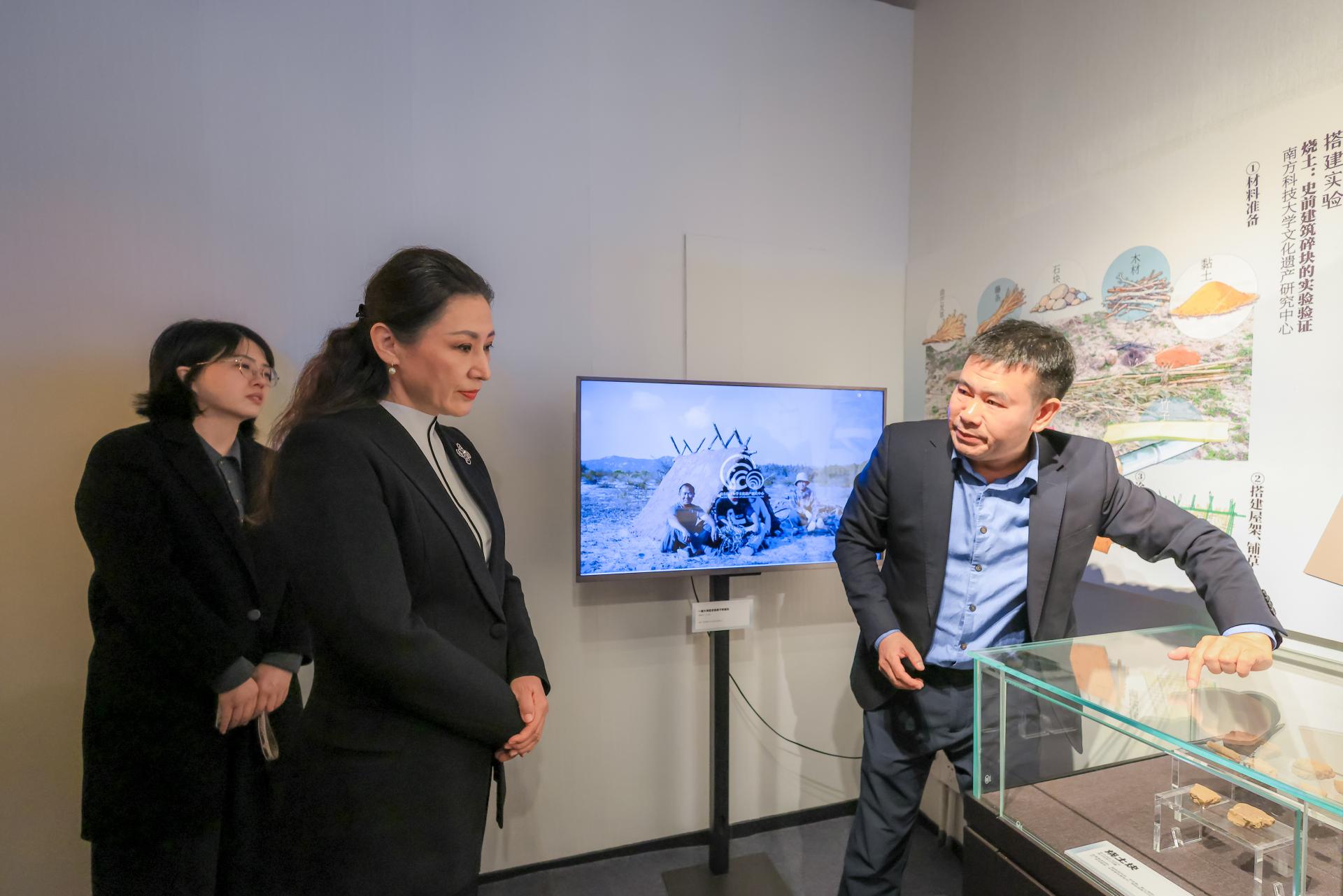
Hong JIANG and her group visited the “Nanshan No. 1: The Earliest Residents of Shenzhen” themed traveling mini-exhibition on Shanxi Street in the ancient town of Nantou, gaining an in-depth appreciation for the historical and cultural significance behind each artifact. The exhibition actively responds to Shenzhen’s call for “Bringing Cultural Heritage into Communities.”
Hosted by the Cultural Heritage Research Center of SUSTech, the mini-exhibition follows the concept of “stepping out of the museum and into everyday life.” Building on ongoing research, it adopts a modular, portable, and immersive design to bring Shenzhen’s 7,000-year prehistoric story into urban public spaces, turning the city into a “local archaeological laboratory” for public engagement and education. Rather than showcasing spectacular treasures, it features modest—and sometimes fragmentary—remains, such as a shard of painted pottery, part of a stone beater, several burnt clay clods, and a few pottery jars. Through systematic scientific research and interdisciplinary analysis of materials, craftsmanship, use-wear traces, and archaeological contexts, these fragments are made to “speak,” revealing the lives and cultural trajectory behind them and showing that Shenzhen has deep historical roots—not a from-scratch beginning.
Hong JIANG pointed out that this mini-exhibition combines cultural relic displays with popular archaeological science, and that it is an important initiative by the university to make the achievements of cultural heritage protection accessible to the public. SUSTech has always regarded the development of humanities and social sciences with the characteristics of a science and engineering university as an important mission, gradually forming a development path of “deep integration of humanities, social sciences, and natural sciences.” The Wubeiling site, where the university is located, is an important burial site cluster from the Xia and Shang dynasties in Shenzhen, and this unique advantage provides favorable conditions for archaeological research. It is necessary not only to further explore Shenzhen’s rich historical context, but also to fully leverage the university’s multidisciplinary strengths to innovate in “technology + archaeology” as well as on-site preservation, relic protection, and revitalization. This also provides an opportunity to vividly tell the story of Shenzhen and China from Wubeiling to the South China Sea, and to make a unique “SUSTech contribution” to the creative transformation and innovative development of China’s outstanding traditional culture.
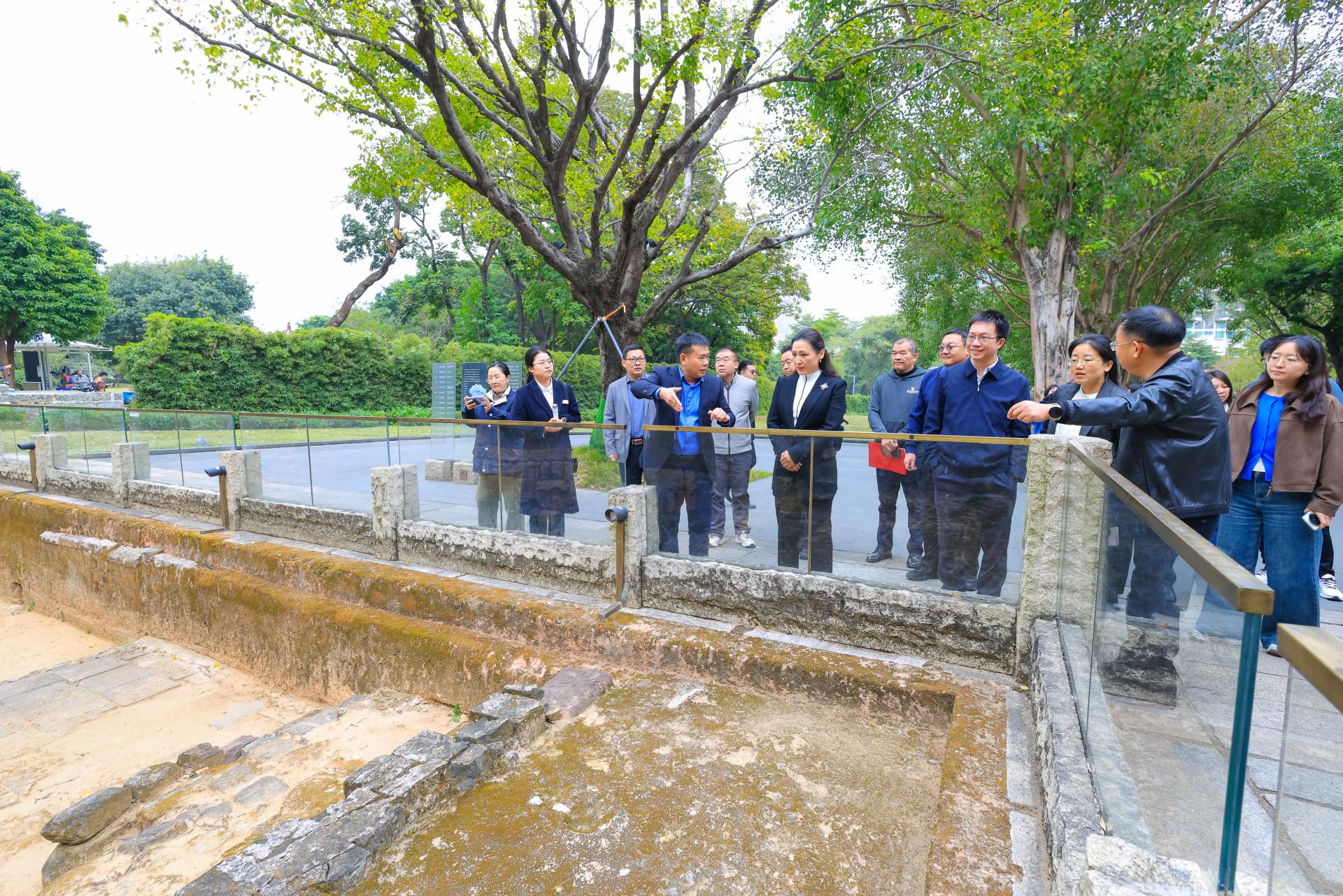
Hong JIANG and her group also conducted an inspection of the ruins outside the South Gate of Nantou Ancient City and the excavation site of the “Eastern Jin Dynasty Relics Museum” project, gaining a detailed understanding of the latest scientific research progress and archaeological discoveries.
This visit is also part of the “Chairperson Visits the Grassroots” series of research activities, which has been ongoing since its launch in 2023. Chairperson Hong JIANG has led teams to visit several functional departments and faculties of the university, and has met with and extended regards to representatives of the university’s high-level talents.
It is reported that the “Nanshan No. 1: The Earliest Residents of Shenzhen” mini-exhibition is the second stop of the tour. The first exhibition was held in Overseas Chinese Town in November this year, receiving a total of 30,000 visitors and earning positive feedback. The Nantou Ancient City stop will continue until January 20, 2026. Some of the exhibits on display come from the Wubeiling site.
The Wubeiling culture existed from 3,800 to 3,000 years ago. It is the second prehistoric archaeological culture to emerge in Shenzhen, following the Xiantouling culture (7,000–6,000 years ago). As an important part of Shenzhen’s prehistory over the past 7,000 years, it also forms the historical foundation of modern Shenzhen, holding significant academic and social value. The site underwent two excavations in 2001 and 2002, and in 2001, it was recognized as one of the “Top Ten Archaeological Discoveries in China.” Geographically, the Wubeiling culture spans the Pearl River Delta region, with the most concentrated findings on the western coast of the Pearl River estuary in Shenzhen. Representative sites include Southern University of Science and Technology Wubeiling, Nanshan Xiangnan Village, Yantian Dameisha, and Dapeng Xiantouling (upper layer).
Proofread ByJunxi KE
Photo ByYan QIU