Recently, Prof. Junhao LIN’s group at the Department of Physics, Southern University of Science and Technology (SUSTech), together with the State Key Laboratory of Quantum Functional Materials and the Quantum Science Center of Guangdong–Hong Kong–Macao Greater Bay Area, reported progress in two-dimensional strongly correlated quantum materials. By inserting a periodic array of Ta atoms between two metallic NbS₂ layers, the team fabricated a 2D Kondo superlattice Ta–NbS₂ with a tunable superperiod. In the 2D limit, they realized “Kondo triangle” structural units with geometric frustration and revealed the associated low-temperature quantum transport and anomalous Hall response. The work, titled “Tunable Hetero-Intercalated 2D Superlattice for Frustrated Kondo Triangles,” was published in Advanced Materials.
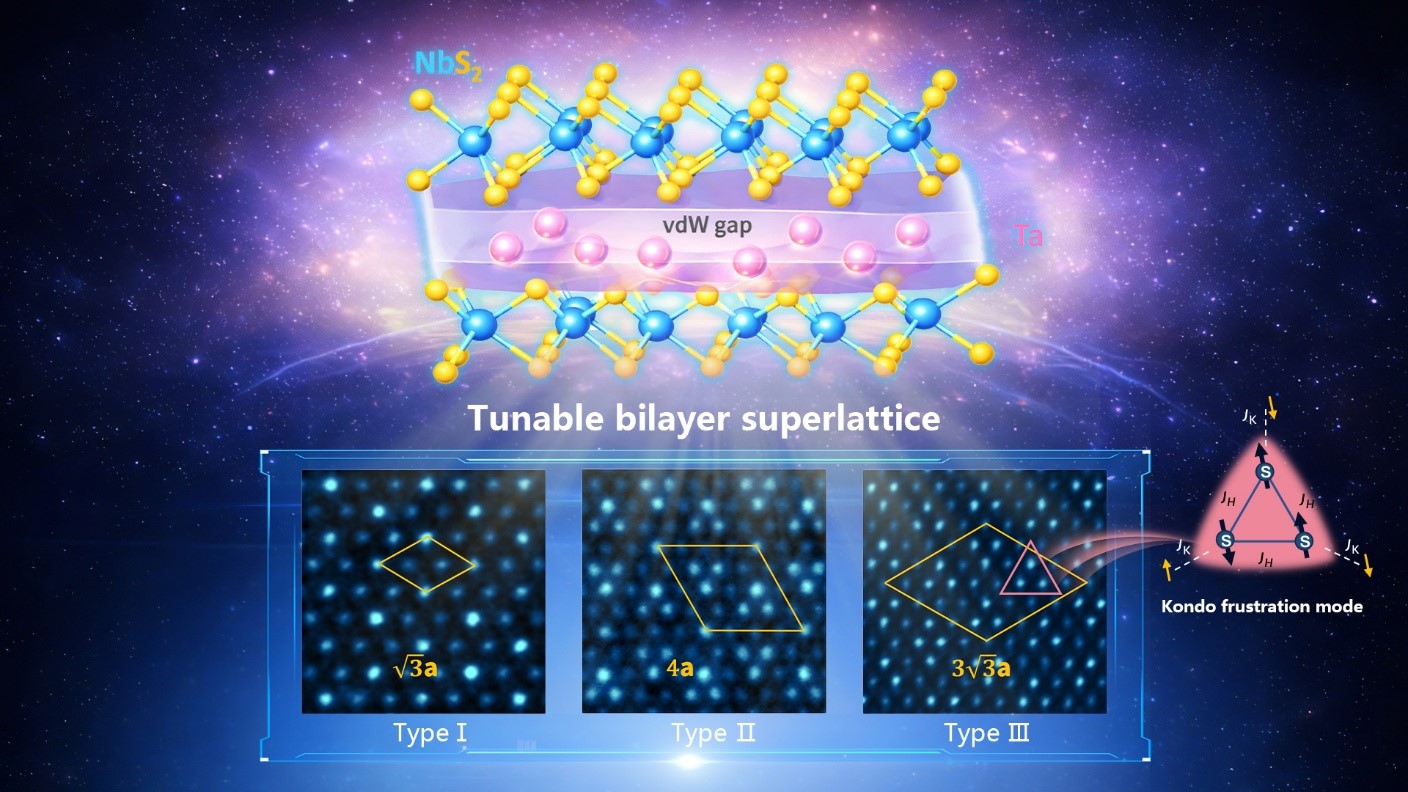
The Kondo effect arises from many-body entanglement between localized magnetic moments and conduction electrons. At low temperatures, conduction electrons partially screen the local moments, modifying scattering and often producing a logarithmic upturn in resistivity. When local moments are arranged periodically, the Kondo interaction can compete with the conduction-electron-mediated Ruderman–Kittel–Kasuya–Yosida (RKKY) interaction. Moreover, in triangular geometries, antiferromagnetic coupling cannot be simultaneously satisfied, leading to geometric frustration—conditions that may host unconventional quantum states.
To controllably build such a “moment lattice” in a 2D system, the team developed a one-step molten-salt-assisted chemical vapor deposition (CVD) strategy, achieving Ta intercalation during the growth of bilayer NbS₂. The intercalated Ta forms stronger covalent coupling with the sulfur atoms in the adjacent layers, stabilizing a designable array of Kondo moments at the atomic scale.
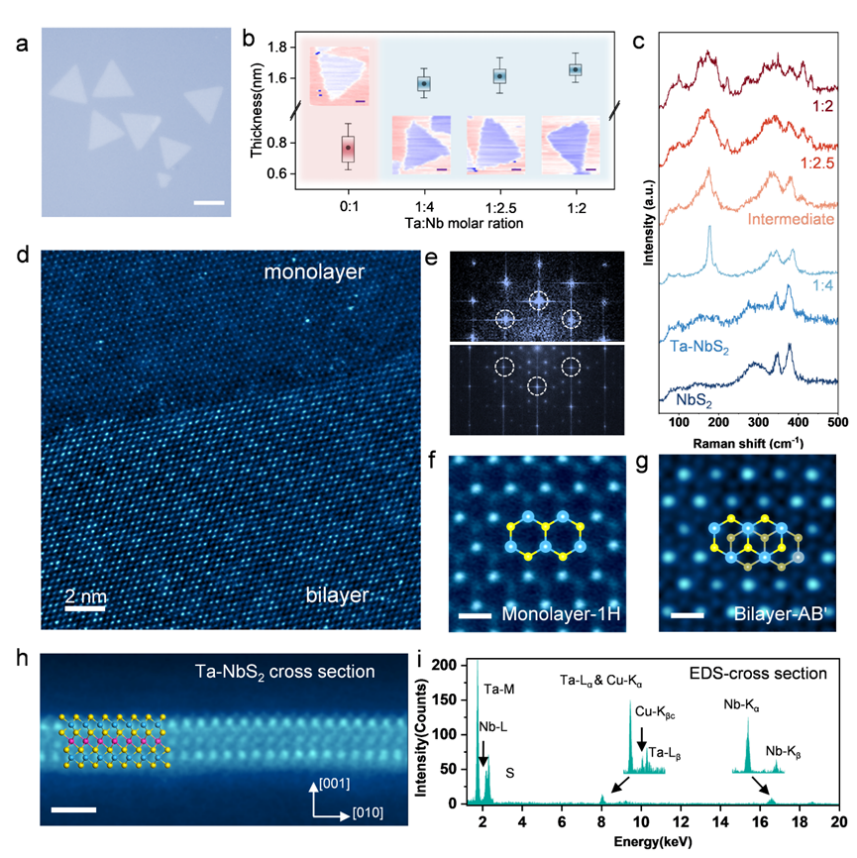
Figure 1. Hetero-intercalated Ta–NbS₂ superlattice
By precisely controlling the Ta intercalation concentration, the team experimentally realized three representative Ta sublattice configurations. Type I is a simple triangular intercalation lattice. Type II contains a coexistence of single Ta atoms and Ta trimers. Type III is a high-density trimer arrangement that can directly form the geometric building block for frustrated Kondo triangles, constituting a geometrically frustrated Kondo-triangle superlattice. Atomic-resolution HAADF-STEM imaging clearly resolved the atomic-scale ordering of these superlattice structures. Combined with first-principles calculations, the authors identified that intercalated Ta in an octahedral crystal field formed by six sulfur atoms hosts a stable local magnetic moment (corresponding to Ta⁴⁺ with spin S = 1/2), providing a key basis for realizing 2D Kondo physics. The calculations further indicate that different intercalation motifs lead to distinct magnetic interactions and energetic stability, offering guidance for experimental control.
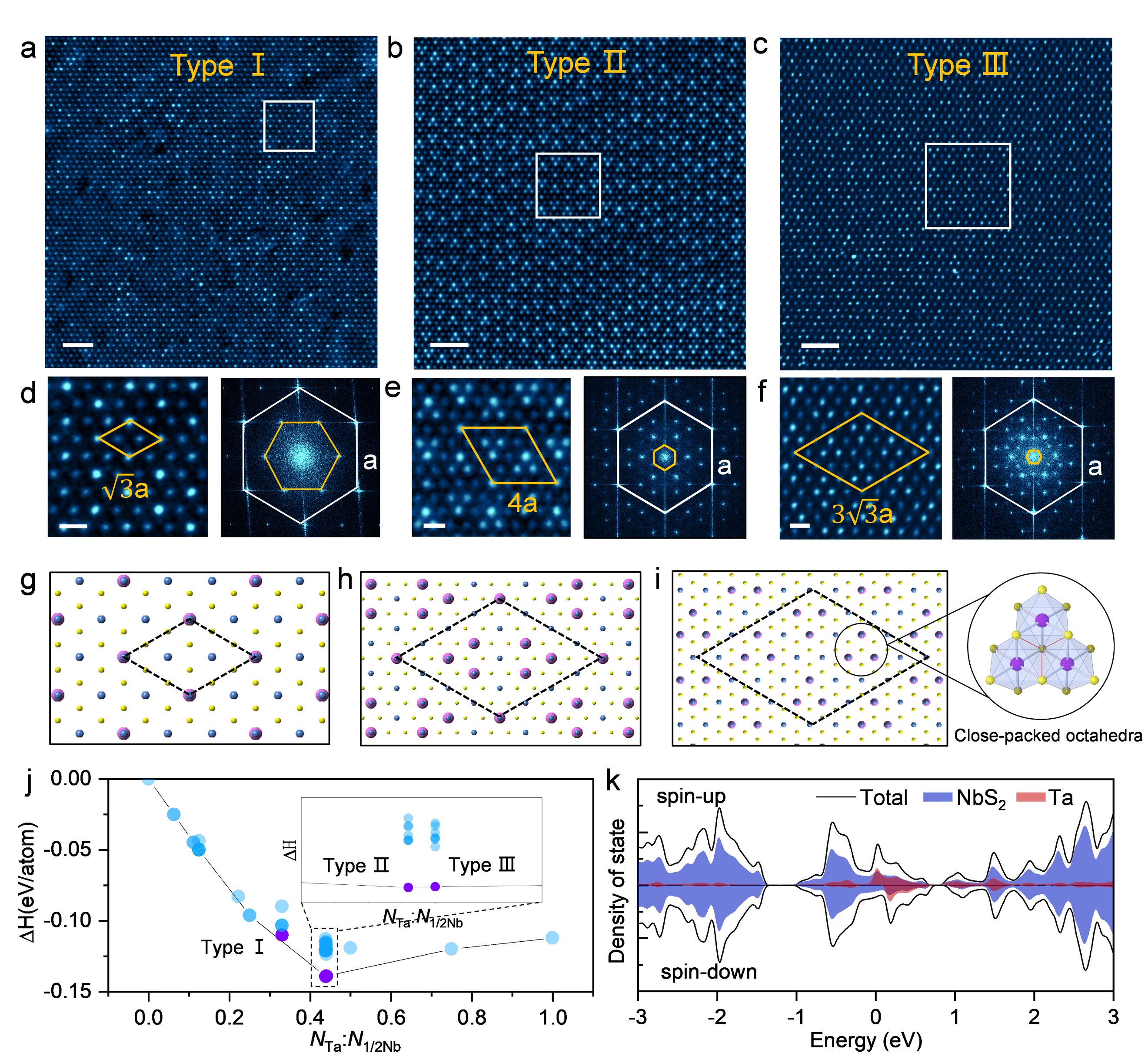
Figure 2. Structure-correlated, tunable superlattices formed by intercalated Ta atoms
Low-temperature transport measurements show that all three superlattice samples exhibit a characteristic logarithmic increase in resistivity at low temperature, which is suppressed by an external magnetic field. Angle-and-field-direction dependent magnetoresistance measurements consistently show negative magnetoresistance, supporting Kondo scattering as the dominant origin of the anomaly rather than alternative mechanisms such as weak localization.
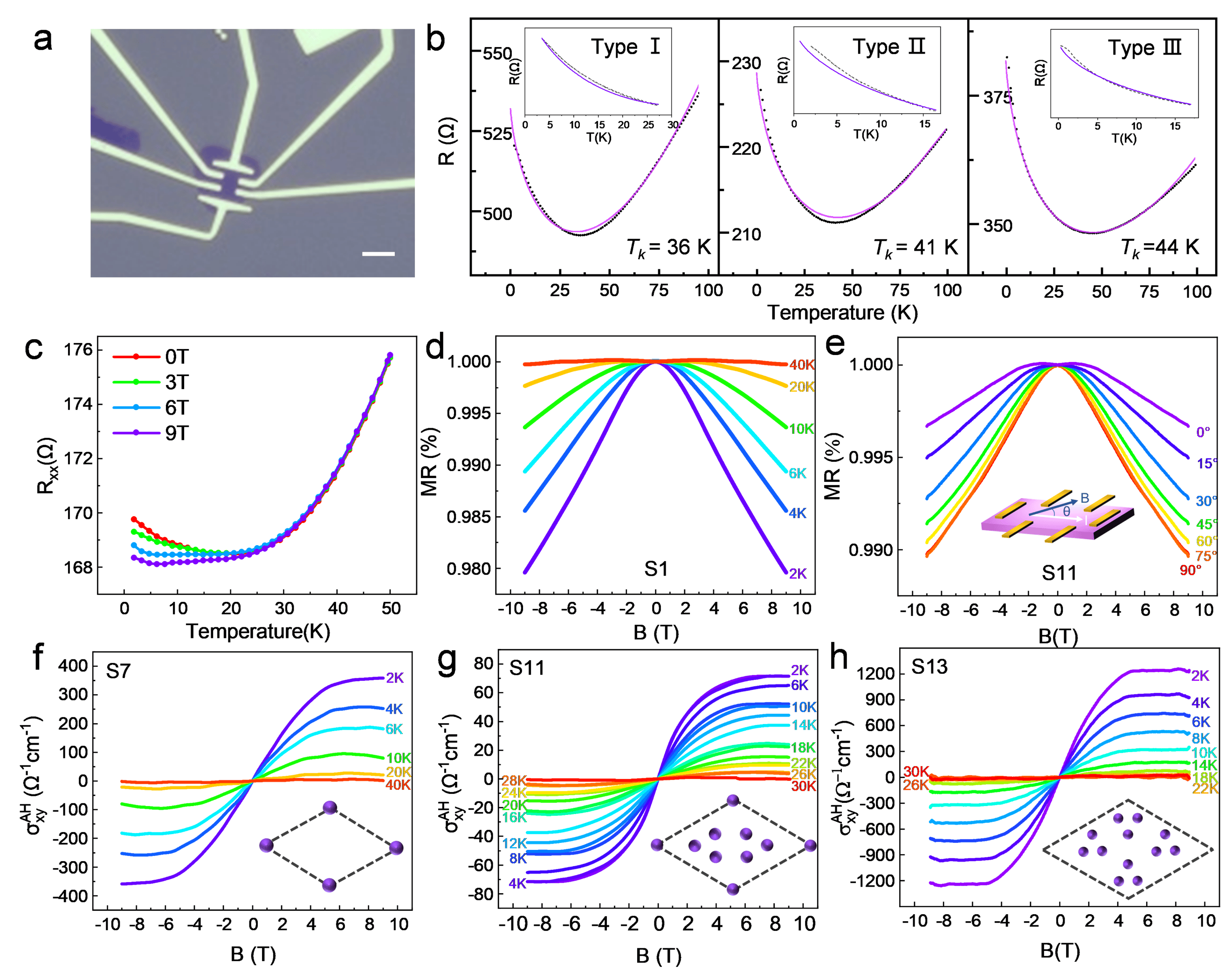
Figure 3. Electrical transport properties of Ta–NbS₂
The team further used the anomalous Hall effect (AHE) to track the evolution of the Kondo system from the “single-impurity” regime to a “collective coherent” regime. Within the same Type I superlattice, changing the carrier concentration markedly alters the low-temperature AHE behavior: the low-carrier sample is more consistent with a Curie–Weiss-type single-impurity scattering picture, while the high-carrier sample displays signatures associated with coherent Kondo scattering at low temperature. Meanwhile, for Type II/III superlattices containing Ta trimers, the low-temperature AHE deviates from the single-impurity model, suggesting the emergence of collective effects and that interactions between local moments become non-negligible. Importantly, densely packed Ta trimers realize the structural unit required by the frustrated Kondo-triangle model and introduce a tunable short-range antiferromagnetic coupling, JH. Overall, the present results indicate that the samples remain primarily in the Kondo-singlet limit; reducing the carrier concentration to tune the ratio TK/JH is expected to drive the system into a more unconventional frustrated-Kondo regime, providing a clear route for exploring low-dimensional strongly correlated quantum states.
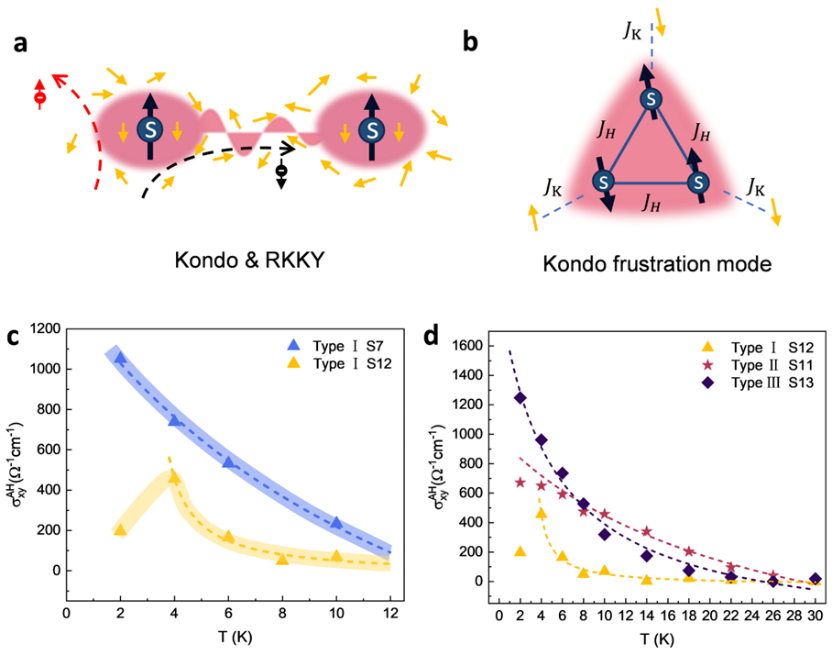
Figure 4. Competition between the Kondo effect and RKKY interaction in Ta–NbS₂
This study demonstrates a 2D Kondo superlattice materials platform whose periodicity and motifs can be highly tuned during growth, overcoming limitations of conventional bulk materials and mechanical exfoliation in terms of structural controllability and interaction strength. The platform enables both designable periodic moment structures in the 2D limit and carrier-density control to finely balance Kondo screening and the RKKY interaction. It offers a new experimental route for investigating low-dimensional strong correlations, geometric frustration, and their quantum transport responses, and may provide opportunities for materials design in spintronics and quantum devices.
Ph.D. student Daiyue LI (SUSTech), Ph.D. student Xiangyu HU (Zhejiang University), and Research Assistant Professor Gang WANG (SUSTech) are co-first authors. Prof. Junhao LIN (SUSTech), Prof. Yi ZHENG (Zhejiang University), and Associate Researcher Jinbo PAN (Institute of Physics, Chinese Academy of Sciences) are corresponding authors. SUSTech is the first affiliation.
Proofread ByNoah Crockett, Junxi KE
Photo ByYan QIU