Professor Hong WANG’s team from the Department of Materials Science and Engineering at Southern University of Science and Technology (SUSTech) has made progress in the research of high-temperature dielectric energy storage materials. The related results were published in the international journal Energy & Environmental Science under the title “Enabling superior high-temperature capacitive performance in polymer dielectrics by multifunctional alternating nanolaminate coating.”
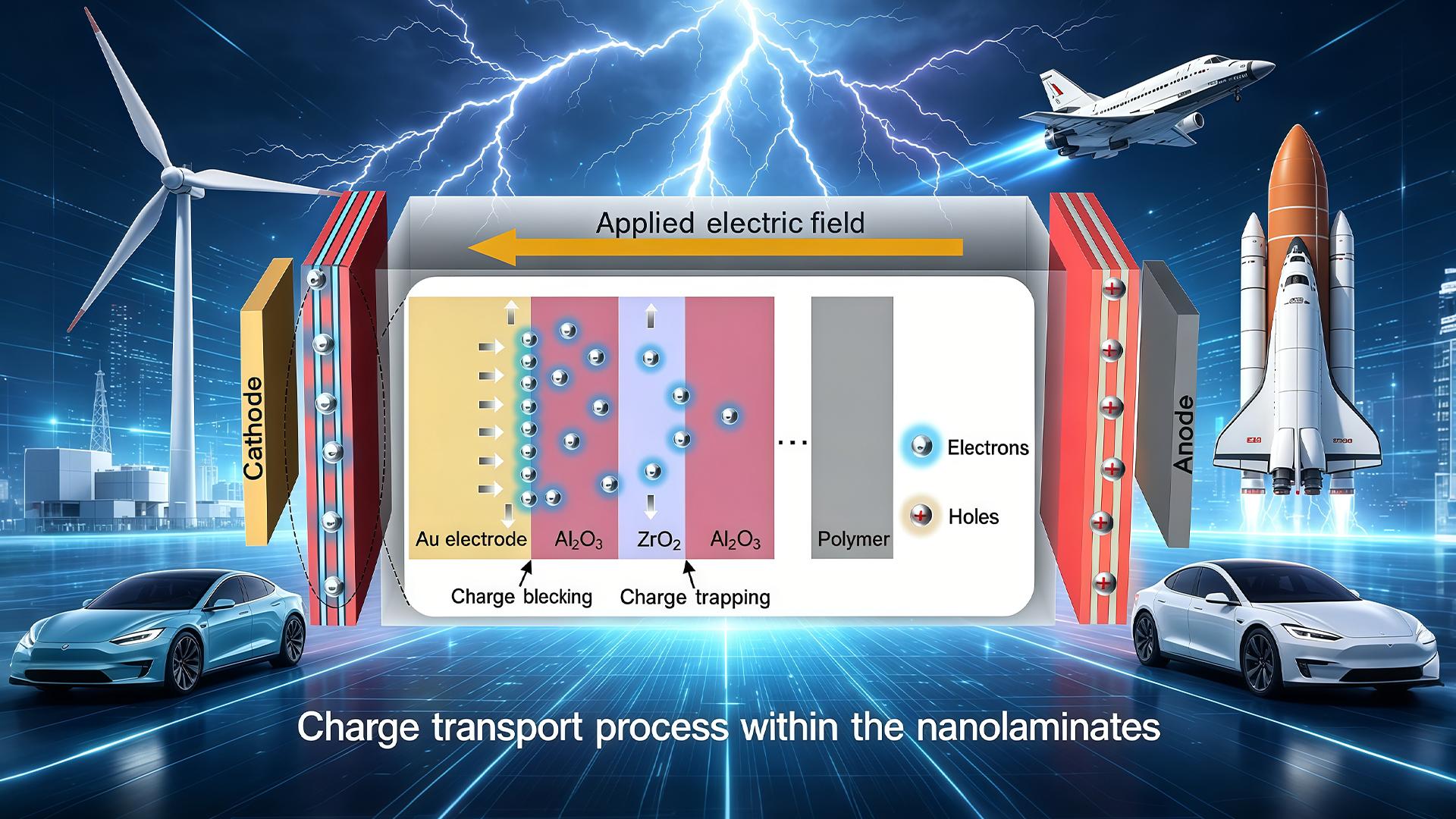
With the rapid development of renewable energy, new energy vehicles, and aerospace sectors, the demand for high-performance energy storage components that can operate stably under high temperatures (such as above 150°C) and high voltage is becoming increasingly urgent. Under high temperatures and high voltage, charge injection at the electrode/dielectric interface can cause significant conduction loss, resulting in a sharp decline in charge-discharge efficiency and cycling lifespan. The mainstream strategy to suppress charge injection is to introduce inorganic barrier layers on both sides of polymers, but the fundamental dilemma faced by traditional inorganic materials is that their key properties, “wide bandgap” (to block charge injection) and “high dielectric constant” (for uniform electric field), are difficult to optimize simultaneously within a single material. Even for aluminum oxide, which has relatively good comprehensive performance, its charge-blocking capability has already approached the theoretical limit for this material system.
To address this bottleneck, the research team proposed abandoning the traditional approach of relying solely on ultra-wide bandgap materials, and instead embedding a 3 nm ultrathin zirconium oxide nanolayer with a relatively narrower bandgap but higher dielectric constant as a functional interlayer within the aluminum oxide layer. The researchers used atomic layer deposition technology to fabricate a total thickness of only about 36 nm of alternating aluminum oxide/zirconium oxide nanolayers on both sides of the polymer film. Based on this innovative interface structure, the coated polycarbonate film achieved a discharge energy density of 8.50 J cm⁻³ at a high temperature of 150°C, while maintaining a charge-discharge efficiency as high as 96.4%. Its overall performance is significantly superior to any single-layer coating system, setting a new record for polymer-based dielectrics. In addition, this interface engineering design also increased the charge-discharge cycle lifespan of the films at high temperatures by nearly two orders of magnitude.
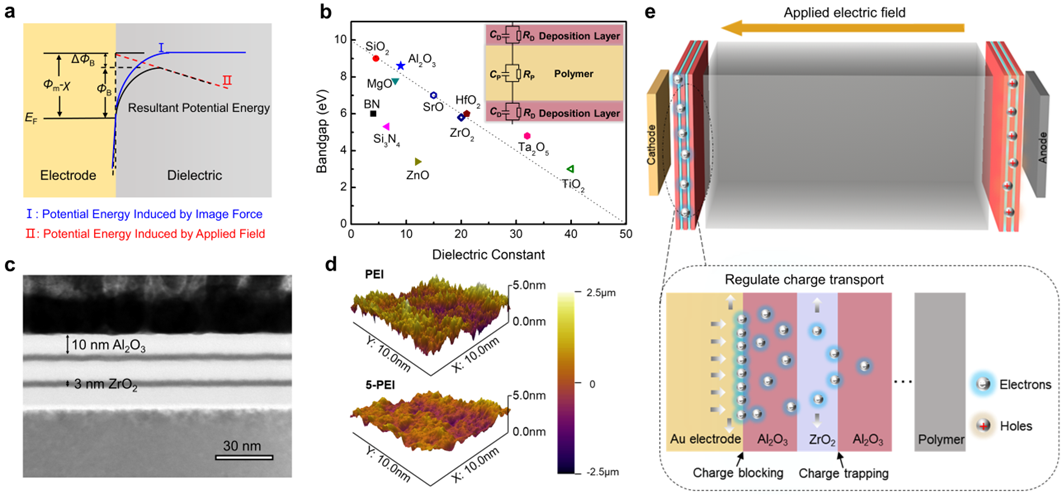
Figure 1. Design principles and structural characterization of alternating aluminum oxide/zirconium oxide nanolaminates
Cross-sectional Kelvin probe force microscopy, Pockels effect imaging, energy-band analysis, and phase-field simulation results indicate that in the “embedded” nanolaminate engineering design, the outer aluminum oxide layer (about 10 nm), benefiting from its wide bandgap, forms a high energy barrier that suppresses charge injection. The embedded zirconium oxide layer (about 3 nm), utilizing its higher dielectric constant, not only redistributes the electric field laterally and alleviates local concentration, but also introduces deep-level charge trapping centers to capture carriers.
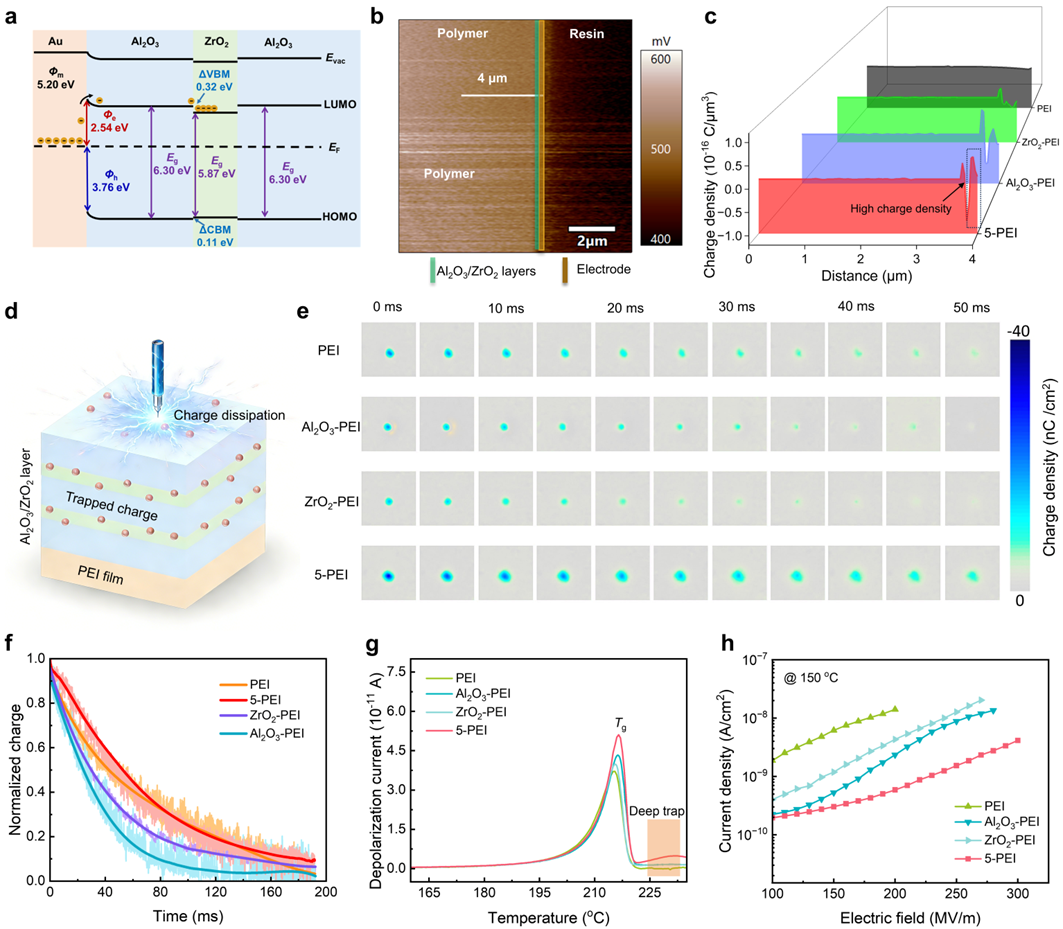
Figure 2. Band structure, cross-sectional KPFM, Pockels effect imaging, and conductive properties of alternating aluminum oxide/zirconium oxide nanolaminates
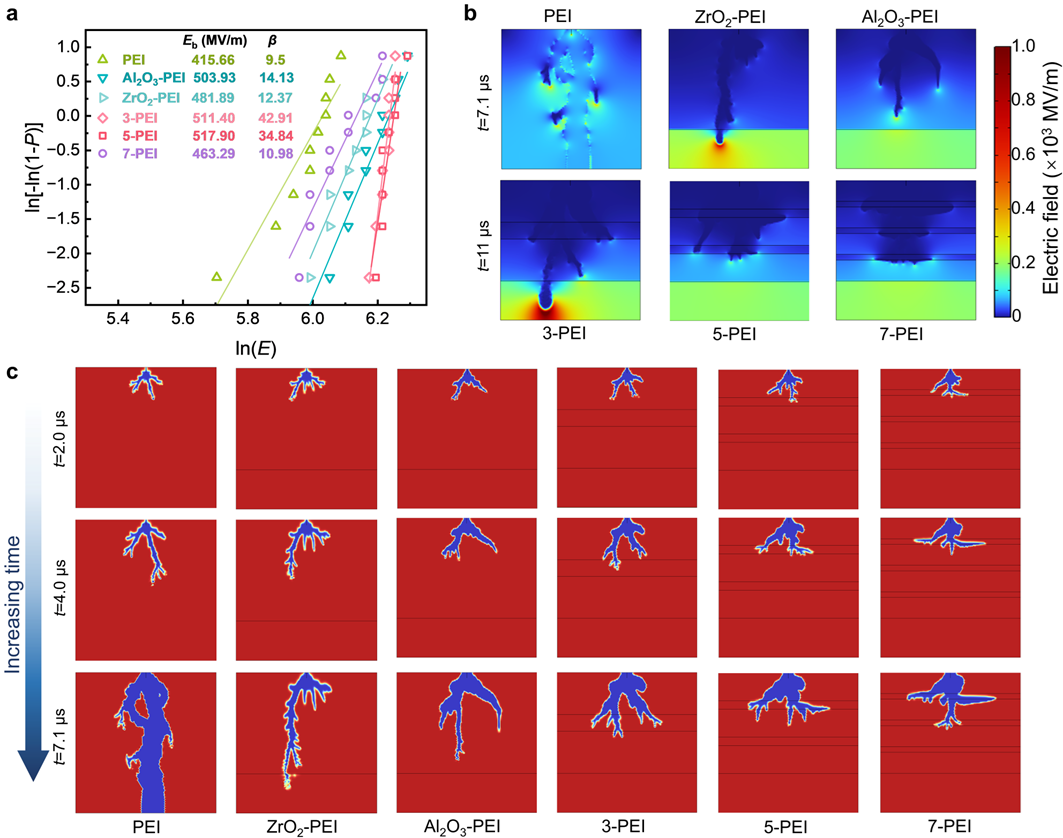
Figure 3. High-temperature breakdown strength of the film and phase-field simulation
In terms of material preparation, the interfacial nanostructuring strategy can achieve significant and stable performance improvements on various polymer substrates (such as polycarbonate, polyetherimide, polyphenylene sulfide, polyethylene naphthalate, and polyfluorenes). The prepared coating films exhibit excellent electrical performance while maintaining outstanding mechanical flexibility, demonstrating good compatibility with large-scale roll-to-roll manufacturing processes and showcasing both broad versatility and potential for industrial application.
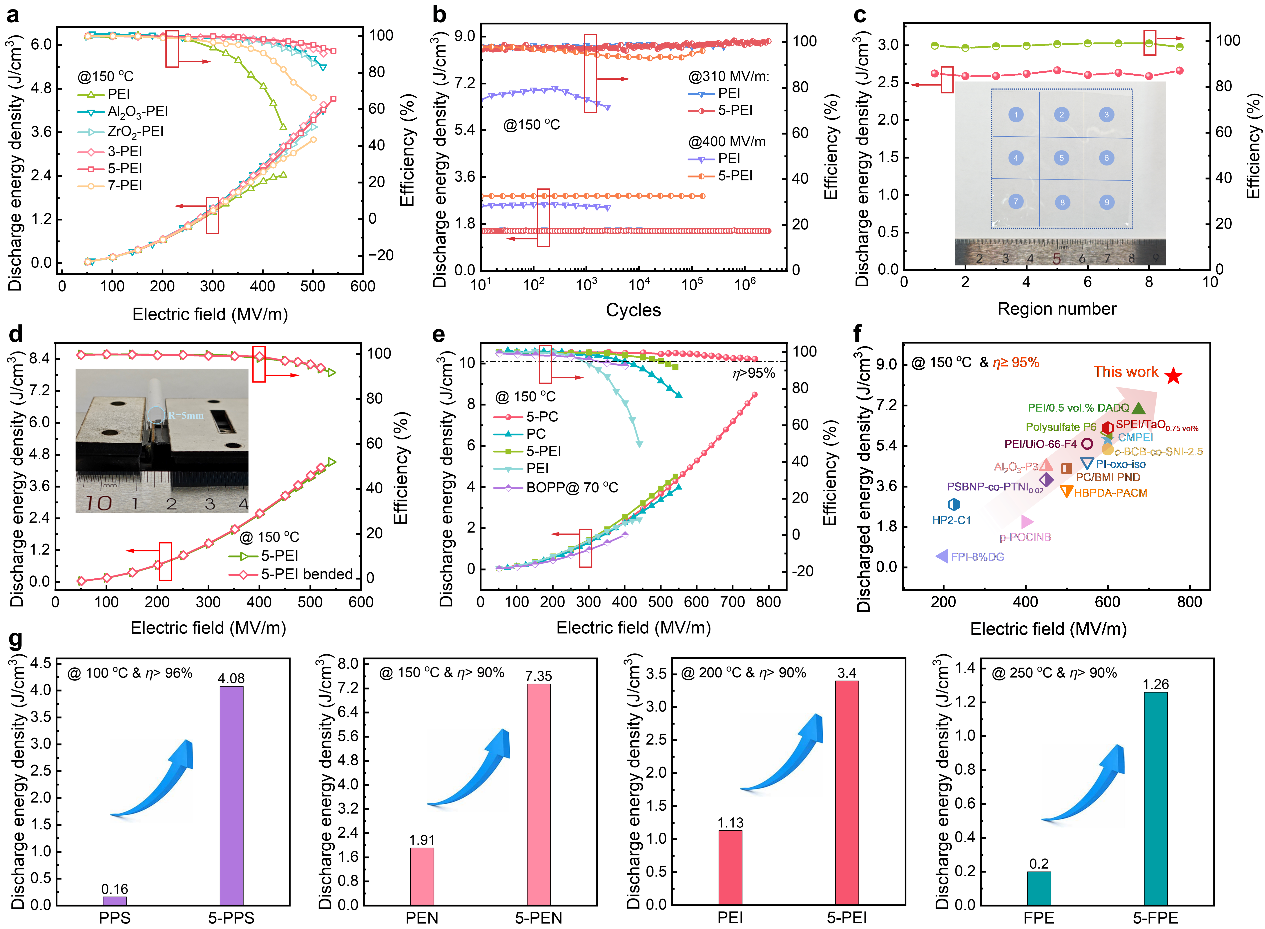
Figure 4. High-temperature energy storage performance, charge-discharge cycle life, mechanical stability, and universality verification of the film
The interfacial nano-engineering strategy proposed in this study provides a clear, feasible, and highly promising material innovation pathway for developing high-temperature-resistant, high-energy-density, and highly stable film capacitors suitable for next-generation electric vehicle drive systems, renewable energy inverters, and advanced aerospace power systems.
Yuqi LIU, a PhD student jointly trained by SUSTech and Hong Kong University of Science and Technology (HKUST), is the first author of the paper. Jiufeng DONG, Assistant Professor of the Department of Materials Science and Engineering at SUSTech, and research assistant Kaixin LIU are co-first authors. Hong WANG, Jiufeng DONG, and Professor Jiannong WANG from HKUST are the corresponding authors. SUSTech is the first affiliation of the paper.
Paper Link: https://doi.org/10.1039/D6EE00769D
Proofread ByNoah Crockett, Junxi KE
Photo By