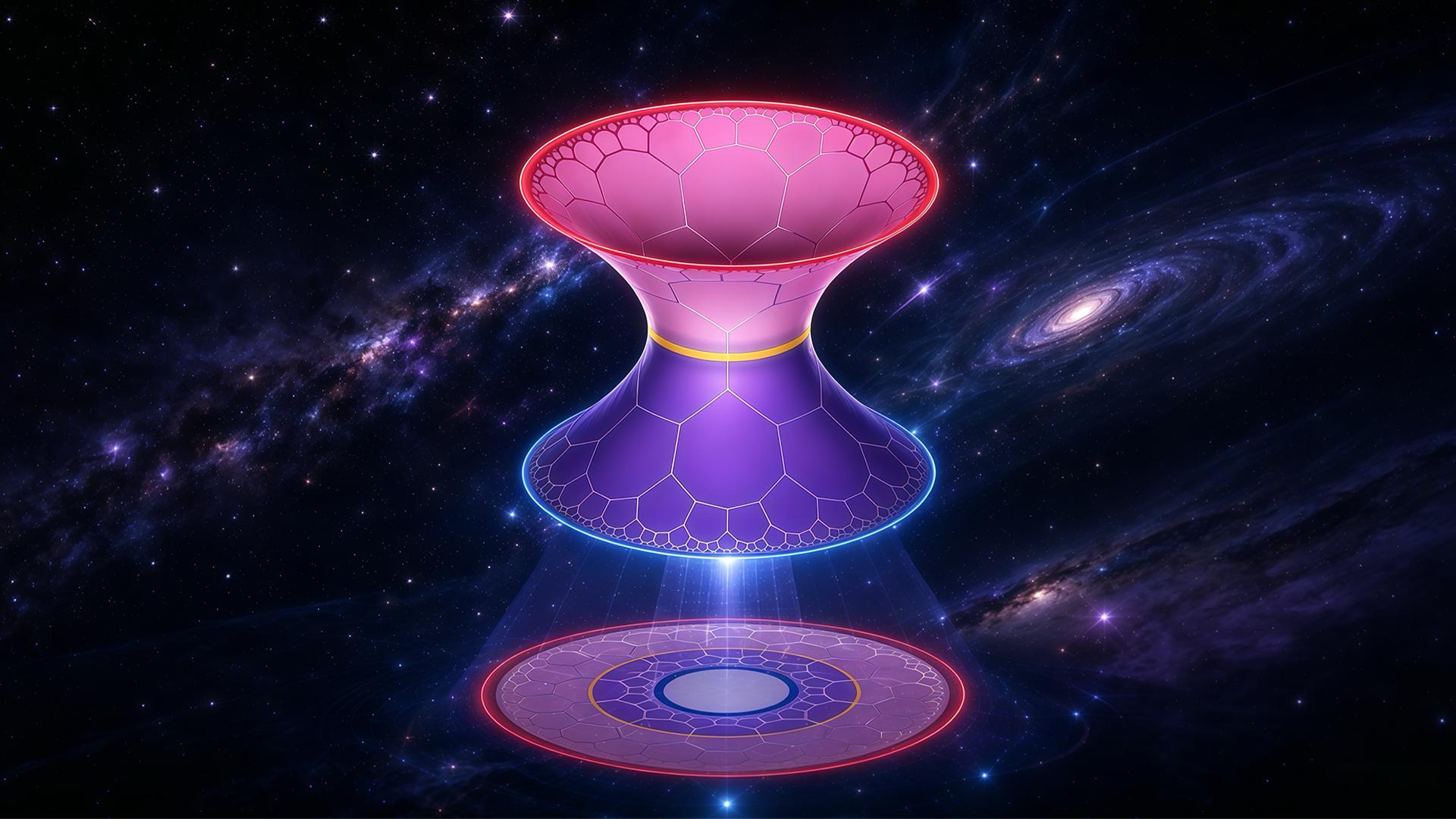
The research group led by Associate Professor Zhen GAO from the Department of Electronic and Electrical Engineering at the Southern University of Science and Technology (SUSTech) has extended both spatial topology and space-time topology into a type-II hyperbolic lattice system for the first time. The work experimentally demonstrates dynamic transfer of chiral edge states with opposite chirality on the inner and outer boundaries of a type-II hyperbolic Chern insulator, and further theoretically proposes a new class of higher-dimensional hyperbolic topological space-time crystals with novel space-time topological states, including space-time topological string states. The study, entitled “Space and space-time topologies in a type-II hyperbolic lattice,” was published in Nature Communications.
The discovery of a hyperbolic lattice, a discretized regularization of non-Euclidean space with constant negative curvature, in circuit quantum electrodynamics and electric circuits has opened new avenues to extend topological physics from the Euclidean to non-Euclidean spaces. However, to date, previous studies on hyperbolic topological physics have been predominantly restricted to conventional type-I hyperbolic lattices and exclusively focused on the spatial topological states associated with a single outer edge. This limitation leaves topological phenomena involving multi-edge spatial interactions and dynamic transitions, such as Laughlin and Thouless pumping, Landau-Zener transition, and non-Hermitian phase transition, largely unexplored. These dynamic topological effects are pivotal for hyperbolic topological physics, as they not only enable dynamic manipulation of hyperbolic topological states but also serve as powerful methods to characterize hyperbolic topological invariants and explore higher-dimensional hyperbolic topological physics. The recently discovered type-II hyperbolic lattice, which features both outer and inner edges, provides an ideal platform for addressing this gap. Although the dynamic transfer of chiral edge states in such a system has been theoretically predicted, its experimental realization has been impeded by stringent and intricately tailored coupling requirements. Consequently, developing a more experimentally feasible type-II hyperbolic topological model and using it to directly observe the dynamic topological phenomena are highly sought after.
Besides the spatial topology relying on energy gaps and spatial interfaces, recent advancements in photonic time and space-time crystals have unveiled fascinating temporal topological interface states and space-time topological events that originate from the momentum and energy-momentum band gaps, respectively. These fascinating results motivate deeper exploration at the intersection of topological physics and spatiotemporal frameworks. However, time and space-time topologies have thus far been primarily limited to Euclidean space-time with only one spatial and one temporal dimension ((1 + 1)-D). In contrast, higher-dimensional hyperbolic space-time and its accompanying novel spatiotemporal topological phenomena remain completely unexplored.
The research team first investigated spatial topology in type-II hyperbolic lattices. Starting from the type-II hyperbolic lattice (Fig. 1a), they constructed a new, simpler, and more elegant type-II hyperbolic Chern insulator by mapping the celebrated Haldane model (Fig. 1b). In particular, because type-II hyperbolic lattices are conformally equivalent to type-I hyperbolic lattices, the researchers further conformally constructed the Bravais lattice of type-II hyperbolic Haldane model (the purple lattice Fig. 1b) and utilized its Bolza unit cell (the orange octagon Fig. 1b) to calculate the bulk density of states using hyperbolic band theory (Fig. 1c). Two bulk band gaps, namely bulk band gap I and bulk band gap II, exist above and below zero energy, respectively, and their nontrivial topological properties can be characterized by a bipartite Chern vector. According to the bulk-boundary correspondence, the two Chern topological band gaps of the finite-sized radial type-II hyperbolic Haldane model (Fig. 2a) supports degenerate chiral edge states localized at the inner and outer boundaries, respectively, with opposite propagation chirality (Fig. 2b-d). To experimentally verify these theoretical results, the research team mapped and implemented the type-II hyperbolic Haldane model on a topological circuit platform, realizing a type-II hyperbolic Haldane circuit (Fig. 2e). By comparing the impedance-to-ground measurements of boundary nodes and bulk nodes, they characterized bulk band gap I and bulk band gap II (the yellow regions in Fig. 2f). The spatial impedance distributions at frequencies within the gaps show excellent agreement with the superposition of the calculated outer and inner boundary eigenstates (Fig. 1c), confirming the coexistence of outer and inner boundary states within the band gaps. By applying chiral voltage sources at the inner and outer boundaries to selectively excite spin-up voltage pseudospins, they clearly observed that the outer-boundary voltage field is tightly localized at the outer boundary and propagates unidirectionally in the counterclockwise direction, while the inner-boundary voltage field is localized at the inner edge and propagates unidirectionally in the clockwise direction.
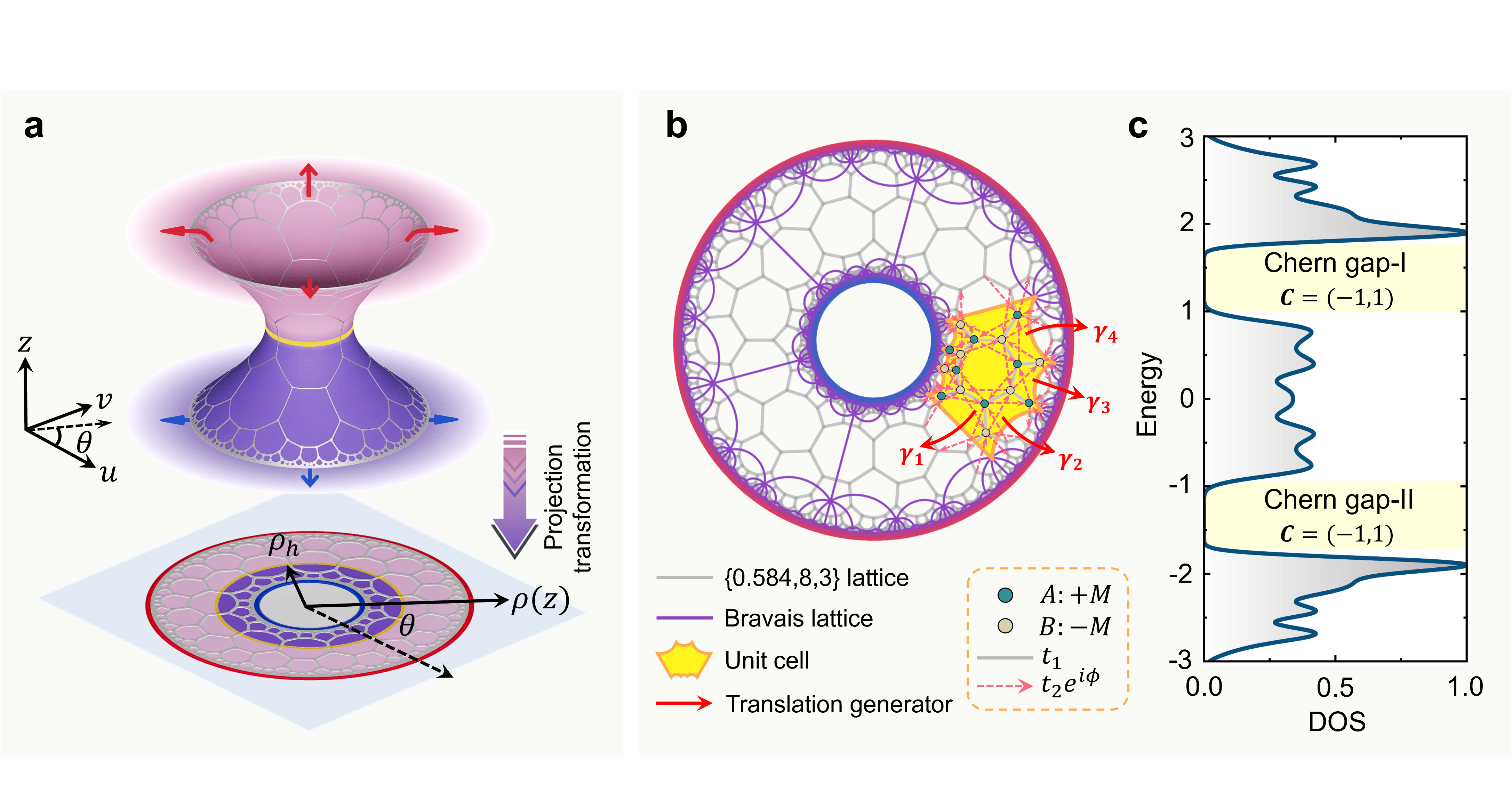
Figure 1. Type-II hyperbolic Chern insulator.
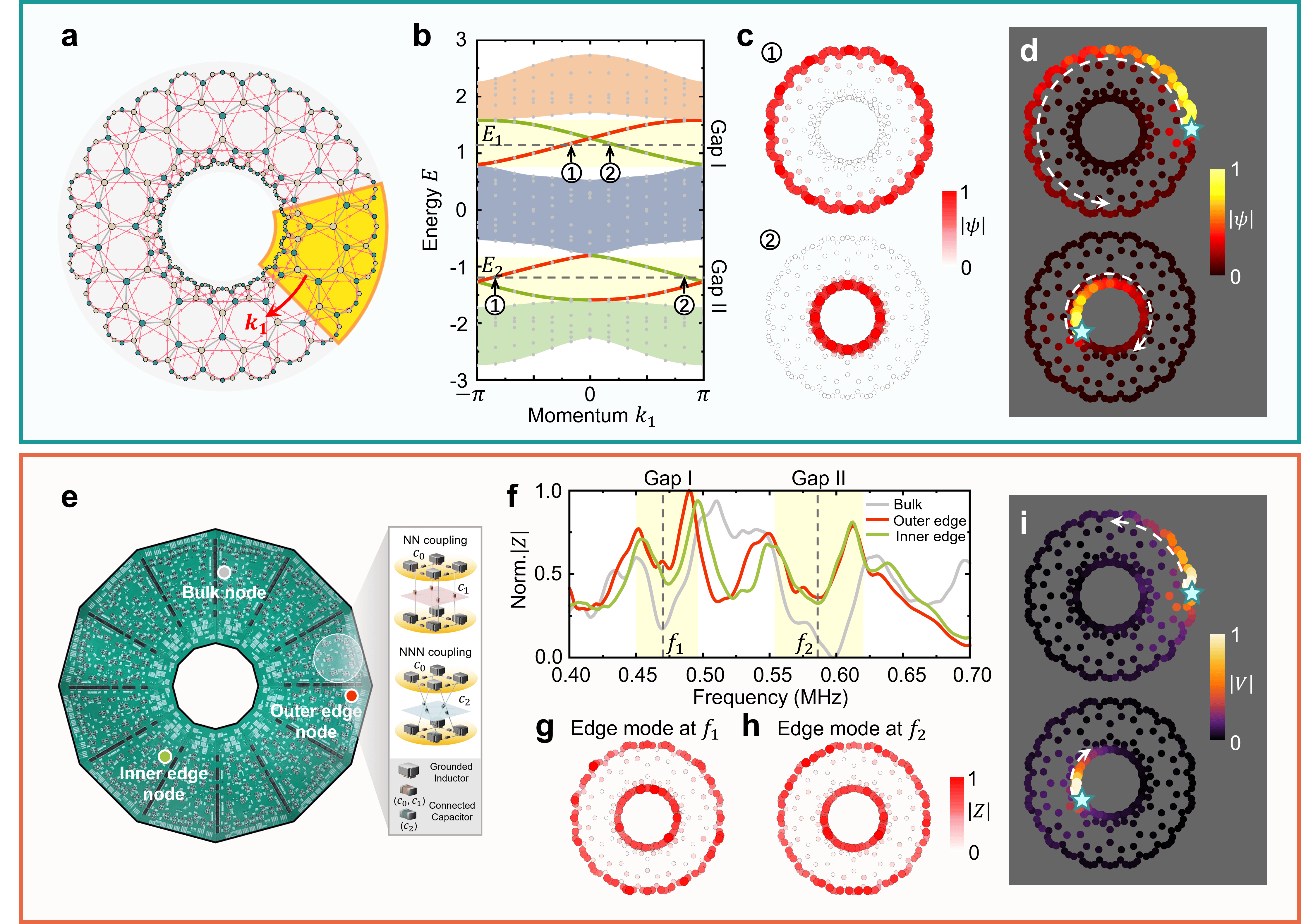
Figure 2. Space topology in a type-II hyperbolic Chern insulator.
The research team introduced a radial coupling channel into the bulk region of the type-II hyperbolic Haldane model (Fig. 3a). In this configuration, a pair of inner and outer chiral edge states with opposite energy flows interact through the coupling channel, and the coupling between their energy flows becomes purely imaginary, thereby naturally forming an effective anti-parity-time symmetric system. As the modulation strength gradually increases, the system evolves from the anti-parity-time broken phase (the blue region Fig. 3c) toward the exceptional point (the red pentagram, Fig. 3b-c). The local density of states of the eigenmodes in the anti-parity-time broken phase and at the exceptional point (Fig. 3d). During this process, arbitrary-ratio dynamical conversion between chiral edge states occurs (Fig. 3e-f). To experimentally verify these theoretical predictions, the researchers constructed the radial coupling channel in the type-II hyperbolic Haldane circuit by introducing additional parallel capacitors (Fig. 3g). By measuring the spatial impedance distributions at frequencies within the band gap, they characterized the eigenmodes in the anti-parity-time broken phase and at the exceptional point, as shown in Fig. 3(h-i). Furthermore, by applying chiral voltage sources at the inner and outer boundaries to selectively excite spin-up voltage pseudospins, they clearly observed arbitrary-ratio dynamical conversion between the inner and outer chiral edge states, as shown in Fig. 3(j-k).
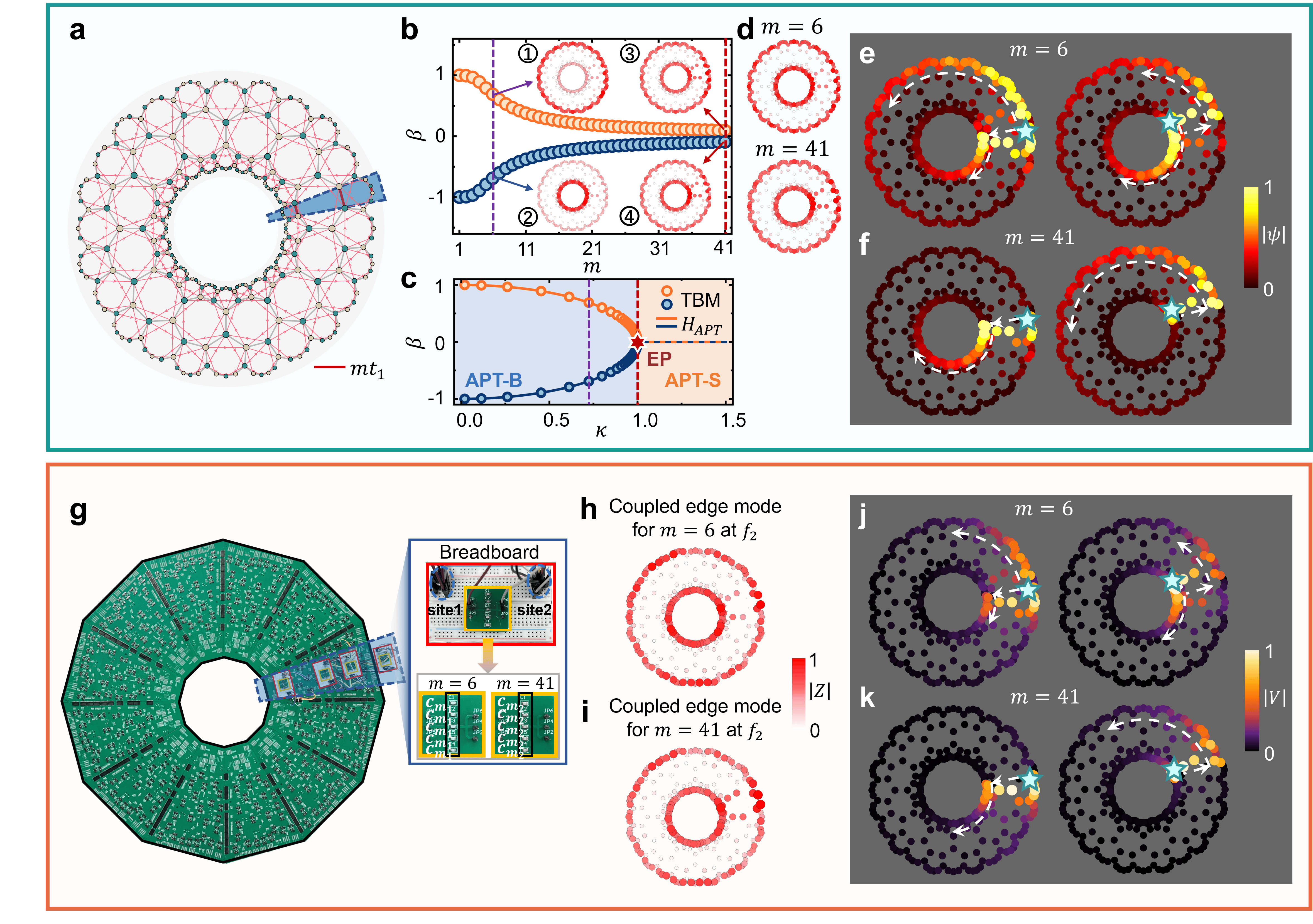
Figure 3. Arbitrary-proportion dynamic transfer of the counterpropagating chiral edge states in a single-channel-modulated type-II hyperbolic Chern insulator.
The research team explored space-time topology in type-II hyperbolic lattices. They found that for approximately monoenergetic chiral edge states (namely, approximately monochromatic temporal pulses), the radial coupling channel behaves as a tunable beam splitter whose splitting ratio can be precisely controlled by the modulation strength. By cascading a 50:50 beam splitter and a 0:100 beam splitter, the boundary-ring system is divided into a long-path ring-L and a short-path ring-S (Fig. 4a-b). When a single pulse is injected into ring-L, it repeatedly undergoes beam splitting, pulse splitting, and interference recombination at the beam splitters, evolving into two pulse sequences residing in ring-L and ring-S, respectively (Fig. 4c-f). Owing to the path-length difference between the two rings, the sub-pulses evolving in ring-L or ring-S acquire negative or positive position shifts relative to the initial pulse. These shifts can be mapped to a discrete spatial coordinate, while the number of pulse circulations around the ring can be mapped to a discrete temporal coordinate. Consequently, the pulse dynamics in this system become equivalent to evolution in a synthetic (1+1)-dimensional space-time lattice composed of a grid of 50:50 beam splitters (Fig. 4g). Furthermore, by combining the discrete radial spatial coordinate, the pulse-sequence evolution becomes equivalent to propagation in a discrete (2+1)-dimensional hyperbolic space-time crystal.
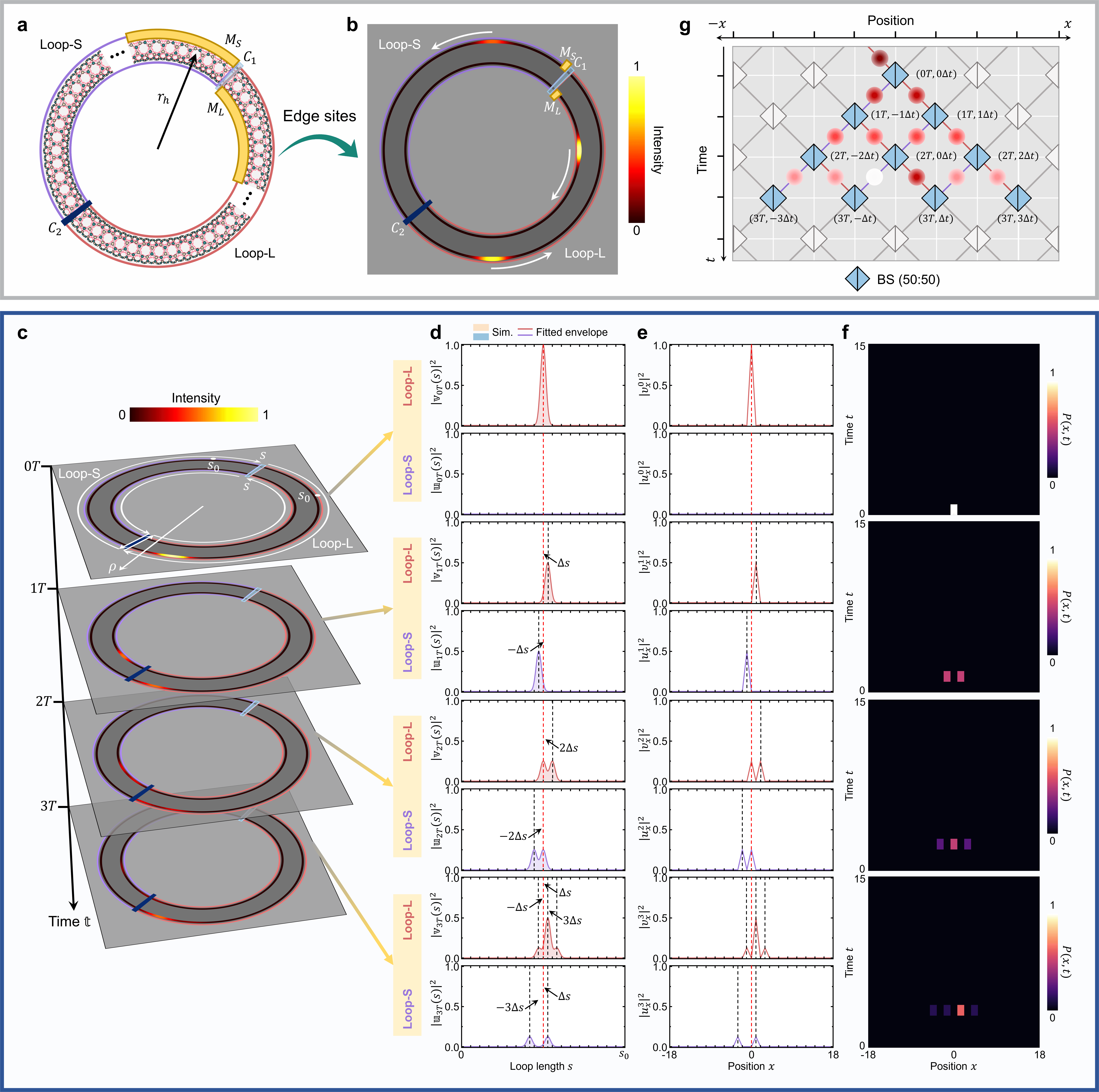
Figure 4. Synthetic space-time lattice mapped from the pulse evolution in a double-channel-modulated type-II hyperbolic Chern insulator.
The real physical space and the synthetic parameter space-time remain strictly separated. Therefore, the space-time topology in this crystal is intrinsically composed of an intertwining of two distinct topologies, one is the spatial topology defined in the spatial subspace, which guarantees the formation of spatial topological boundary states; the other is the temporal topology defined in the temporal subspace, which determines the emergence of temporal topological interface states. In the Hermitian case, the temporal topology of the subspace is trivial, and the energy bands of the synthetic lattice remain gapless in both energy and momentum. For a wave packet with a large spatial width injected from ring-L, the evolution is extended in both the spatial and temporal dimensions, while the total wave-packet energy remains constant over time (Fig. 5a-g). This space-time topological state is exponentially localized along the spatial axis, while remaining delocalized along the spatial and temporal axes, thereby forming a space-time topological worldsheet state. By contrast, in the non-Hermitian case, the temporal topology of the subspace becomes nontrivial, and a momentum band gap opens in the synthetic lattice, whose topological invariant is characterized by the temporal winding number. By connecting two hyperbolic space-time crystals with opposite temporal winding numbers to form a temporal interface, a wave packet with a large spatial width injected from ring-L becomes extended along one spatial dimension while localized at the temporal interface along the temporal dimension. Before and after the temporal interface, the total wave-packet energy first increases and then decreases with time evolution (Fig. 5h-n). This space-time topological state is exponentially localized along both the spatial and temporal axes while remaining delocalized along another spatial axis, thereby forming a space-time topological string state.
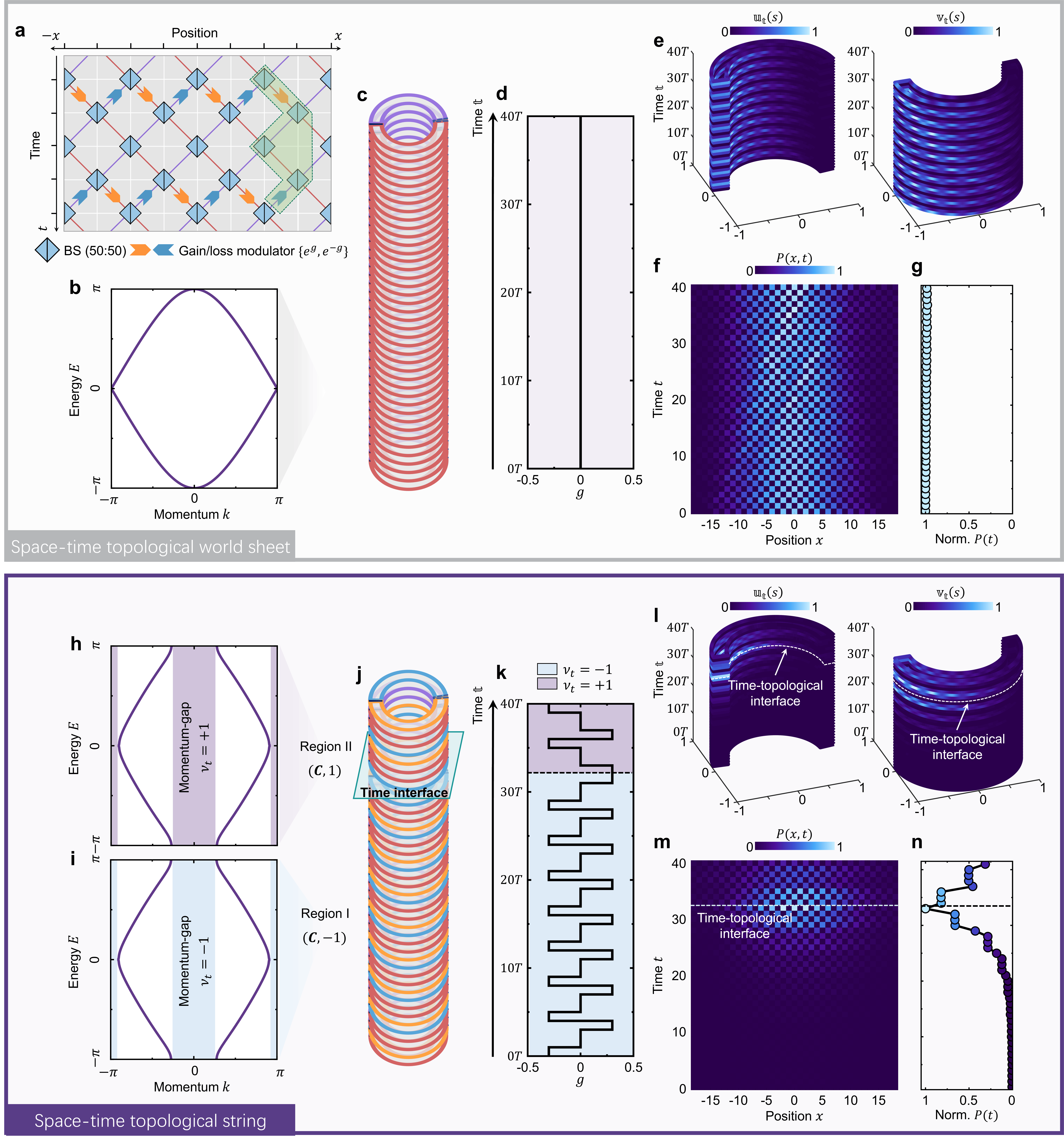
Figure 5. Hyperbolic space-time topological string.
Jingming CHEN, a PhD student at SUSTech, is the first author of the paper. Zebin ZHU, a postdoctoral researcher at SUSTech, and Minqi CHENG, a Master’s student at SUSTech (currently a PhD student at Westlake University), are co-first authors. Associate Professor Zhen GAO is the sole corresponding author. Associate Professor Linyun YANG and SUSTech Master’s student Yuxin ZHONG also made important contributions to this work. SUSTech is the first affiliation of the paper.
Paper Link: https://www.nature.com/articles/s41467-026-70706-7
Proofread ByNoah Crockett, Junxi KE
Photo By