Professor Fuzeng REN’s team from the Department of Materials Science and Engineering at the Southern University of Science and Technology (SUSTech), in collaboration with Professor Qingping SUN from the Hong Kong University of Science and Technology and Professor Robert O. Ritchie from the University of California, Berkeley, has made significant progress in developing highly fatigue-resistant NiTi shape memory alloys. The findings, entitled “Bending-fatigue-resistant hierarchical NiTi shape memory alloy,” were published in the international academic journal Nature Communications.
NiTi shape memory alloys have broad application prospects in biomedical implants, smart actuators, robotics, aerospace systems, and elastocaloric cooling owing to their excellent superelasticity, corrosion resistance, large reversible deformation capacity, and high damping characteristics. However, under cyclic tensile or bending loads, NiTi alloys are prone to fatigue crack initiation and propagation at the surface, which can lead to fracture and device failure. Fatigue has long restricted the engineering application of NiTi shape memory alloys in high-cycle, high-reliability service scenarios.
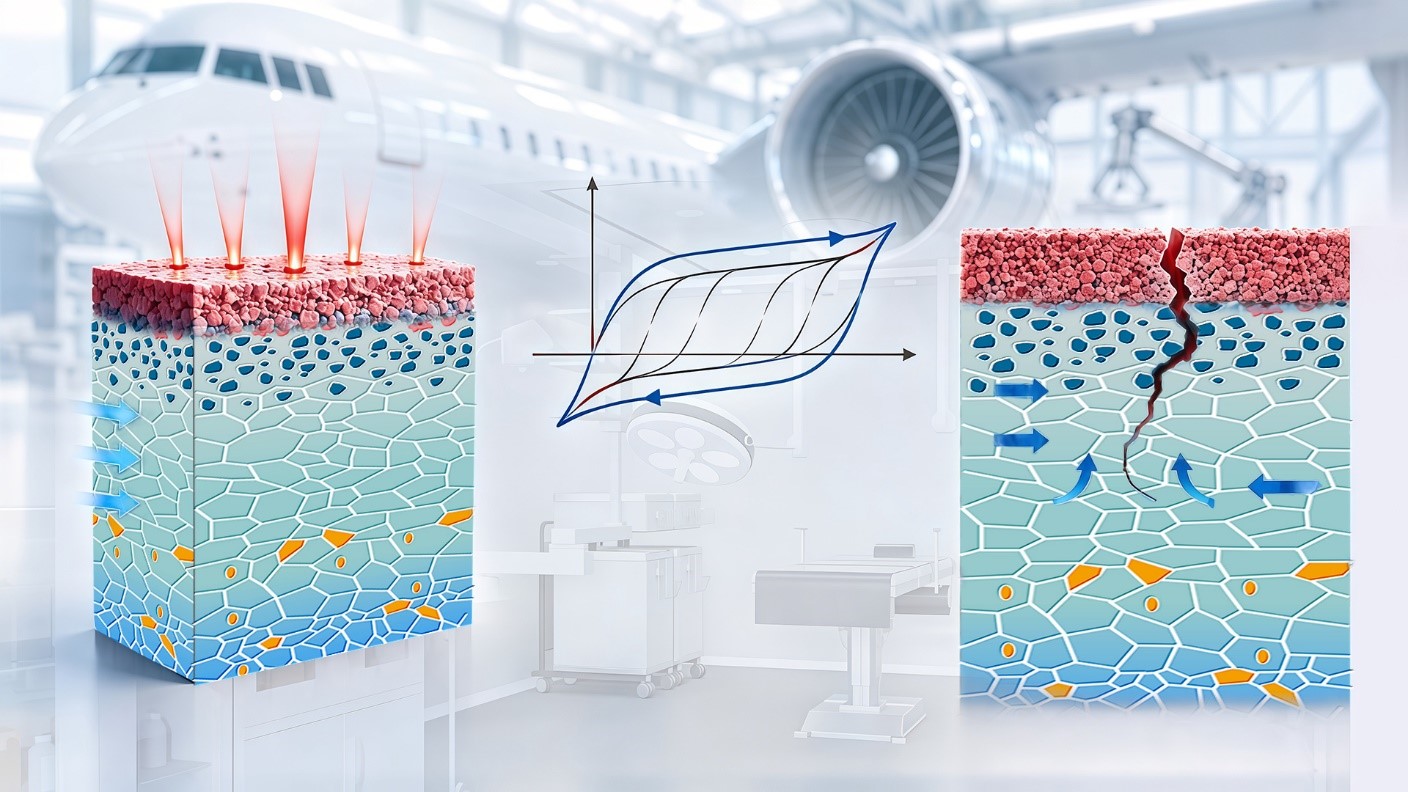
The research team proposed a surface engineering strategy called pre-strain warm laser shock peening (pw-LSP). This method applies laser shock processing under pre-strain and elevated-temperature conditions to construct a hierarchical surface architecture approximately 40 micrometers deep on commercially available nanocrystalline NiTi. This region consists of a high-strength surface layer enriched with titanium nitrides, an ultrafine-grained layer with an inverse grain size gradient and a B19′-R-B2 phase gradient, and a compressive residual stress field exceeding one GPa (Figure 1).
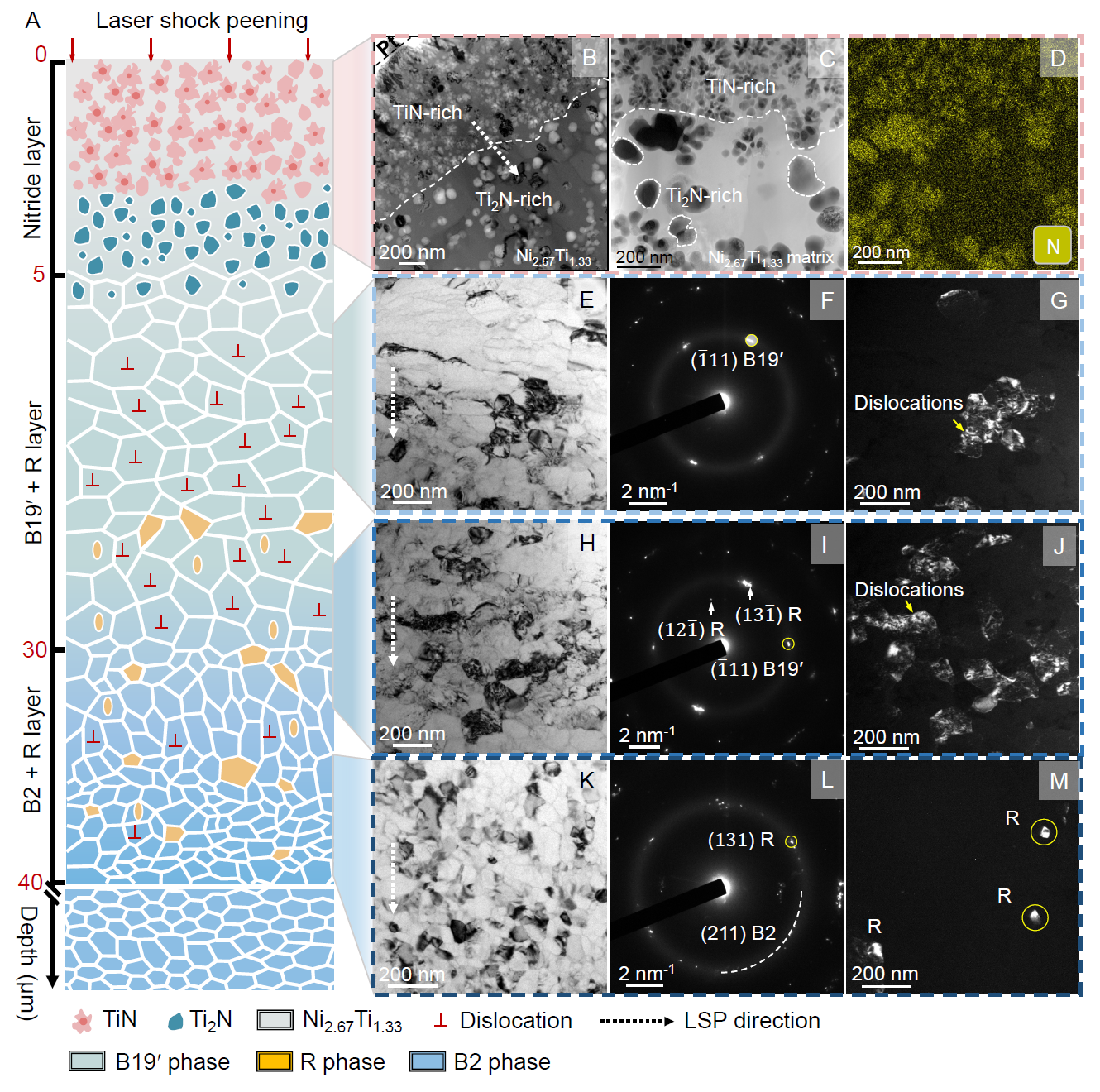
Figure 1. Hierarchical surface architecture of the pw-LSP-treated NiTi shape memory alloy.
In the four-point bending fatigue test, the untreated nanocrystalline NiTi sample failed after only 1,654 cycles under a maximum surface tensile strain of 1.94%. The hierarchical NiTi sample treated with pw-LSP withstood over 5 million cycles under the same strain conditions without fracturing, representing a more than 3,000-fold increase in fatigue life (Figure 2).
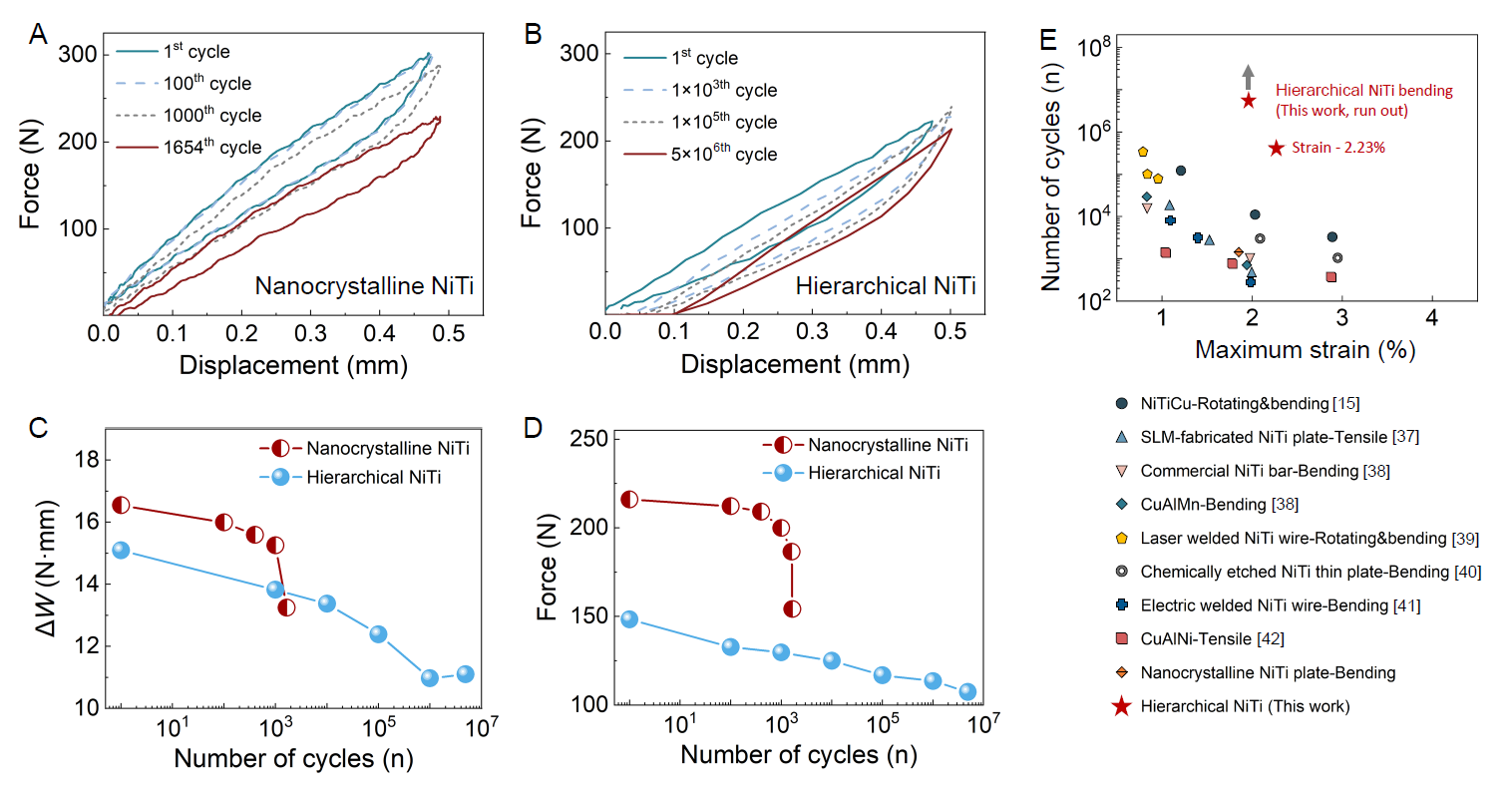
Figure 2. Bending fatigue performance of untreated nanocrystalline NiTi and hierarchical NiTi.
The research team further revealed the intrinsic mechanism behind the material’s excellent fatigue resistance. On the one hand, the hard surface layer enriched with titanium nitrides significantly increases surface hardness and elastic modulus, effectively suppressing local plastic deformation and crack initiation under cyclic loading. On the other hand, the high compressive residual stress introduced by pw-LSP can counteract the tensile stress generated by external loads, maintaining a compressive stress state in the near-surface region during cycling and thereby reducing the driving force for crack formation and propagation. Test results show that the surface compressive residual stress in the treated samples exceeded 1 GPa in magnitude and effectively counteracted the applied tensile stress within a depth of approximately 20 micrometers.
The ultrafine-grained subsurface layer also plays a key shielding role during crack propagation. Post-fatigue cross-sectional observations revealed that the maximum crack propagation depth was approximately 20 micrometers, with cracks effectively arrested within the hierarchical surface region. Transmission electron microscopy analysis showed complex structures near the crack tip, including amorphous shear bands, the R phase, B19′ martensite, and coherent interfaces between the R phase and B19′ martensite. These structures can induce crack deflection, branching, and blunting, reduce the local stress intensity factor, and effectively hinder crack propagation (Figure 3).
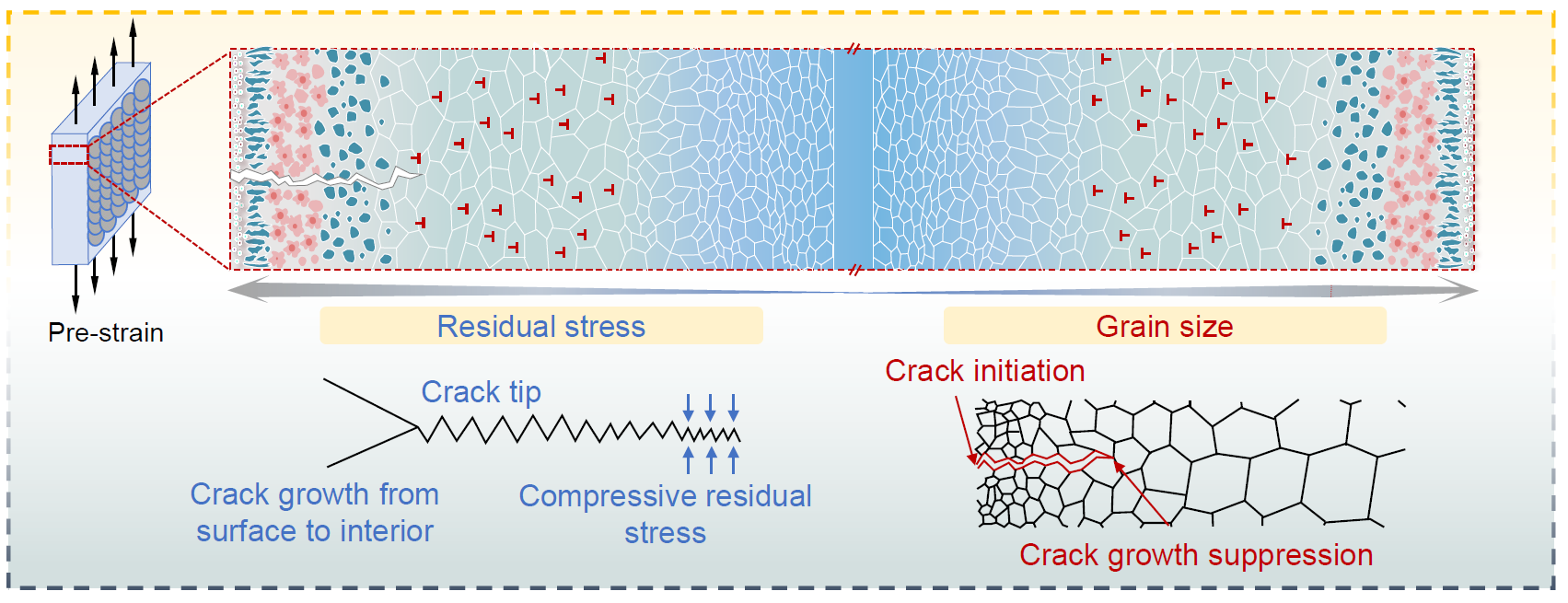
Figure 3. Schematic illustration of the fatigue-resistance mechanism of hierarchical NiTi shape memory alloys.
This study overcomes a key performance bottleneck of nanocrystalline NiTi shape memory alloys under high-cycle bending fatigue through a synergistic strategy of surface chemical strengthening, gradient phase-structure regulation, and residual-stress design. The research not only provides new insights into enhancing the structural durability and functional reliability of NiTi shape memory alloys, but also lays an important foundation for their applications in high-reliability service scenarios such as biomedical devices, flexible actuators, robotics, aerospace systems, and solid-state cooling.
Postdoctoral researcher Kai YAN and Research Assistant Professor Kangjie CHU from the Department of Materials Science and Engineering at SUSTech are the co-first authors of the paper. SUSTech is the first affiliation of the paper, with Professors Qingping SUN, Robert O. Ritchie, and Fuzeng REN serving as co-corresponding authors.
Article Link: https://doi.org/10.1038/s41467-026-72857-z
Proofread ByNoah Crockett, Junxi KE
Photo By