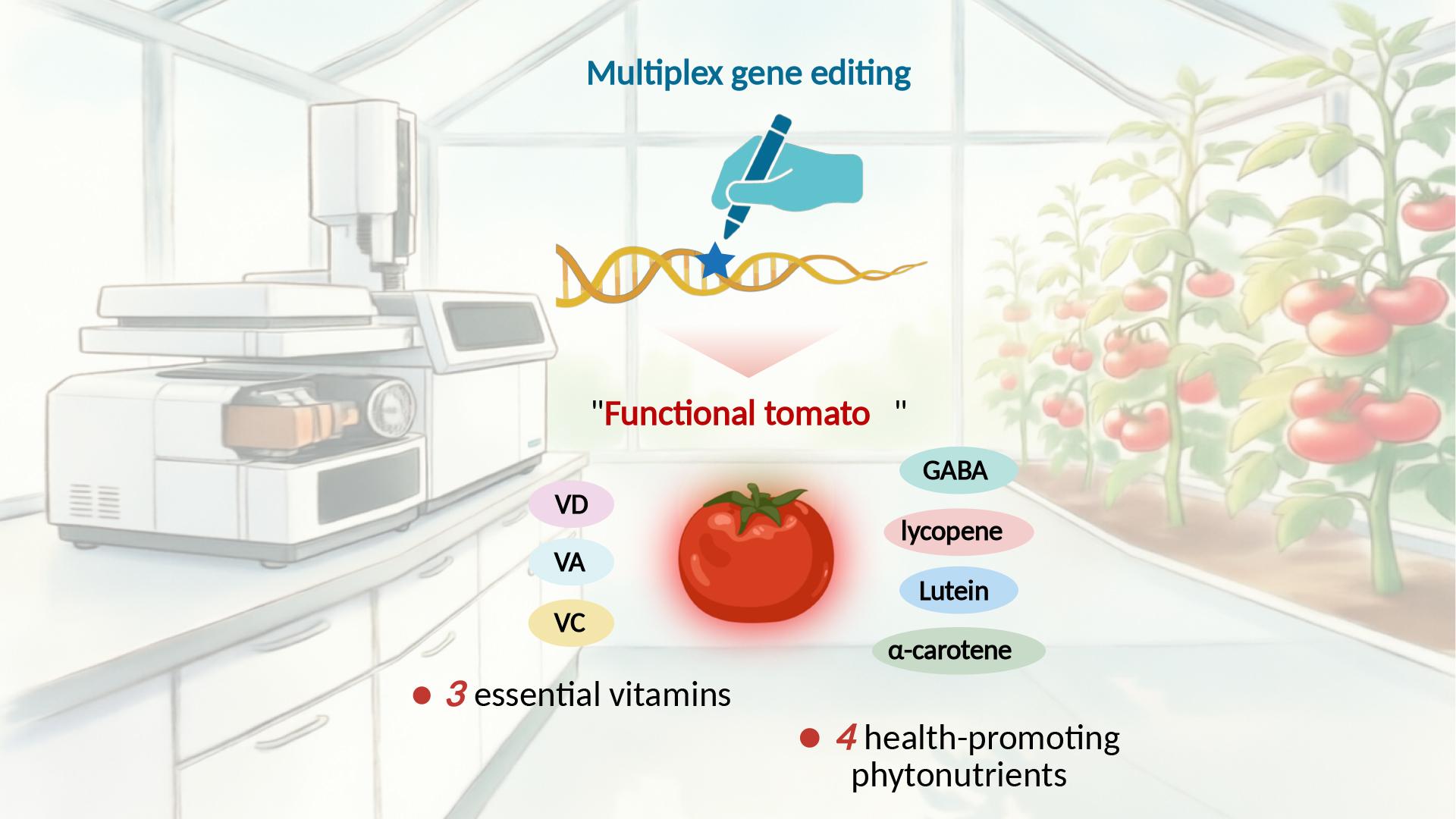
The research team led by Prof. Jian-Kang ZHU from the School of Medicine and the Institute of Advanced Biotechnology at the Southern University of Science and Technology (SUSTech) has developed a new generation of “functional tomato.” These tomatoes are enriched with seven important health-promoting phytonutrients. The relevant findings were published under the title “Multiplex gene editing enables the multi-biofortification of essential vitamins and other health-promoting phytonutrients in tomato” in the international academic journal Proceedings of the National Academy of Sciences of the United States of America (PNAS).
“Hidden hunger” refers to malnutrition caused by deficiencies in essential micronutrients, such as vitamins and minerals. More than 2 billion people worldwide suffer from hidden hunger, with children, pregnant women, and the elderly being particularly vulnerable. This is not only a personal health issue but also affects global sustainable development. The United Nations explicitly included “ending all forms of malnutrition” as one of the key goals in the “2030 Sustainable Development Goals.” In China, the Central Document No. 1 of 2024 proposed, for the first time, to “establish a broad agricultural and food perspective” with the core idea being to shift from simply “eating enough” to “eating well” and “eating healthily.” Increasing nutrient intake in daily diets is a key way to achieve this goal.
Tomatoes are one of the most widely consumed vegetables globally, known for their good taste and rich nutrition, and naturally contain health-beneficial compounds such as vitamin C, lycopene, and γ-aminobutyric acid (GABA). However, the levels of these beneficial metabolites in ordinary tomatoes are generally too low, and a single tomato cannot meet the body’s daily nutritional needs. In the past, scientists attempted to use genetic modification technology to enhance the nutritional value of tomatoes. Still, these efforts typically increased the content of only one nutrient and struggled to achieve a synergistic increase of multiple nutrients simultaneously. The emerging gene-editing technology (CRISPR) has allowed precise modification of plant genes, enabled higher and more accurate breeding efficiency and offered advantages in regulatory policies. In 2021, Japan became the first country to market gene-edited “high-GABA tomatoes,” the world’s first generation of functional tomatoes. However, to date, no reports of tomato varieties with multiple enhanced nutrients have been published.
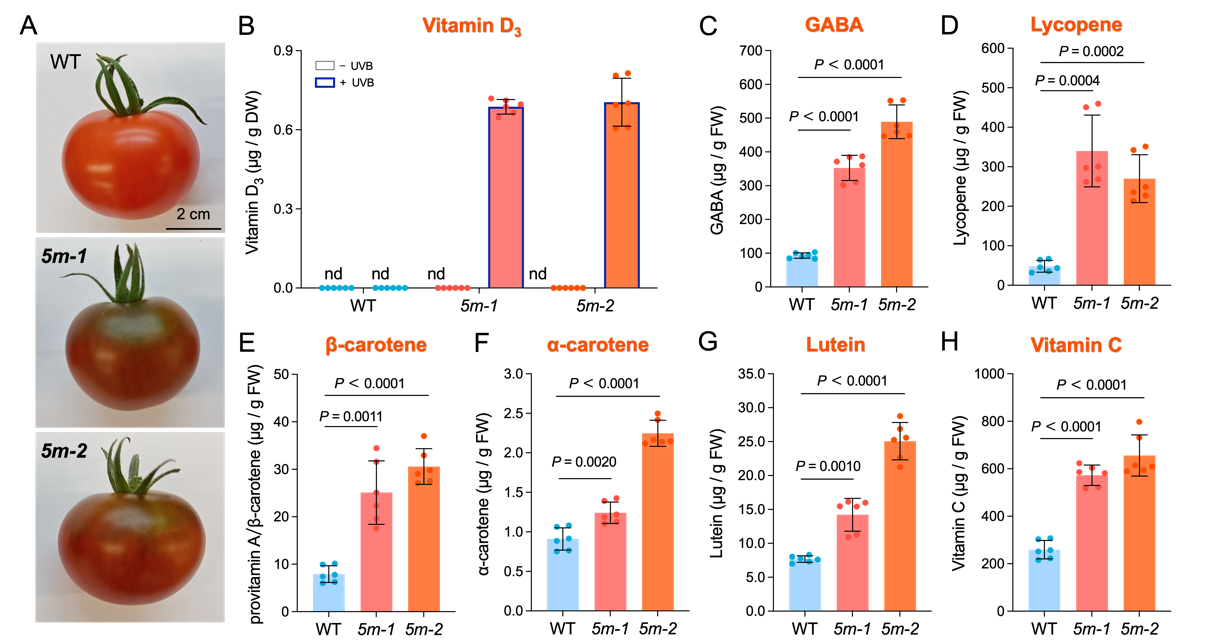
Figure 1. Multiplex gene editing achieves simultaneous increases in seven health-promoting phytonutrients in tomato fruits
To cultivate new tomato varieties that simultaneously enhance multiple beneficial phytonutrients, the research team designed a multiplex gene editing strategy targeting five key genes: Sl7-DR2, SlGAD3, SlSGR1, SlGGP1, and SlGGP2-across four distinct metabolic pathways in tomatoes, aiming to increase vitamin D, GABA, carotenoids, and vitamin C. By genetic transformation and genotyping, they successfully obtained a five-gene-edited tomato without exogenous DNA, referred to as the Five Mutation (5m) tomato (Figure 1). The fruit displayed a distinct and appealing rusty-red color and was agronomically normal, with traits such as plant height and fruit size similar to those of ordinary tomatoes. Further metabolic analysis showed significant increases in the target metabolites in 5m tomatoes. Notably, one such 5m tomato (~30 grams) can meet an adult’s recommended daily intake of vitamin A precursors (β-carotene) and lycopene, and four 5m tomatoes can provide the daily requirement for vitamin C and vitamin D (ordinary tomatoes contain no vitamin D). Moreover, 5m tomatoes can also provide higher levels of GABA, α-carotene, and lutein than ordinary tomatoes.
The research team further explored the health effects of 5m tomatoes. In an in vitro assay, extracts from 5m tomatoes displayed significant inhibition on the growth and migration of colorectal cancer cells HCT116. In a mouse xenograft model, dietary supplementation with 5m tomato powder significantly inhibited tumor growth. Mice fed 5m tomatoes had significantly smaller tumor volumes and weights than the control group after 21 days of treatment (Figure 2). Multiple phytonutrients enriched in 5m tomatoes could work synergistically to produce notable health benefits, demonstrating considerable potential as a “functional food” and meeting the internationally recognized concept of “food as medicine,” which has garnered attention in recent years.
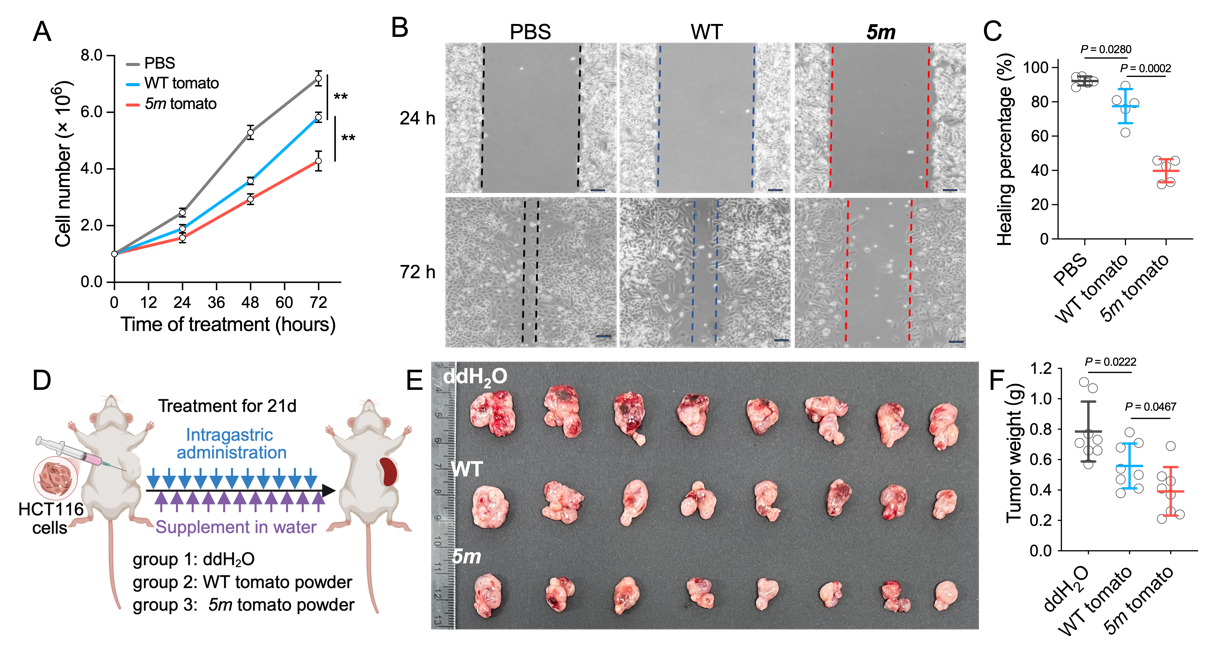
Figure 2. 5m tomatoes can significantly inhibit the growth of HCT116 cells and tumor growth in mice.
This study simultaneously reprogrammed multiple metabolic pathways in tomatoes using multiplex gene editing technology, resulting in “synergistic enhancement of multiple phytonutrients” in a single crop. It provides an important strategy for cultivating a new generation of “functional foods,” which is expected to improve the deficiency of various vitamins and nutritional health substances in daily diets, providing strong scientific and technological support for realizing a “Healthy China” and the United Nations’ “Zero Hunger” goals.
SUSTech is the primary institution of the paper. Research Associate Professor Yechun HONG and Prof. Jian-Kang ZHU from the School of Medicine and the Institute of Advanced Biotechnology at SUSTech are co-corresponding authors. Yechun HONG, Zongjun YU, Wenbo ZHU, and Jialei SUN are equally first authors of the paper. Dr. Zeyao ZHU and Minjie CAO, Research Assistant Professor Yu-Xuan LYU, Professor Zhaobo LANG, Associate Professor Pengpeng LIU, and Professor Zhen WANG from Anhui Agricultural University provided assistance for this paper.
Paper Link: https://doi.org/10.1073/pnas.2603937123
Proofread ByNoah Crockett, Junxi KE
Photo ByInstitute of Advanced Biotechnology