The team led by Junguo LIU from the School of Environmental Science and Engineering at the Southern University of Science and Technology (SUSTech), together with collaborators, published a research paper titled “Climate warming drives thermal shocks and accelerated freshwater habitat fragmentation” in Nature Climate Change. The team combined freshwater fish distributions with a global river network and analysed simulated river water temperatures from 1976 to 2099. A short-term extreme thermal event was defined as at least three consecutive weeks in which mean weekly water temperature exceeded a species-specific threshold. Long-term exposure occurred when at least one such short-term event was recorded in each of five or more consecutive years. For each species, the threshold was set at the 97.5th percentile of the long-term mean annual maximum weekly temperature across its extent of occurrence during 1976–2005. Rather than relying on static future snapshots, the analysis tracked the magnitude, abruptness, and timing of accumulating thermal exposure.
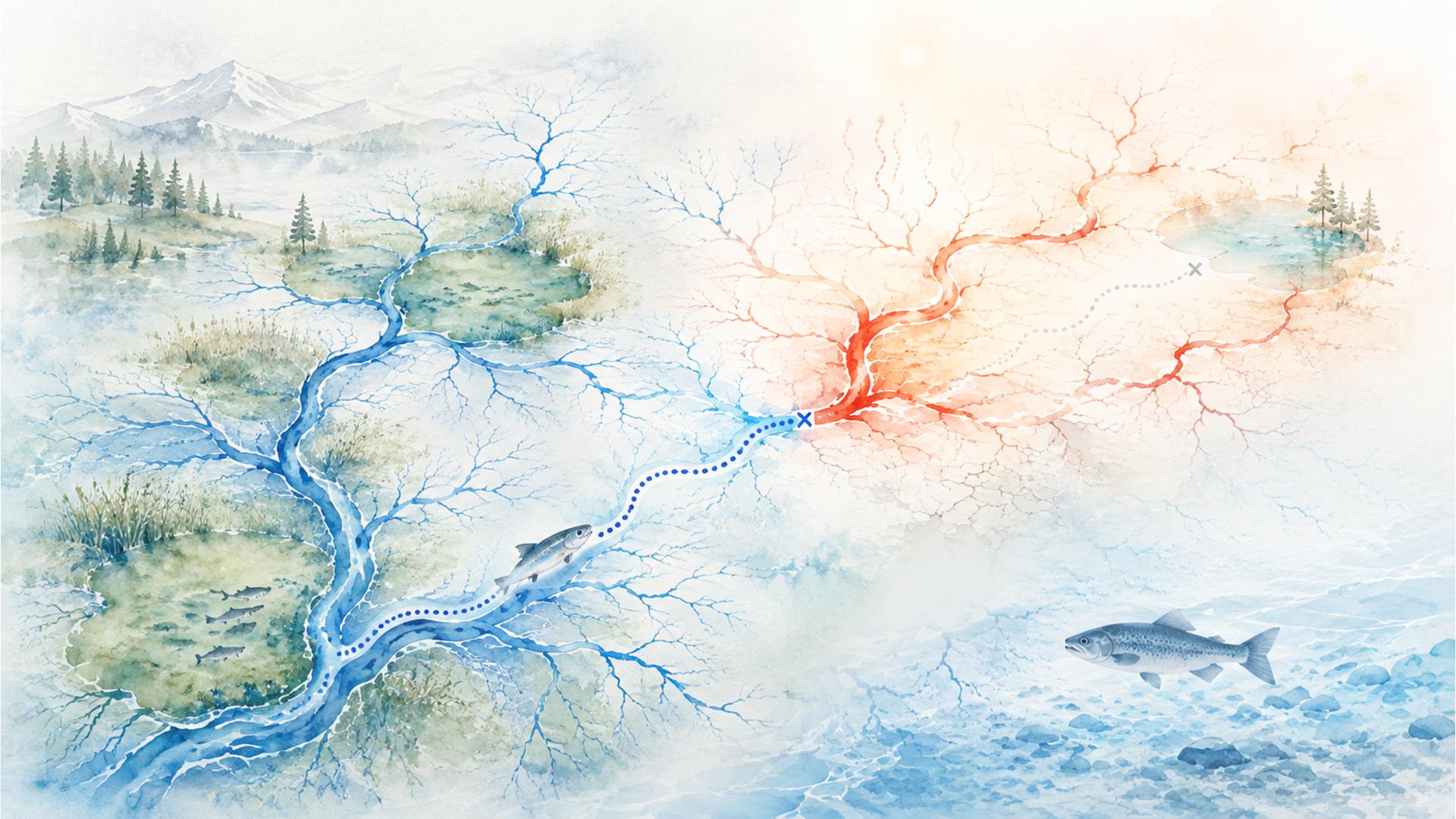
Under the high-emissions scenario (RCP8.5), 63% of global fish assemblages are projected to have at least one species exposed to prolonged, unprecedented extreme temperatures before 2100, compared with 38% under RCP4.5 and 25% under RCP2.6. Tropical regions face a greater cumulative magnitude of long-term exposure, whereas non-tropical regions are more vulnerable to intense short-term extremes. Exposure is also highly abrupt: under RCP8.5, mean assemblage-level abruptness reaches 64%, meaning that nearly two-thirds of ultimately exposed species become newly exposed within the single decade of maximum exposure.
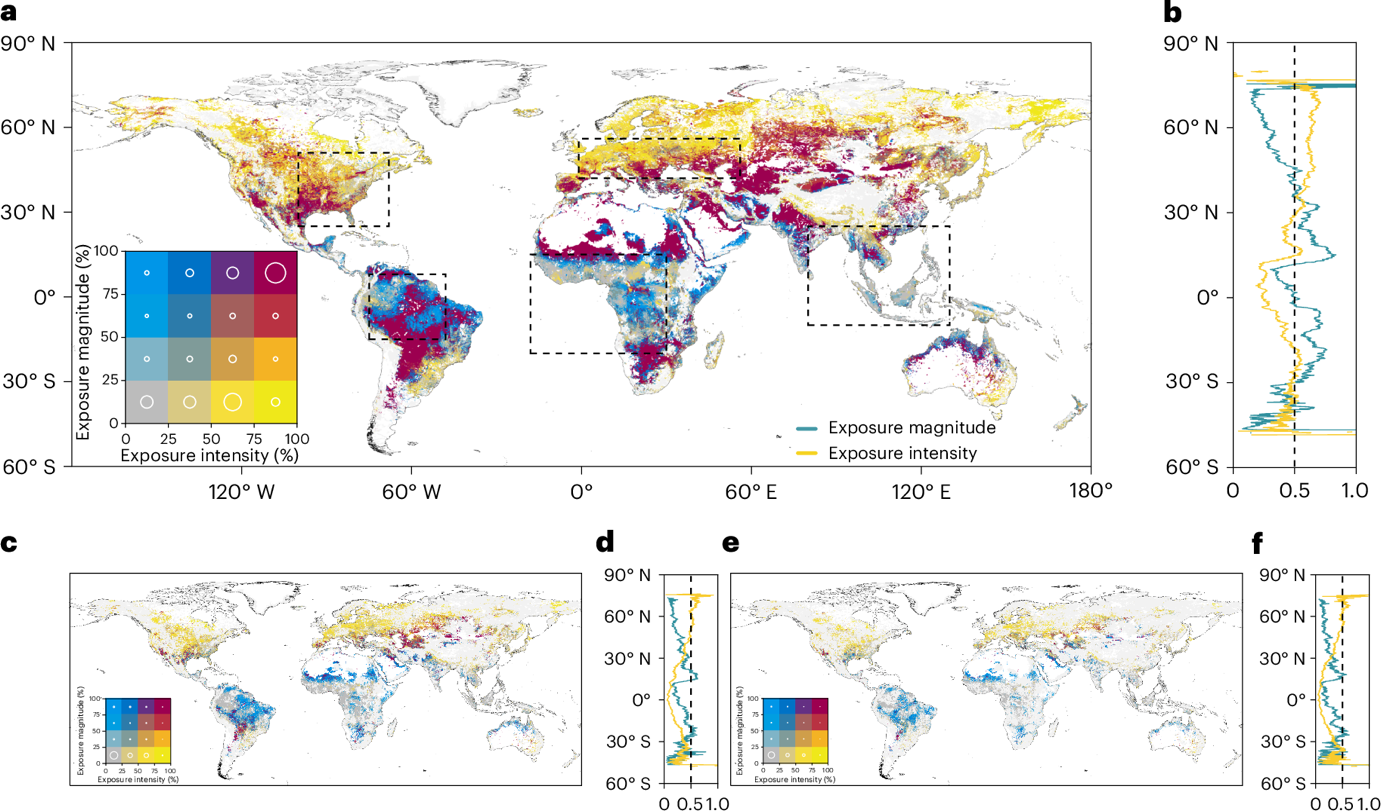
Figure 1. Spatial patterns of freshwater fish assemblages’ thermal exposure magnitude and intensity due to extreme thermal events by 2099
To capture climate-induced risks arising from spatially heterogeneous thermal regimes and warming across river networks, the researchers introduced thermal fragmentation exposure (TFE). This metric integrates water temperature change, river network structure, and species-specific thermal thresholds to quantify how overheated reaches impede movement between thermally suitable habitats. Under RCP8.5, the proportion of species at high risk (a climate-driven increase in TFE, noted as ΔTFE, greater than 20%) rises from 7% in the 2020s to 40% in the 2050s and 81% in the 2080s. By the end of the century, 63% of species show an accelerating increase in TFE. The global summaries of ∆TFE highlight that RCP2.6 will delay the most-at-risk species (∆TFE > 20%) under TFE by 68 years compared to RCP8.5, providing an adaptation window for 72% of species.
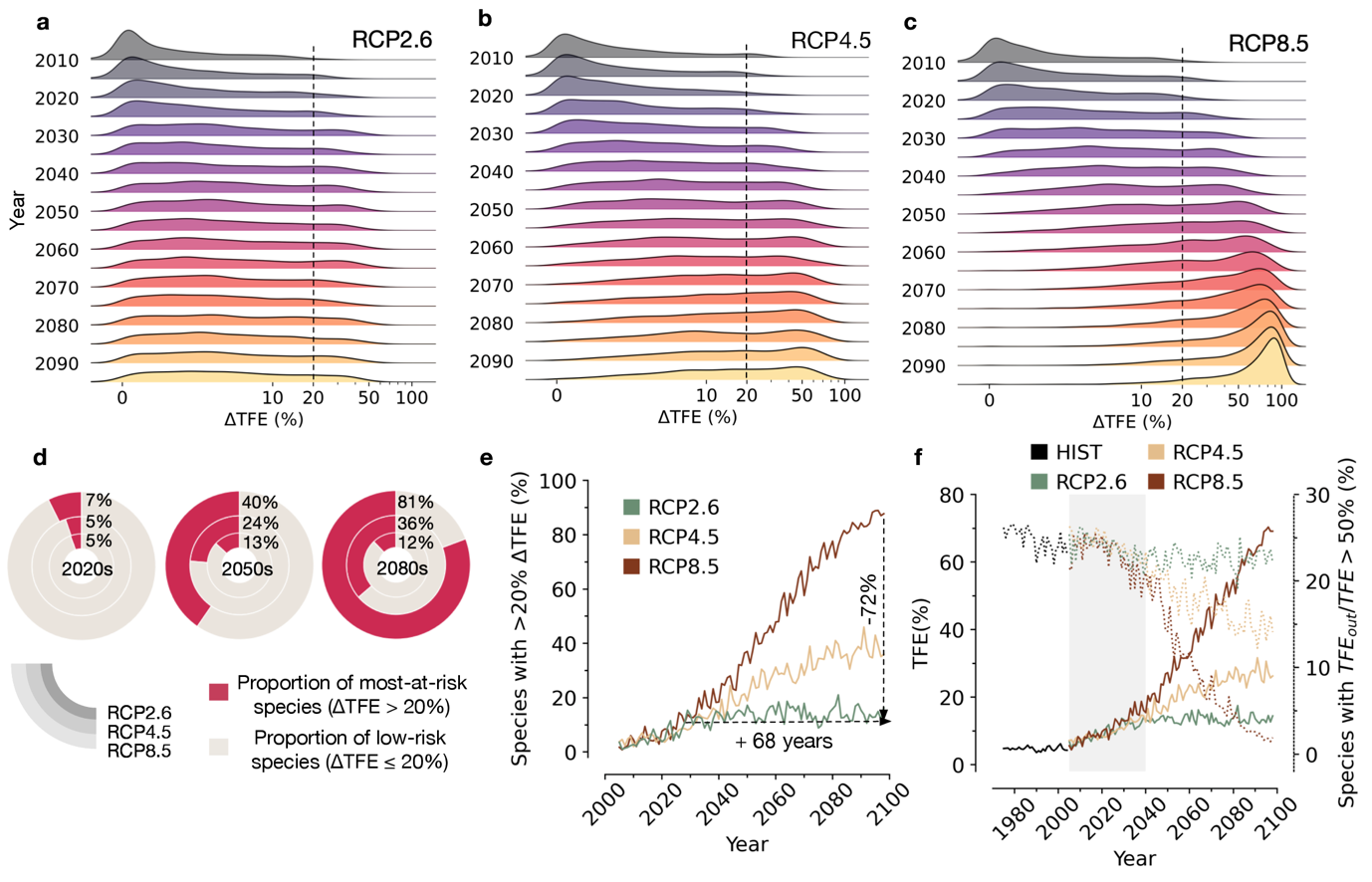
Figure 2. Comparison of TFE among species across different periods and scenarios.
The study further shows that, during the early stages of warming, more than 20% of species experience over half of their TFE increase in reaches outside their current ranges but hydrologically connected to occupied habitats. Conservation planning should therefore protect not only currently occupied habitat patches but also river reaches beyond species’ present ranges that are critical for maintaining thermal connectivity. The TFE framework can serve as an early-warning and risk-screening tool for targeted monitoring and freshwater biodiversity conservation at both basin and species levels.
Hong WANG, a joint PhD student in the School of Environmental Science and Engineering at SUSTech and the School of Geography at the University of Leeds, is the first author. Professor Junguo LIU is the corresponding author, and SUSTech is the first affiliation. The other co-authors are Professor Joseph Holden and Dr. Megan Klaar from the University of Leeds, Penghan CHEN from SUSTech, and Dr. Valerio Barbarossa from Leiden University and the PBL Netherlands Environmental Assessment Agency. SUSTech is the first affiliated institution of the paper.
Paper Link: https://www.nature.com/articles/s41558-026-02731-9
Proofread ByNoah Crockett, Junxi KE
Photo ByYan QIU