A joint research team from the Department of Physics at the Southern University of Science and Technology (SUSTech), the State Key Laboratory of Quantum Functional Materials, and the Quantum Science Center of Guangdong-Hong Kong-Macao Greater Bay Area, in collaboration with the University of Science and Technology of China, Shanghai Jiao Tong University, and Tsinghua University, made significant progress in studying the electronic structure of bilayer nickelate superconducting films. The team used Angle-Resolved Photoemission Spectroscopy (ARPES) with variable photon energy to systematically analyze the three-dimensional electronic structure of ambient-pressure superconducting (La, Pr, Sm)3Ni2O7 films, revealing that different orbitals have different dimensional characteristics, and found a superconducting gap of about 18 meV on the γ band dominated by the dz2 orbital. The related results were published in the international physics journal Physical Review X under the title “Three-Dimensional Electronic Structures in Superconducting Ruddlesden-Popper Bilayer Nickelate Films.”
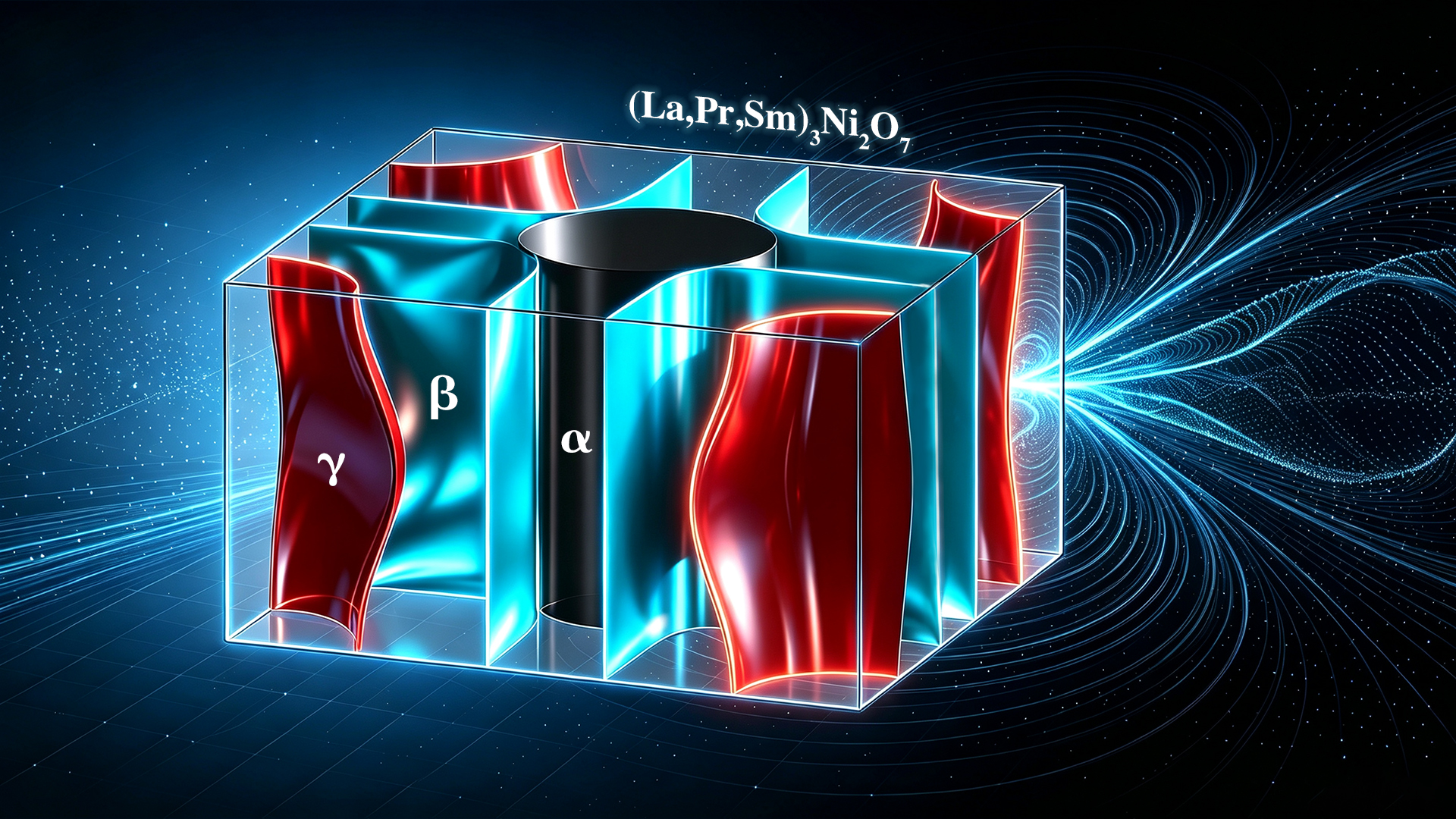
Copper oxide high-temperature superconductors are usually seen as typical quasi-two-dimensional systems. The recently discovered Ruddlesden-Popper bilayer nickelates are a bit different. Near the Fermi level, both the dx2-y2 and dz2 orbitals exist, and the interlayer coupling from the multilayer structure might directly participate in superconducting pairing. So, whether the third dimension is just a minor correction or an essential degree of freedom has become a key question for understanding their superconducting mechanism. In particular, the γ band formed by the dz2 orbital, whether it crosses the Fermi energy, how it evolves with out-of-plane momentum, and whether it directly participates in superconductivity has been a topic of theoretical debate. Traditional ARPES measurements using a single photon energy mainly give information about a particular kz slice, making it hard to answer the full 3D question. At the same time, bilayer nickelates are highly sensitive to oxygen loss, and samples tend to degrade easily during transfers.
To tackle the experimental challenges mentioned above, the team used a super-oxidizing atomic layer-by-layer epitaxy method to grow high-quality (La,Pr,Sm)3Ni2O7/SrLaAlO4 films. Reflection high-energy electron diffraction, X-ray diffraction, and scanning transmission electron microscopy all confirmed the atom-by-atom growth and high crystallinity of the films. Transport measurements showed that the samples have a superconducting onset temperature of around 48 K. After growth, the samples were quickly cooled to below 200 K and transferred to a synchrotron ARPES beamline via a low-temperature ultra-high vacuum transfer chamber. This process minimized oxygen loss during the transfer, providing a reliable basis for measuring intrinsic energy bands and gaps.
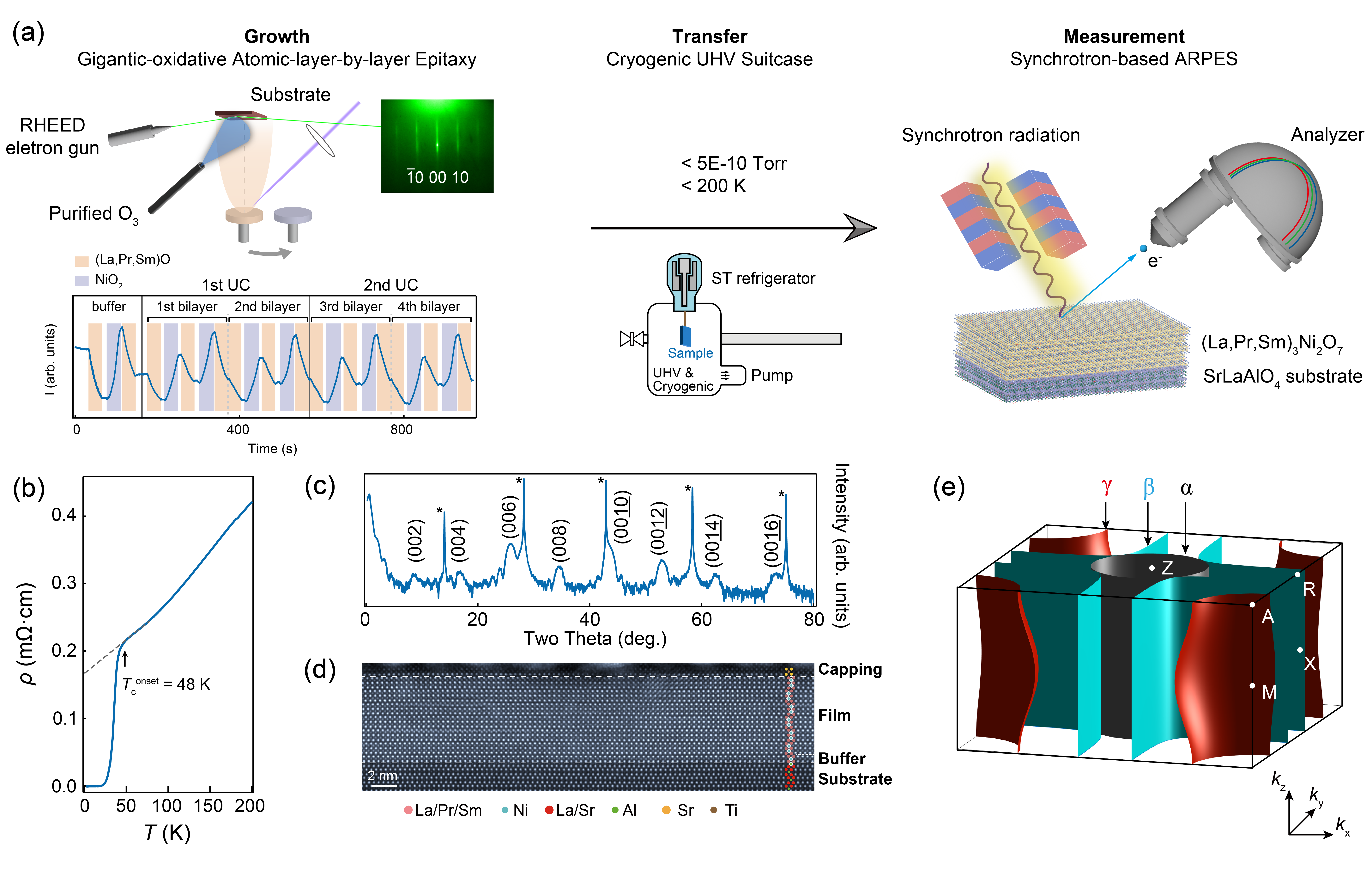
Figure 1. A schematic of the full process for sample growth, transfer, and measurement, along with quality characterization.
Measurements show that the energy band contributed by the dx2-y2 orbital changes very little along the kz direction, maintaining quasi-two-dimensional characteristics. In contrast, the γ band dominated by the dz2 orbital exhibits clear kz dispersion and continuously crosses the Fermi level in the measured three-dimensional momentum space. This orbital-selective dimensionality indicates that bilayer nickelates cannot be simplified as strictly two-dimensional systems, as interlayer coupling participates in their low-energy electronic structure. The study also points out that the intensity of the γ band weakens or almost disappears at certain photon energies, mainly due to the photoelectron matrix element effect varying with kz, and this does not mean the band actually vanishes from the Fermi surface. The bilayer structure’s spatial periodicity in the films causes the γ band to show corresponding periodicity along kz.
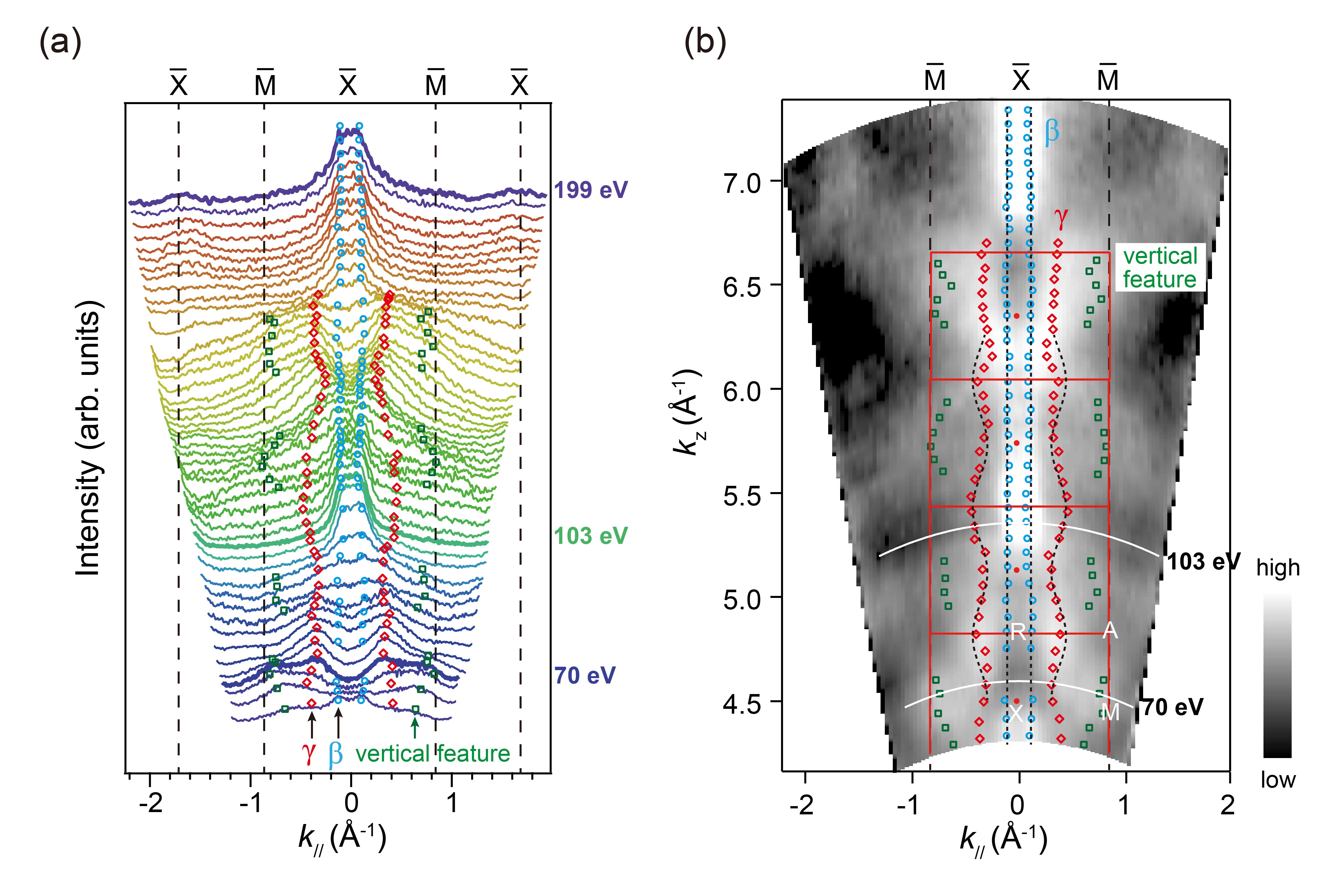
Figure 2. kz dispersion of bilayer nickelate superconducting thin films.
Regarding the superconducting gap, the team systematically measured the α, β, and γ bands along several high-symmetry directions, and in all cases observed a finite gap, supporting a nodeless pairing picture. Temperature-dependent analysis of the γ band shows that its gap is about 18 meV at 9.5 K, corresponding to 2Δ/kBTc of around 8, significantly higher than the 3.5 predicted by weak-coupling BCS theory. This result confirms that the dz2 orbital is involved in the superconducting pairing and strong-coupling pairing picture. The experiment also found that the spectral weight suppression of the γ band near the Fermi level persists even above the superconducting transition temperature and extends up to about 90 K, suggesting the possible presence of pseudogap-like behavior.
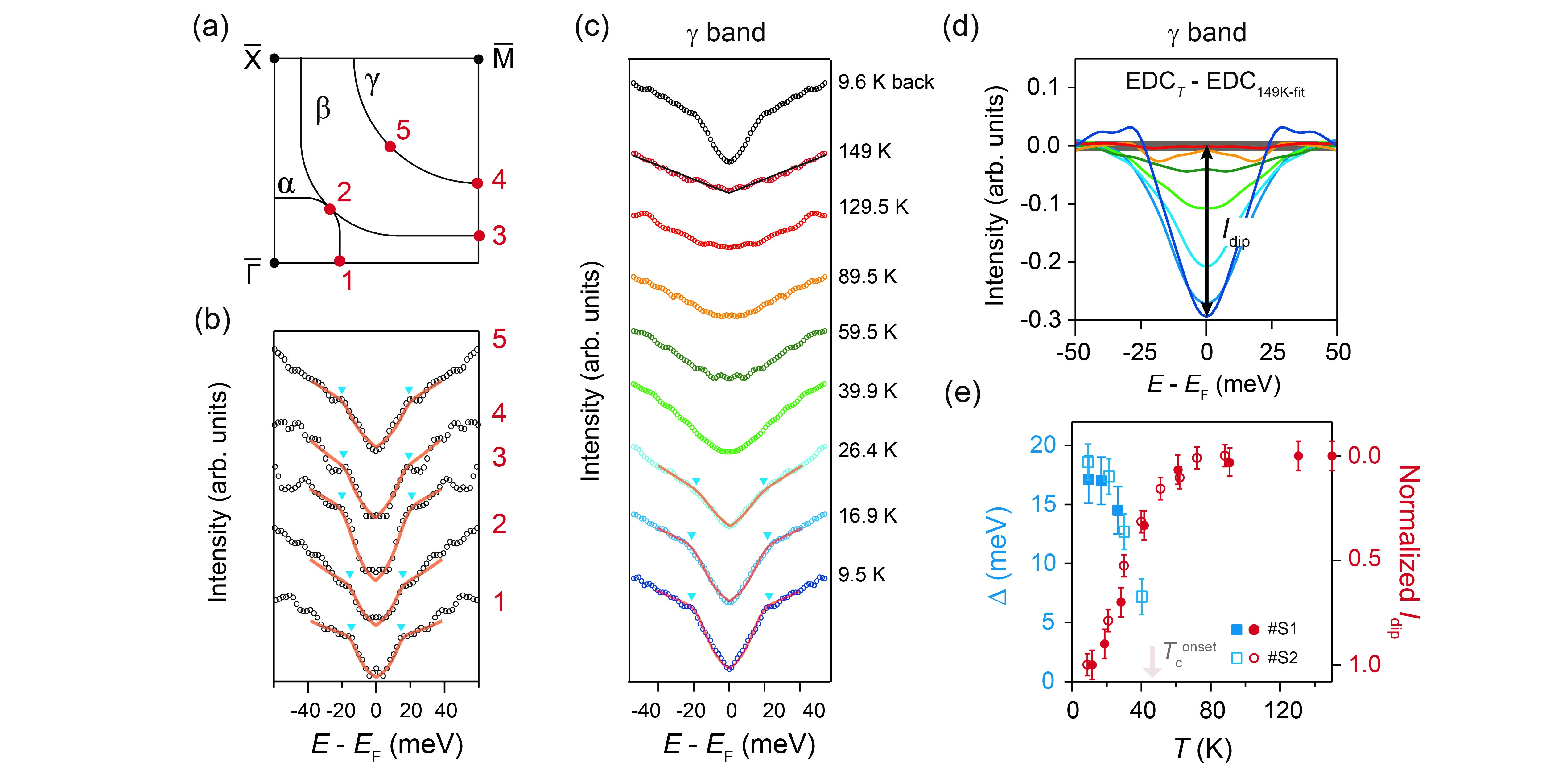
Figure 3. Superconducting gaps of bilayer nickelate superconducting thin films.
This study built a continuous experimental evidence chain for bilayer nickelate superconducting thin films, covering the 3D Fermi surface, orbital-resolved dispersions, and superconducting gaps. The results reveal that different orbitals have different dimensionalities, and through the superconducting gap and spectroscopic features on the γ band, they show the joint role of the dz2 orbital and electron correlations in nickel-based superconductivity. These findings suggest that relevant theoretical models need to go beyond strict two-dimensional approximations and handle bilayer structures, out-of-plane orbital coupling, and multi-orbital electron correlations within a unified framework.
SUSTech is the primary institution for this paper. Research Assistant Professor Yueying LI and PhD students Lizhi XU and Wei LU from the Department of Physics at SUSTech are co-first authors; Assistant Researcher Peng LI from the Quantum Science Center of Guangdong-Hong Kong-Macao Greater Bay Area, and Qikun XUE and Zhuoyu CHEN from SUSTech and the State Key Laboratory of Quantum Functional Materials are corresponding authors.
Paper Link: https://doi.org/10.1103/466c-8sl4
Proofread ByNoah Crockett, Junxi KE
Photo By