A research team led by Professor Jianchun WANG from the Department of Mechanics and Aerospace Engineering at the Southern University of Science and Technology (SUSTech) has recently reported new insights into the mechanisms of skin friction and heat flux generation in turbulent boundary layers over a hypersonic lifting body. The findings were published in Aerospace Science and Technology in a paper entitled “Skin-friction and heat flux generation by wall-attached structures in hypersonic turbulent boundary layers over a lifting body.” The study investigated the turbulent boundary layer over the Hypersonic Transition Research Vehicle (HyTRV) model by combining a skin friction decomposition based on the Renard-Deck formula with a heat flux decomposition derived from the total energy equation.
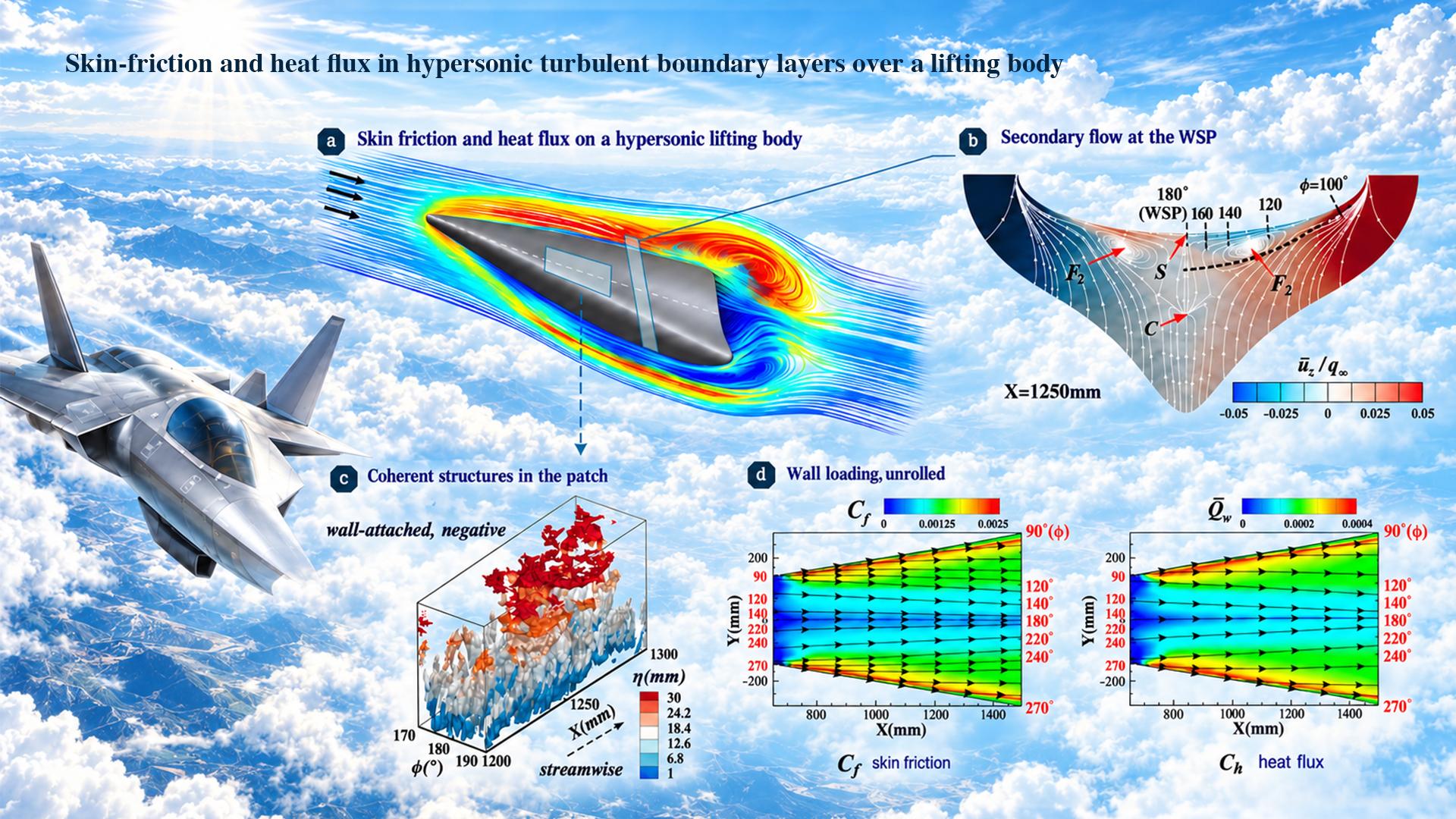
Friction drag and aerodynamic heating are major considerations in hypersonic vehicle design, affecting flight energy consumption and thermal protection requirements, respectively. Turbulent boundary layers over vehicle surfaces are important regions of momentum and energy transport, and the flow within them directly influences the distributions of skin friction and wall heat flux. Understanding how these surface loads are generated is therefore essential for improving the reliability of aerothermal predictions and exploring approaches to reducing drag and thermal loads.
The vehicle geometry and parameter settings are shown in Figure 1. Surface friction drag and aerodynamic thermal loads directly affect vehicle drag, thermal protection design, and overall performance. For realistic vehicle configurations, the three-dimensional geometry of the windward surface can induce secondary flows and pronounced nonuniformity in the boundary layer, making the mechanisms of skin friction and heat flux generation more complex than those in canonical configurations such as flat plates and channels. Identifying the structures that dominate momentum and heat transport in turbulent boundary layers over complex lifting bodies is important for developing drag and thermal load reduction strategies, as well as improving turbulence models. This study examined the fully developed turbulent boundary layer on the windward side of the vehicle, spanning φ = 90-270° (Fig. 1), at Mach 6 and an angle of attack of 2°. By systematically analyzing the mechanisms of friction drag and heat flux generation in different regions, the researchers clarified how flow structures over complex curved surfaces influence these processes.
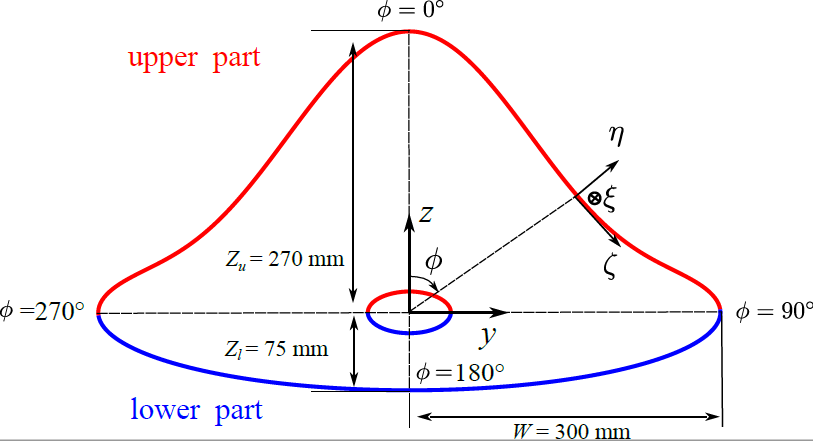
Figure 1. Cross-sectional views of the forebody and aftbody, and a side view of the HyTRV model.
The researchers found that, near the windward symmetry plane of the HyTRV model, flow converges from both sides and forms a large-scale secondary circulation. This circulation strengthens the outer shear layer and Kelvin-Helmholtz instability, thereby increasing turbulence intensity in the outer region. By contrast, at the φ = 140° meridional plane farther from the windward symmetry plane, the influence of secondary flow is substantially weaker, and the flow more closely resembles a canonical zero-pressure-gradient turbulent boundary layer over a flat plate (Fig. 2). Comparing these two representative regions allowed the researchers to examine how secondary flows induced by complex geometry modify the mechanisms of friction drag and heat flux generation.
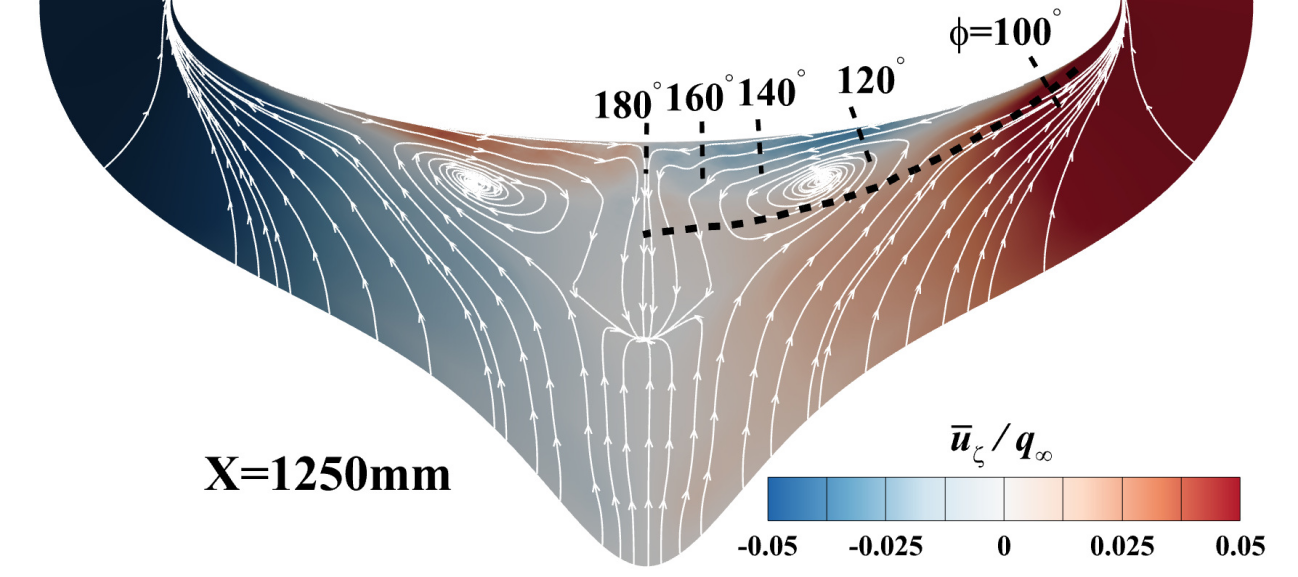
Figure 2. Mean azimuthal velocity and streamlines in the cross section at X = 1,250 mm on the windward side of the HyTRV model, showing the large-scale secondary flow near the windward symmetry plane.
The decomposition results showed that the Reynolds stress terms make the largest contributions to both skin friction and heat flux generation. Near the windward symmetry plane, secondary flow significantly enhances the contributions of outer-region Reynolds stresses to friction drag and heat flux. Farther from the symmetry plane, these outer-region contributions decrease markedly, and the inner and logarithmic regions become the dominant contributors. As the flow develops downstream, large-scale energetic motions gradually weaken despite an increase in the friction Reynolds number, leading to an overall decrease in the Reynolds stress contributions to friction drag and heat flux.
Figures 3 and 4 show the streamwise distributions of the skin friction and heat flux coefficients, respectively, together with their decomposition terms, in the two representative meridional planes. Near the windward symmetry plane at φ = 180°, the Reynolds stress terms contribute substantially to friction drag and heat flux, although their contributions gradually diminish downstream. At φ = 140°, where secondary flow effects are weaker, the spatial evolution of friction drag and heat flux more closely resembles that of a canonical flat-plate turbulent boundary layer.
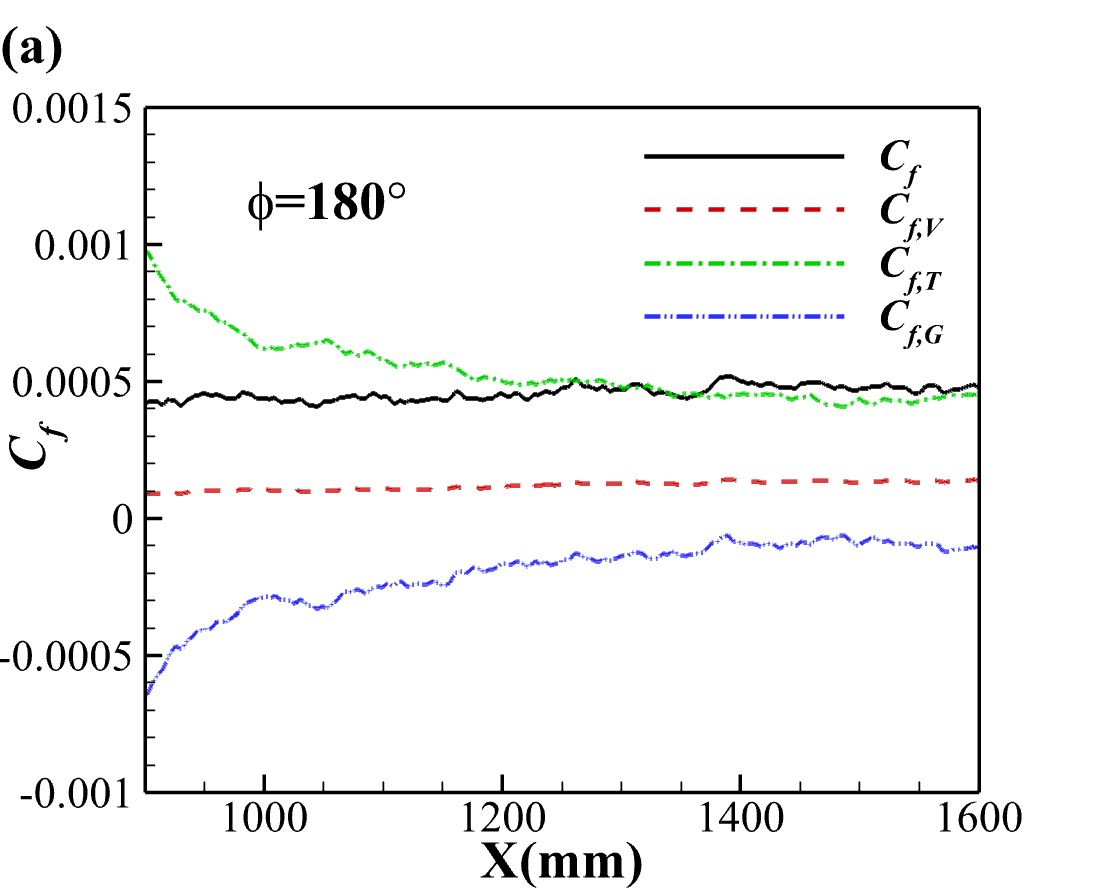
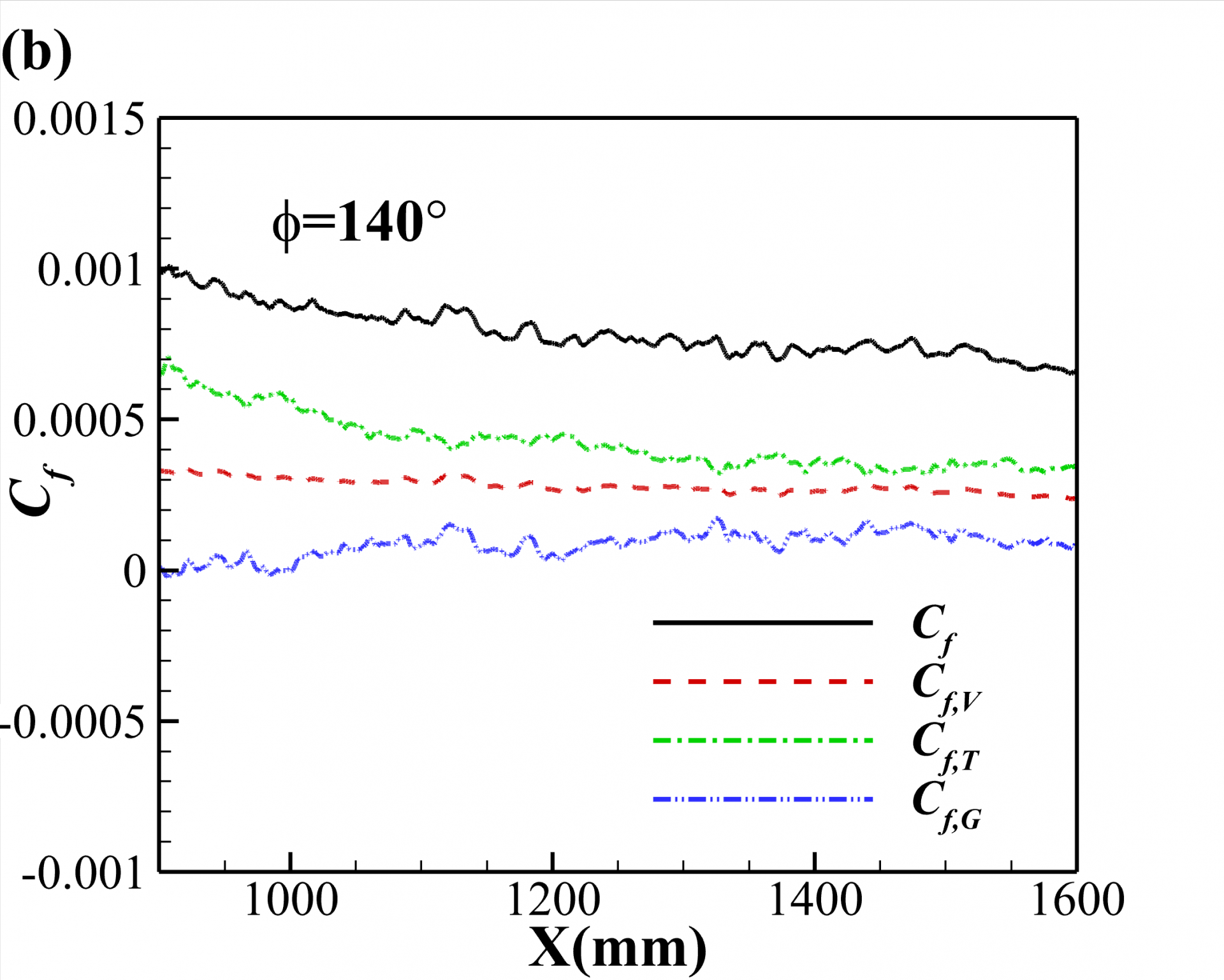
Figure 3. Streamwise distributions of the skin friction coefficient C_f and its decomposition terms in the φ = 180° and φ = 140° meridional planes.
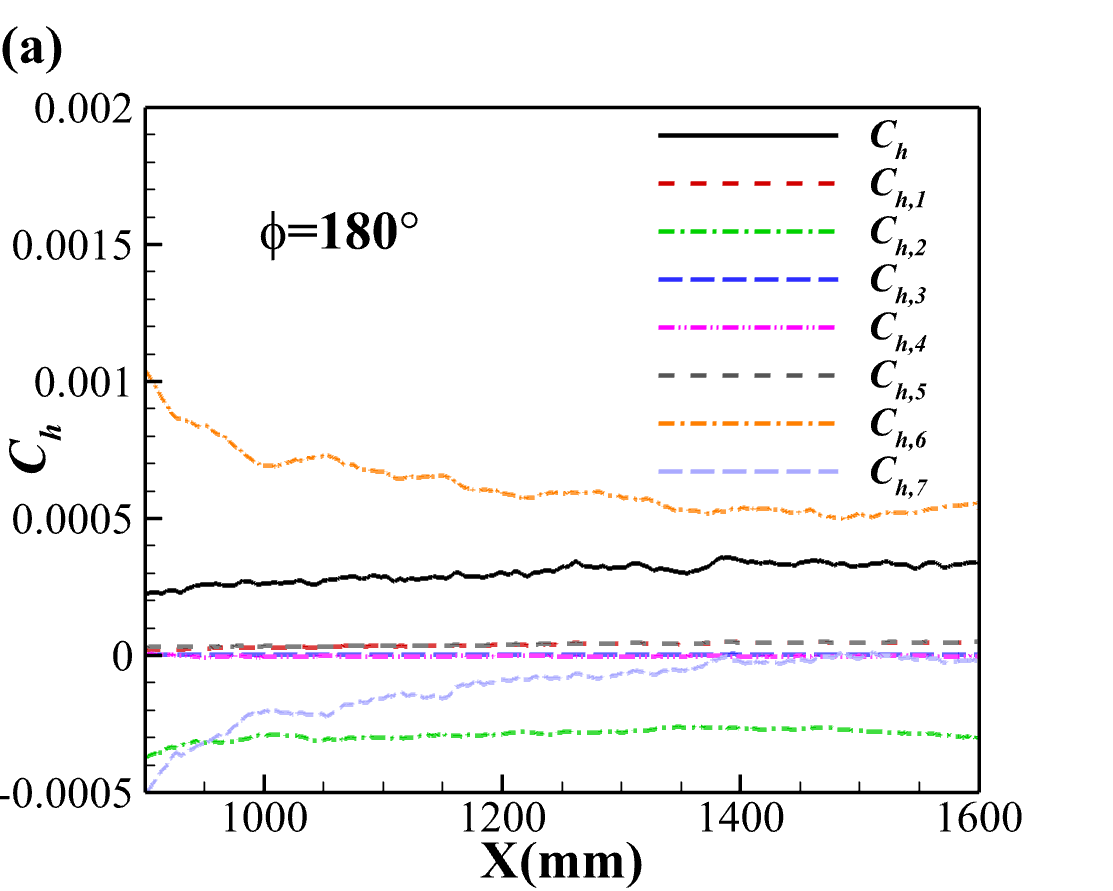
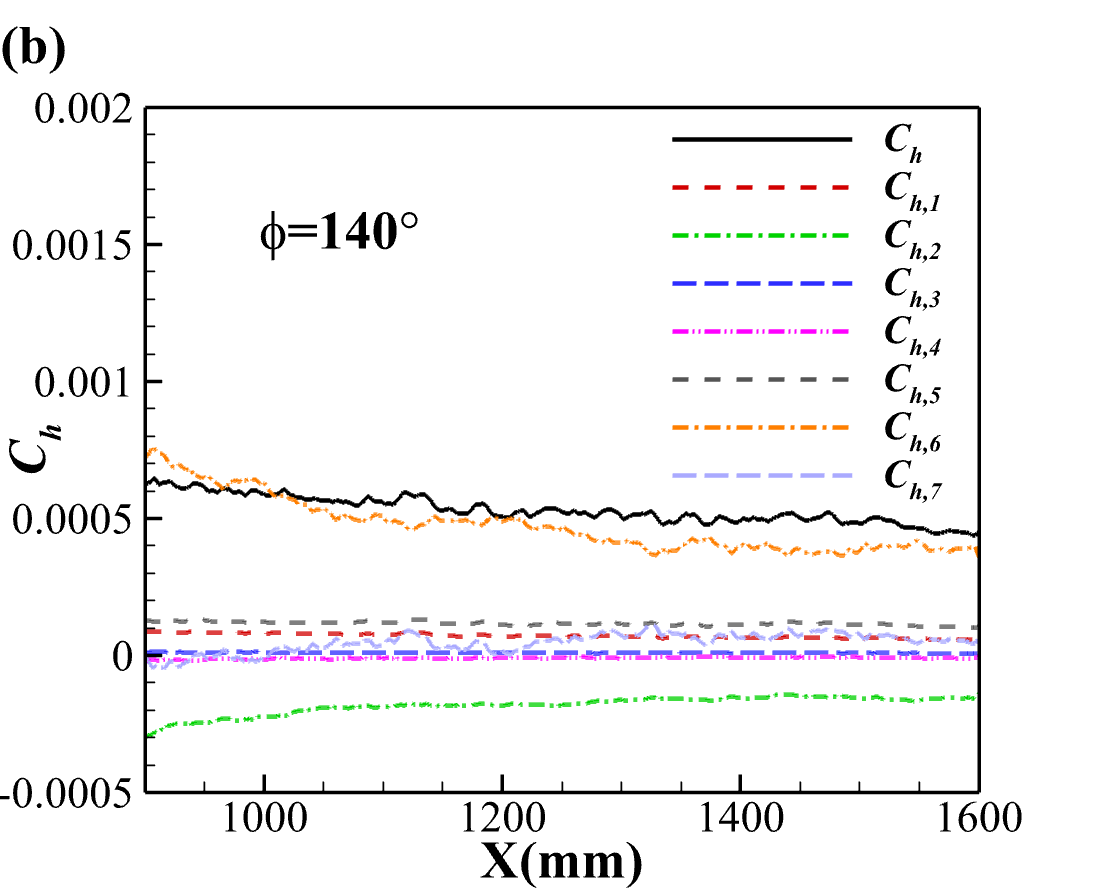
Figure 4. Streamwise distributions of the wall heat flux coefficient C_h and its decomposition terms in the φ = 180° and φ = 140° meridional planes.
Figure 5 further separates the Reynolds stress contributions into those from the inner, logarithmic, and outer regions. The outer-region contributions dominate near the windward symmetry plane, consistent with the enhancement of large-scale outer-region structures by secondary flow. At φ = 140°, the outer-region contributions are substantially reduced, while the inner and logarithmic regions become the main contributors. This comparison demonstrates that secondary flows induced by complex geometry can significantly alter the mechanisms of friction drag and heat flux generation by modulating large-scale structures in the outer region.
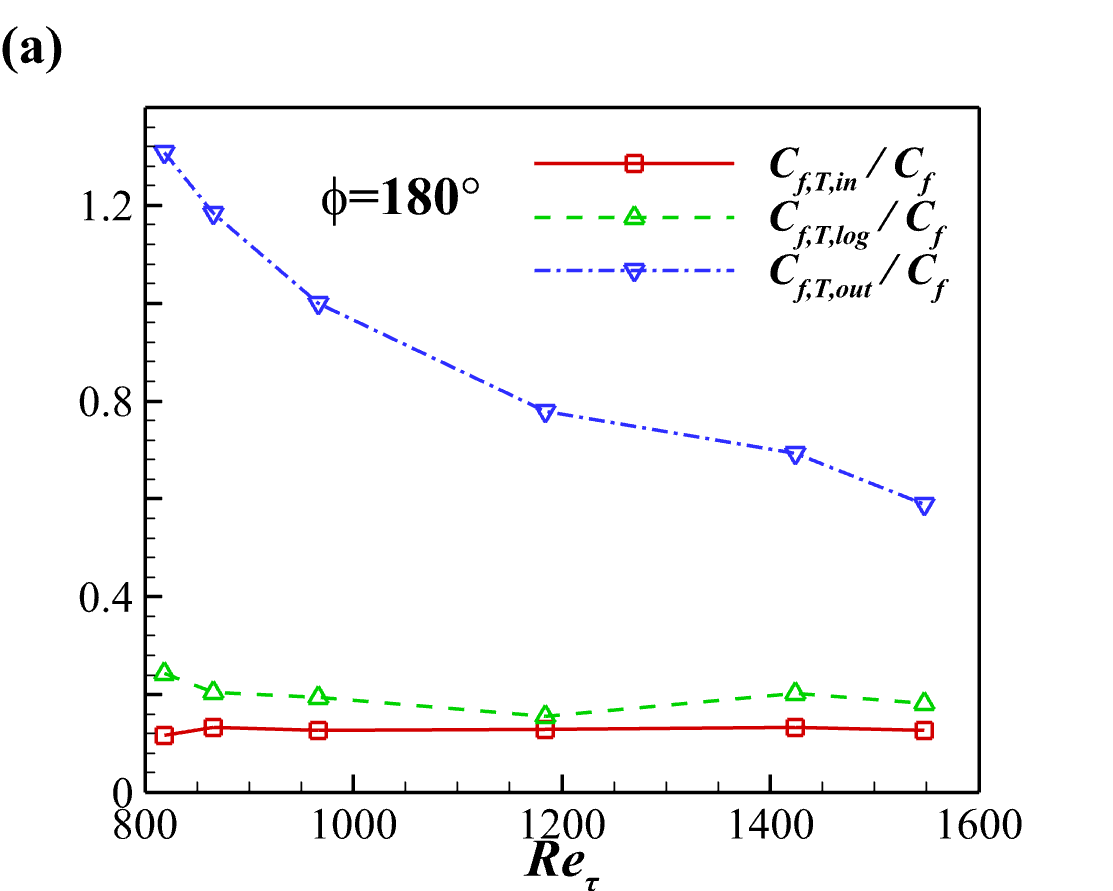
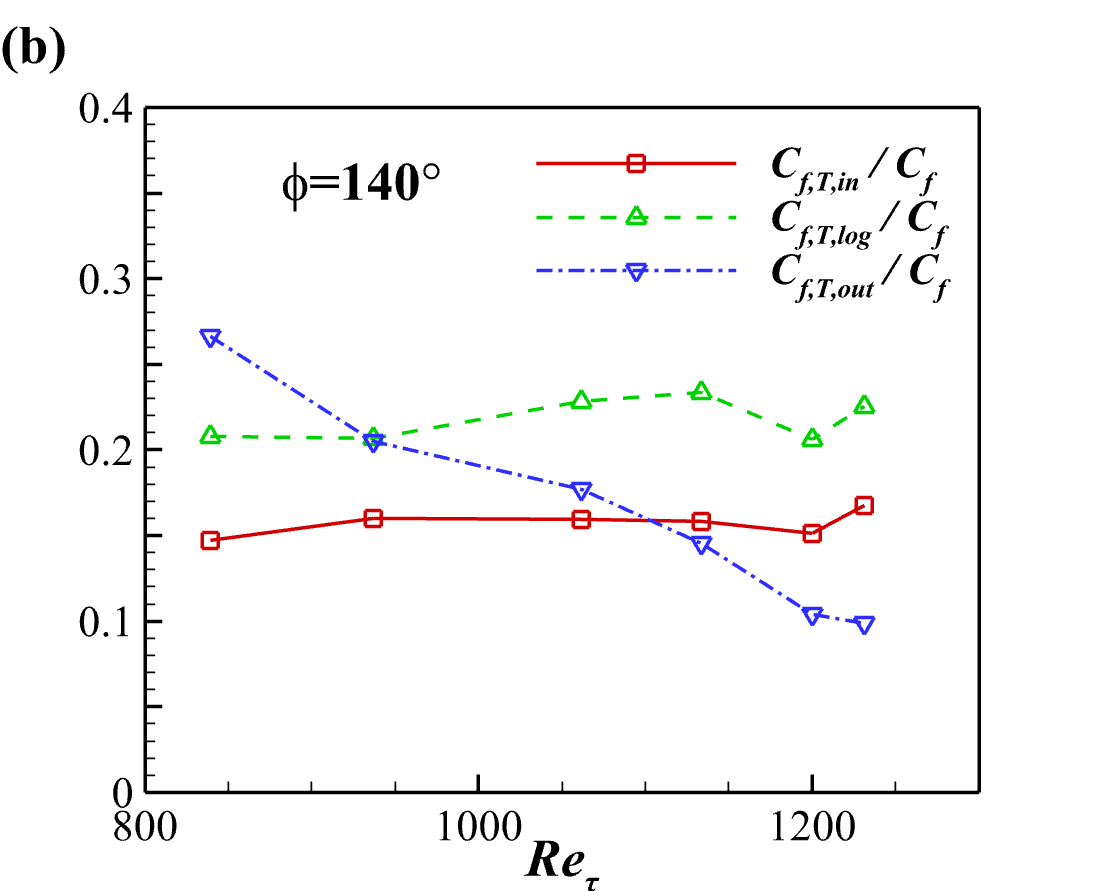
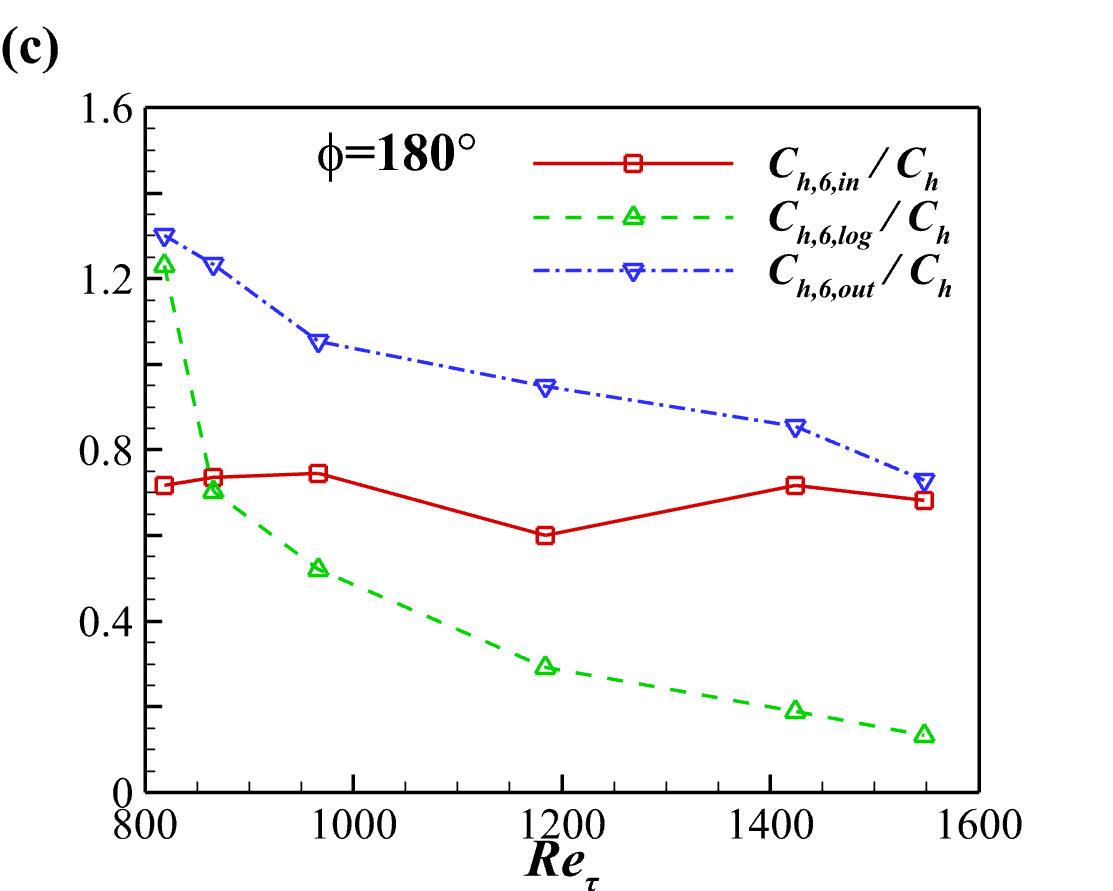
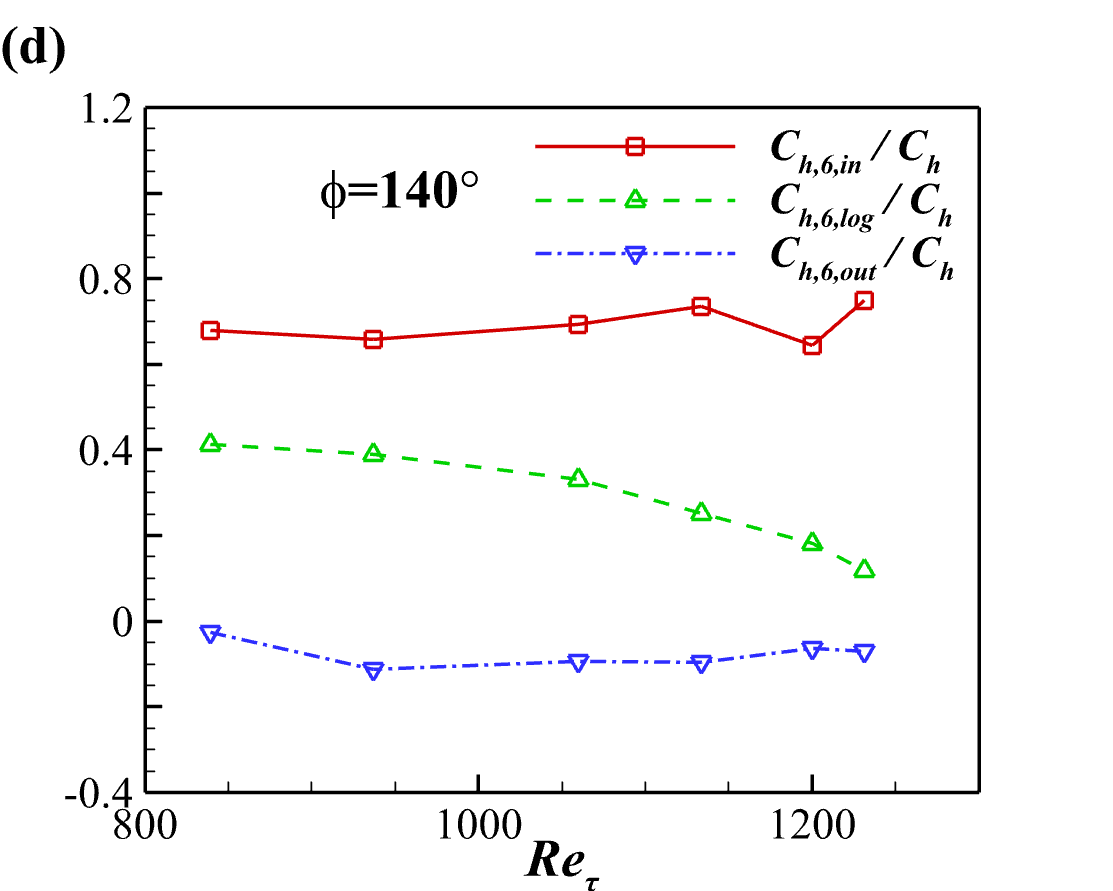
Figure 5. Contributions of the Reynolds stress terms from the inner, logarithmic, and outer regions to skin friction and wall heat flux.
To identify the structures responsible for these Reynolds stress contributions, the researchers identified and statistically analyzed density-weighted Reynolds shear stress structures (Fig. 6). Wall-attached negative shear stress structures, which are intense fluctuating structures associated with ejection and sweep motions, made the largest contributions to the Reynolds stress terms. Contributions from wall-attached positive structures were close to zero, while the positive and negative contributions from wall-detached structures largely canceled each other out. Wall-attached negative structures originate in the near-wall region and extend toward the boundary layer edge, with sizes comparable to the boundary layer thickness. They therefore provide an important link between near-wall processes and large-scale motions in the outer region.
Quantitative analysis showed that intense negative structures occupied only approximately 8% of the volume, yet contributed more than the background turbulence, which occupied approximately 90%. In particular, large-scale wall-attached negative structures with heights comparable to the boundary layer thickness accounted for 82.9% of the contribution made by wall-attached structures to the Reynolds stress term in the skin friction decomposition. Their contribution corresponded to approximately 42.7% of the mean skin friction. For heat flux, these structures accounted for 81.4% of the contribution made by wall-attached structures to the corresponding Reynolds stress term, equivalent to approximately 71.8% of the mean wall heat flux. These findings demonstrate that a small volume fraction of intense coherent structures can make disproportionately large contributions to wall momentum and heat transport over complex hypersonic configurations.
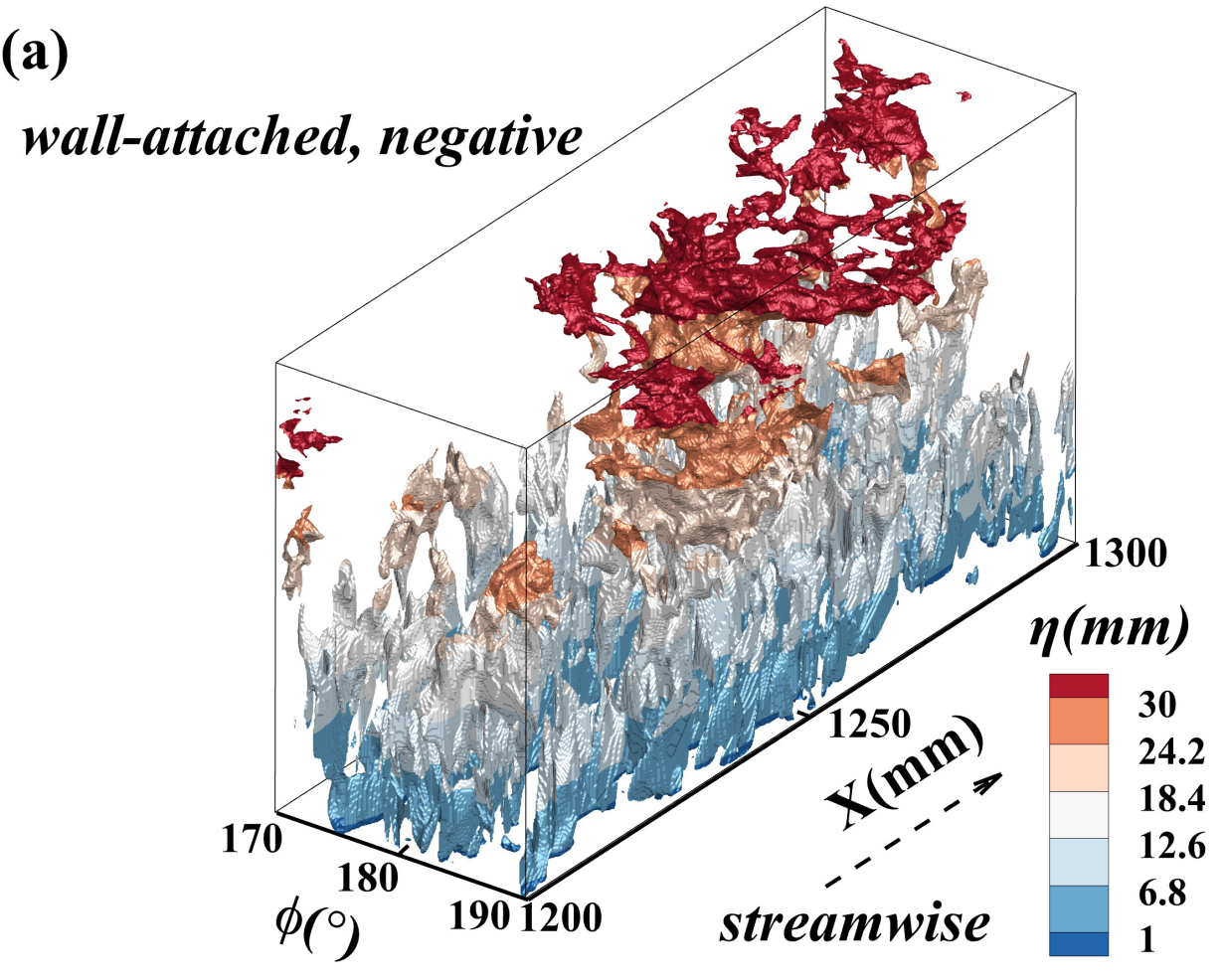
Figure 6. Wall-attached negative Reynolds shear stress structures in the instantaneous flow field near the windward symmetry plane.
By combining quantitative decompositions of skin friction and heat flux with turbulence structure identification, this study reveals how secondary flows induced by complex geometry modify wall momentum and energy transport through their influence on large-scale wall-attached structures. The findings show that understanding friction and heat transfer at the wall requires consideration of both near-wall motions and large-scale structures that extend toward the boundary layer edge, together with the interactions between them. The substantial contributions from a small population of intense fluctuating structures provide a physical basis for explaining spatial variations in skin friction and heat flux over complex lifting bodies. They also offer a structural interpretation of the relationship between these two surface quantities.
These findings can inform the assessment and improvement of turbulence models for complex hypersonic configurations, helping researchers evaluate whether the models adequately capture the effects of secondary flows and large-scale outer-region structures on surface loads. By identifying the structures that contribute most strongly to skin friction and heat flux, along with the regions in which they act, the study also provides guidance for exploring more targeted flow control approaches. Further investigations across a wider range of geometries, flight conditions, and control strategies could build on these insights to support more detailed predictions of skin friction and wall heat flux, optimization of thermal protection layouts, and designs that address both drag and thermal load reduction.
Yuandong CHEN, a Doctoral student in Professor Jianchun WANG’s group, is the first author of the paper, and Professor Jianchun WANG is the corresponding author. Other co-authors include SUSTech Master’s student Ximeng HOU, Research Assistant Professor Xiaoning WANG, and Rikui ZHANG from Tenfong Technology Co., Ltd., Shenzhen. SUSTech is the first-listed institutional affiliation.
Paper Link: https://www.sciencedirect.com/science/article/pii/S1270963826009375
Proofread ByNoah Crockett, Junxi KE
Photo By