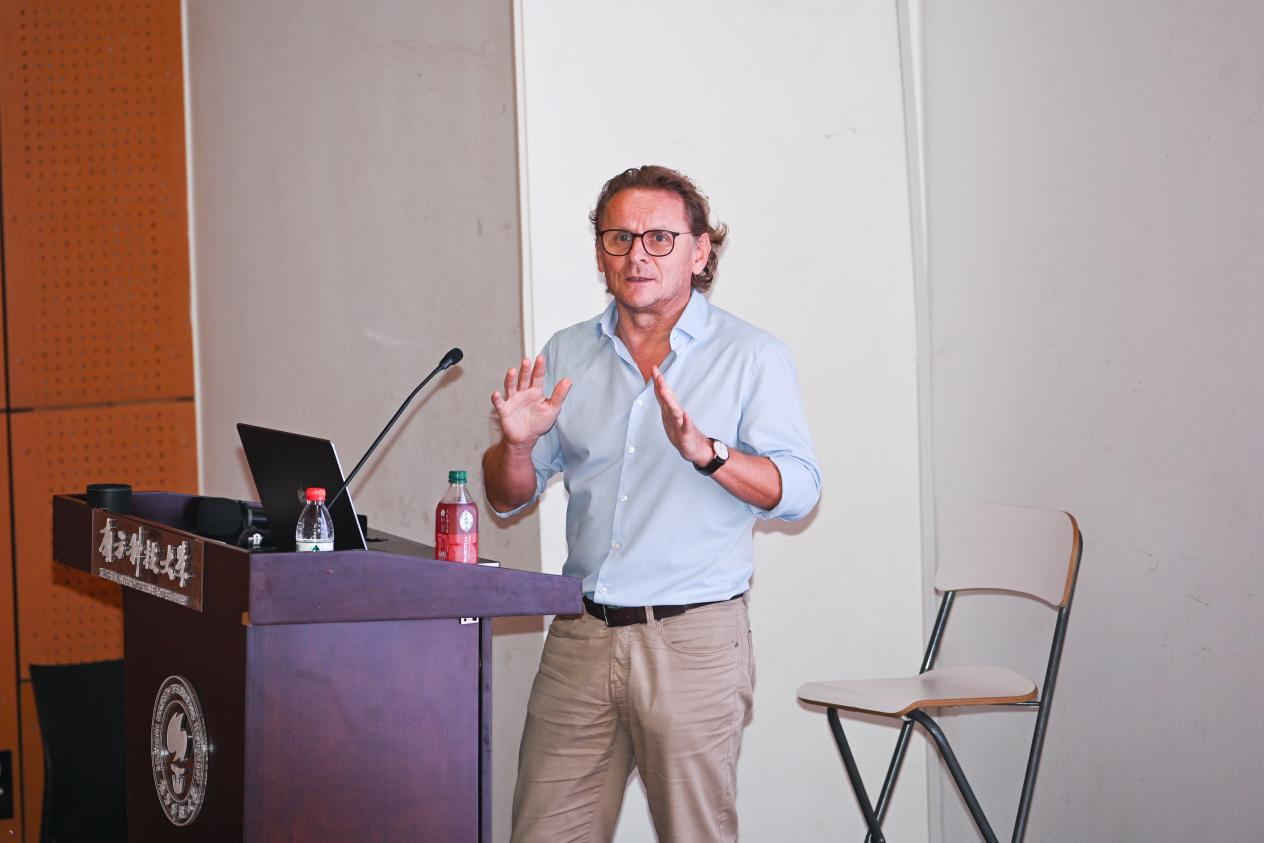
Professor Anne Osbourn, an Honorary Professor at the University of East Anglia and Researcher at the John Innes Centre, visited the Southern University of Science and Technology (SUSTech) for the 455th session of the SUSTech Lecture Series. She delivered a lecture titled “Finding drugs in the garden: Harnessing plant metabolic diversity for therapeutic applications.”
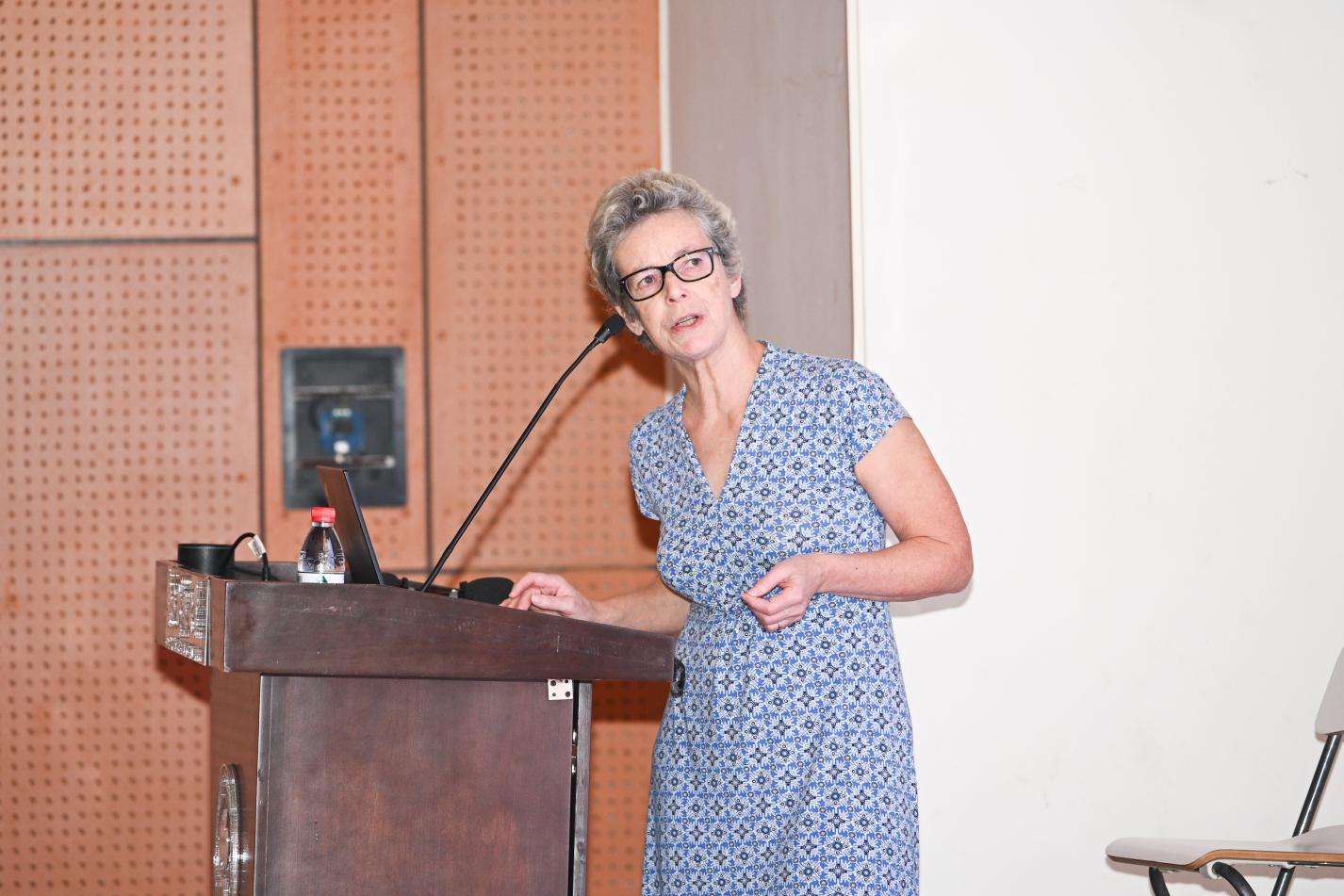
Professor Osbourn also serves as the Director of the Industrial Biotechnology and Bioenergy Alliance at the Norwich Research Park, and is the co-founder of HotHouse Therapeutics. She has been awarded the Order of the British Empire and is a Fellow of the Royal Society and a foreign member of the National Academy of Science of the United States of America. As a pioneer in the fields of plant metabolic biology and synthetic biology, she has long focused on the biosynthesis of plant natural products and has made groundbreaking contributions to the functional analysis of operon-like gene clusters. In 2023, she received the Novozymes Prize for the first complete elucidation of the biosynthetic pathway of the potent vaccine adjuvant QS21.
In the lecture, Professor Osbourn started by introducing the diversity of plant natural products. She noted that while plants can produce a large number of natural products, the vast majority of diversity encoded in their genomes is yet to be fully explored and utilized. Currently, with the rapid growth of plant genome sequencing data, significant reduction in DNA synthesis costs, and the fast development of new DNA assembly technologies, there are unprecedented opportunities for synthetic biology to explore the diversity of plant natural products and synthesize new molecules in heterologous hosts. She pointed out that genes responsible for the synthesis of different natural products are often arranged in biosynthetic gene clusters in plant genomes, providing important clues for finding new biosynthetic pathways and chemical reaction mechanisms.
Subsequently, drawing on her team’s work, she introduced recent progress in using a translational synthetic biology pipeline for the rapid preparation of plant natural products and their novel analogs. She also detailed how her team leverages new plant transient expression techniques to promote more rational production strategies, allowing them to obtain both known natural products and compounds not yet discovered in nature, serving applications in the food, health, and industrial sectors.
During the interactive session, students and faculty actively asked questions about the formation and evolutionary mechanism of plant biosynthetic gene clusters, strategies for efficient synthesis of complex natural products in heterologous hosts, and the prospects of synthetic biology in the modernization of traditional Chinese medicine. Professor Osbourn answered each question based on her research and encouraged the students of SUSTech to stay curious and explore the unknown.
Proofread ByJunxi KE
Photo BySchool of Life Sciences