The team led by Associate Professor and Researcher Pengfei LI from the Department of Chemistry in the College of Science at the Southern University of Science and Technology (SUSTech) has been focusing on the “Strategic transformation of alcohols.” They successfully developed a series of new strategies for stereoselective transformation of α-functionalized alcohols bearing auxiliary groups. These strategies have made research progress in a range of cutting-edge areas, with related findings published in Journal of the American Chemical Society, Chemical Science, Angewandte Chemie International Edition, and Journal of the American Chemical Society again.
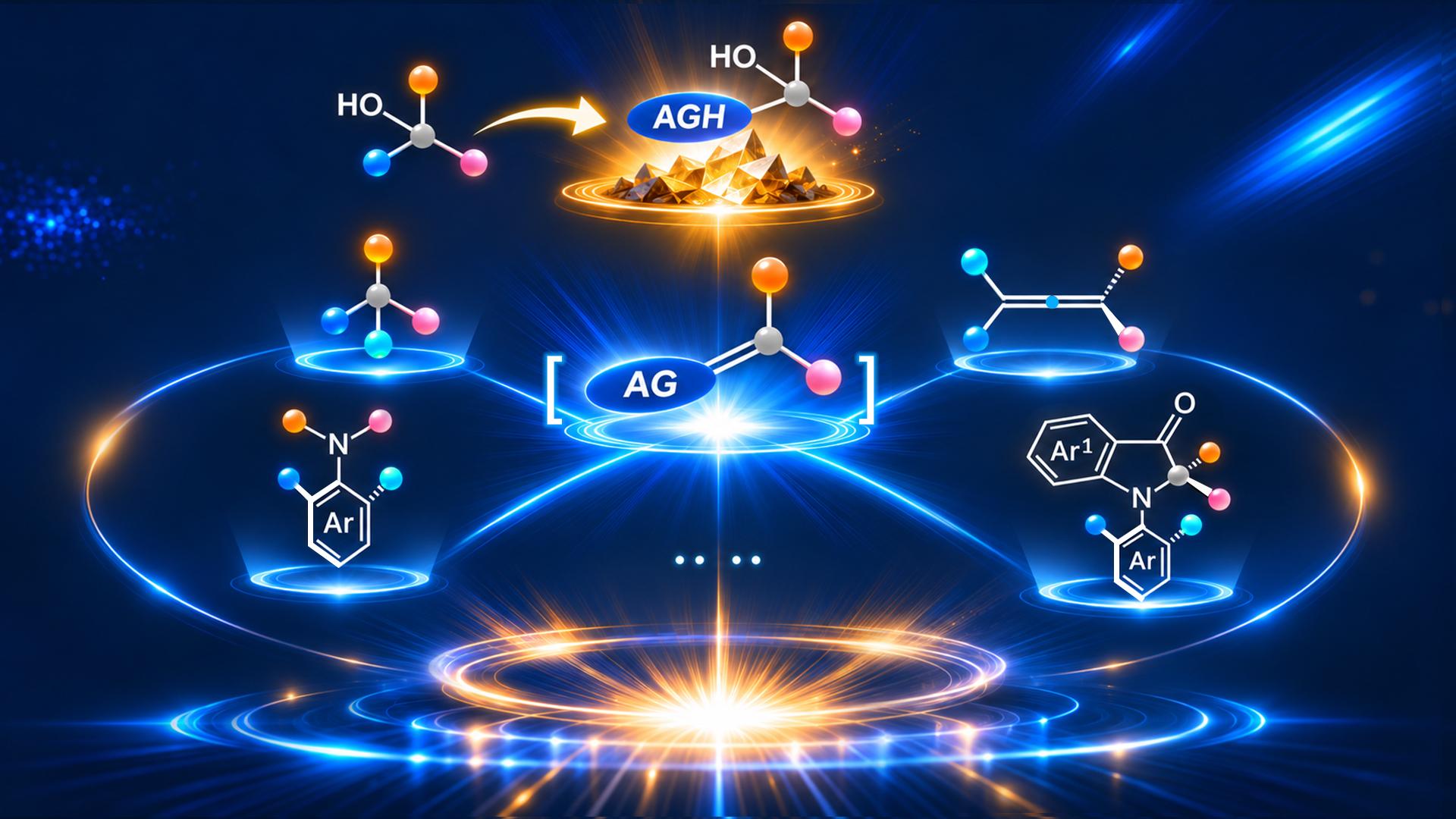
Building Chiral Molecules from α-Functionalized Alcohols
Catalytic enantioselective construction of quaternary carbon stereocenters plays an important role in modern asymmetric synthesis. Due to their unique structures and associated reactivity, asymmetric nucleophilic substitution reactions of tertiary alcohols are an effective way to directly obtain quaternary carbon stereocenters. These reactions are still challenging in terms of steric effects and asymmetric induction. In particular, synthesizing chiral tetraarylmethanes from racemic triarylcarbinols through asymmetric catalysis remains difficult.
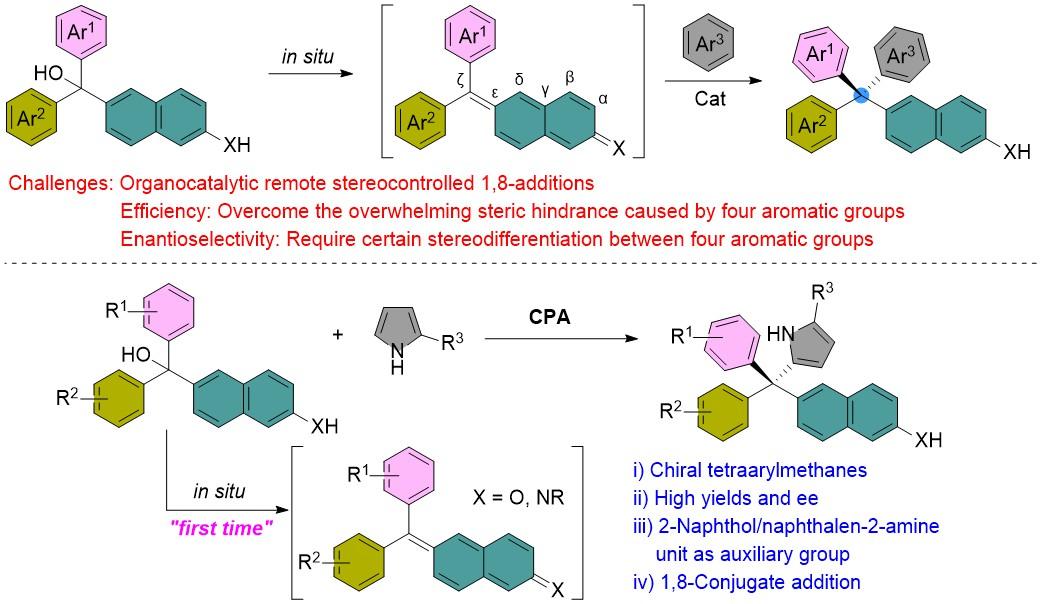
Figure 1. α-(Naphthylphenol/Naphthylamine) Methanol Constructing Chiral Tetraarylmethane
Pengfei LI’s team developed a racemic triarylated tertiary alcohol using 2-naphthol or 2-naphthylamine as an auxiliary group. These α-functionalized alcohols can undergo dehydration under chiral phosphoric acid catalysis to form electron-deficient (aza)-methylenenaphthalen-2(6H)-ones intermediates in situ. Then nucleophiles carry out stereoselective 1,8-conjugate addition to these intermediates, achieving a formal enantioselective nucleophilic substitution of these triarylated tertiary alcohols. This strategy was successfully applied to efficiently synthesize chiral tetraarylmethanes with high enantioselectivity from triarylated tertiary alcohols (Fig. 1).
These findings were published in Journal of the American Chemical Society under the title “Organocatalytic enantioselective 1,8-addition for the synthesis of chiral tetraarylmethanes from 2-naphthol/naphthalen-2-amine-based tertiary alcohols.” PhD students Meiwen LIU and Boming SHEN, from the Department of Chemistry at SUSTech, are co-first authors. Pengfei LI and Associate Professor Peiyuan YU of the Department of Chemistry at SUSTech are co-corresponding authors. SUSTech is the first institution.
Constructing Csp2-N Atropisomers from α-(isoindolinone) Propargyl Alcohol
Atropisomers are widely recognized as the most common type of axially chiral compounds, with their conformations arising from restricted rotation around single bonds, which allows them to be separated in a stable form. The low rotational barrier around the C-N bond and their conformational instability mean that asymmetrically catalyzing the synthesis of these atropisomeric frameworks is extremely challenging.
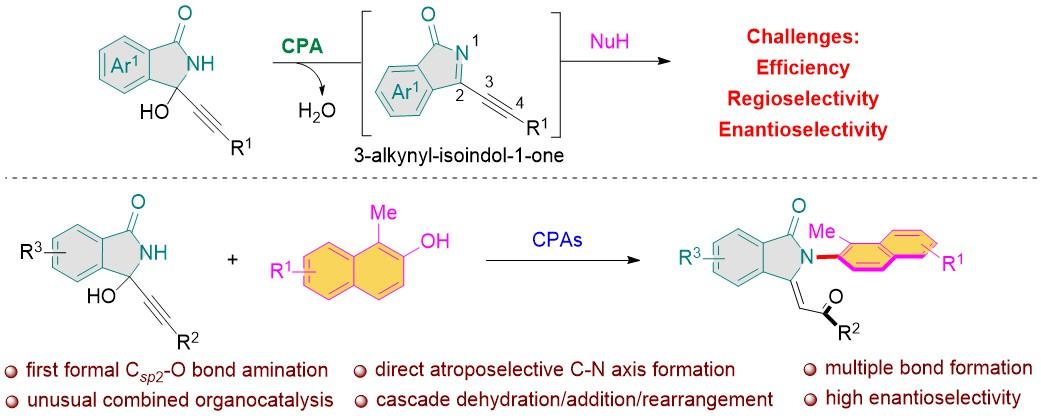
Figure 2. α-(isoindoleline) propanol constructs Csp2-N retractor isomers
Due to the high dissociation energy of C-O bonds, breaking Csp2-O bonds attached to electron-rich aromatic rings is often very challenging and often requires transition metal catalysts such as nickel or palladium to activate Csp2-O bonds. Currently, research on directly constructing chiral Csp2-N axes via Csp2-O bond activation remains a technical gap. At the same time, amination reactions that do not involve transition metals usually require harsh conditions such as high temperatures and strong alkalis. Pengfei LI’s team developed an propargyl alcohol using isoindolin-1-one as an auxiliary group. This α-functionalized alcohol can dehydrate under chiral phosphoric acid catalysis and form electron-deficient 3-alkynyl 1H-isoindol-1-one intermediates in situ. Stereoselective 1,4-conjugation addition, water addition, intramolecular cyclization, and ring-opening chain reactions occurred, directly realizing the stereoselective construction of Csp2-N spin isomers (Fig. 2).
The above research results were published in Chemical Science under the title “Organocatalytic enantioselective synthesis of Csp2-N atropisomers via formal Csp2-O bond amination.” SUSTech and Hong Kong University of Science and Technology (HKUST) jointly trained doctoral student Chenxiao QIAN, SUSTech master’s student Tingting HUANG, and HKUST’s Jing HUANG as co-first authors. Pengfei LI and HKUST professor Jianwei SUN are co-corresponding authors.
Constructing Axially Chiral Tetrasubstituted Allenes from α-(4-(4-Hydroxyphenyl)phenyl)propargyl Alcohol
Chiral phosphoric acids or their analogues have enabled asymmetric conjugate addition reactions of ortho– or para-methylene quinones, achieving stereoselective electrophilic alkylation of α-functionalized alcohols and offering a new strategy for building complex chiral molecules. Under mild conditions, in situ dehydration of the corresponding α-functionalized alcohols to form the methylene quinone intermediates with methylene and carbonyl groups in different rings is difficult. As the distance between the methylene and carbonyl groups increases, controlling both the site selectivity and stereoselectivity of the reaction becomes much harder, with remote stereocontrol being especially challenging.
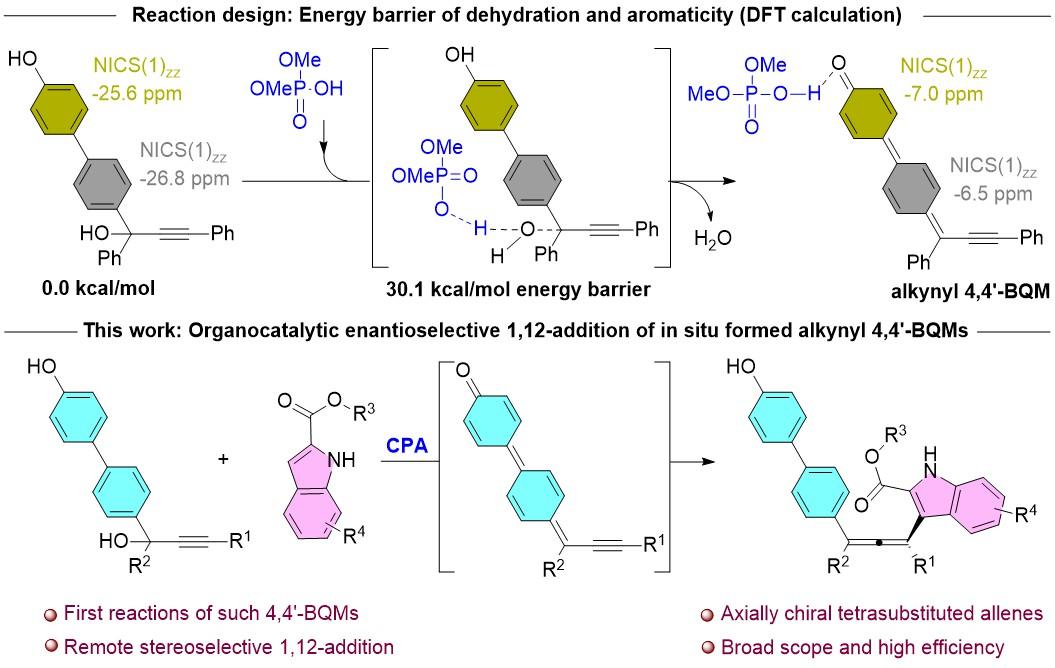
Figure 3. α-(4-(4-Hydroxyphenyl)phenyl)propargyl alcohol building axially chiral tetra-substituted allenes
Under light irradiation, the biaryl precursor can efficiently generate methylene biphenyl quinone, an intermediate that is usually difficult to form via thermal methods. Pengfei LI’s team developed α-functionalized alcohols with para-hydroxyphenyl as an auxiliary group. These α -(4-(4-hydroxyphenyl)phenyl)propargyl alcohols undergo dehydration under chiral phosphoric acid catalysis, forming alkynyl 4,4’-biphenyl quinone intermediates in situ. They then successfully carried out an organocatalytic asymmetric 1,12-conjugate addition of nucleophiles to this intermediate, efficiently producing a series of axially chiral tetra-substituted allenes with high enantioselectivity. This strategy not only expands the types of functional groups on α-functionalized alcohols but also extends asymmetric conjugate addition to stereoselective 1,12-conjugate addition (Figure 3).
These findings were published under the title “Organocatalytic enantioselective 1,12-addition of alkynyl biphenyl quinone methides formed in situ” in Angewandte Chemie International Edition. Xing WANG, a Master’s student from Wenjun LI’s group at Qingdao University, along with PhD students Boming SHEN and Meiwen LIU from the Department of Chemistry at SUSTech, are co-first authors. Wenjun LI, Peiyuan YU, and Pengfei LI are co-corresponding authors.
Three-Component Reactions Involving α-Functionalized Alcohols for Synergistic Construction of Indolone Derivatives with Both Central and Axial Chirality
With the continuous development of science and technology, the collective understanding of “chirality” has expanded from initially focusing on central chirality to include axial, planar, helical, and inherent chirality. These chiral molecules play an increasingly important role in pharmaceuticals, agrochemicals, life sciences, and materials science. Organic asymmetric catalytic multicomponent reactions have gradually become a powerful tool for constructing chiral molecules containing central, axial, planar, or helical chirality. Introducing multiple types of stereocenters, like axial and central chirality, within the same molecular framework via asymmetric catalytic multicomponent reactions remains a relatively underdeveloped and challenging research area, becoming one of the hot and difficult topics in asymmetric catalysis today.
Pengfei LI’s team developed a three-component reaction to synergistically construct complex chiral molecules featuring both central and axial chirality. N-aryl-2-substituted anilines and 2-oxo-2-arylacetaldehydes react in the presence of a chiral phosphoric acid and oxidant to generate α-functionalized alcohols in situ. These α-functionalized alcohols undergo dehydration catalyzed by the chiral phosphoric acid to form imine intermediates, which then react stereoselectively with nucleophilic indoles to yield indolone-1-one derivatives with both central and axial chirality. By generating the α-functionalized alcohols in situ, this strategy not only successfully expands the application scope of α-functionalized alcohols but also provides an excellent platform for constructing chiral molecules with both central and axial chirality (Fig. 4).
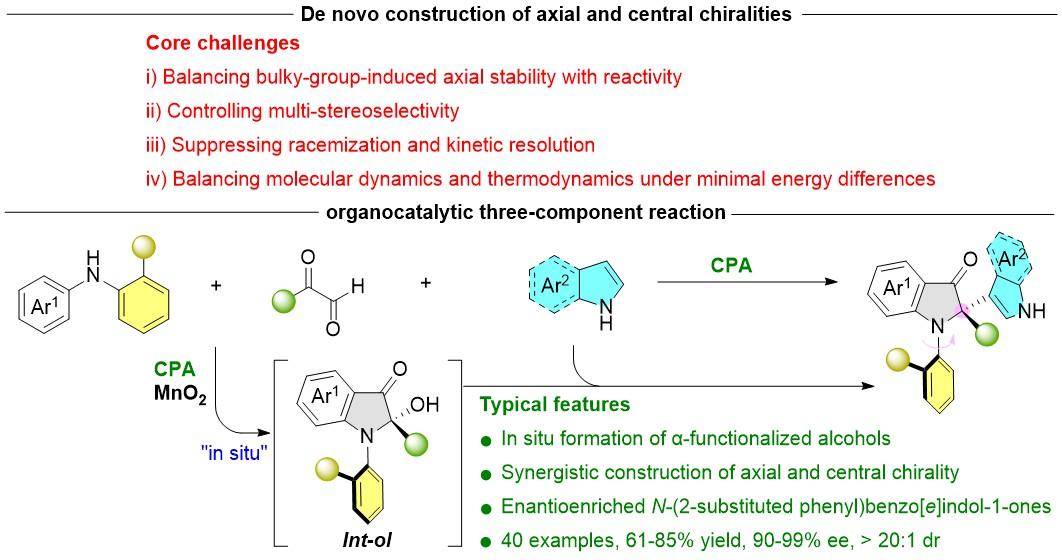
Figure 4. Synergistic construction of central and axial chirality through a three-component reaction
The above research was published under the title “Synergistic construction of axial and central chirality via an organocatalytic three-component reaction involving in situ formed α-functionalized alcohols” in Journal of the American Chemical Society. PhD student Yijie GU from the Department of Chemistry at SUSTech and Master’s student Tingting HUANG are co-first authors. Pengfei LI is the corresponding author. SUSTech is the primary institution listed for the paper.
Paper Links:
Paper 1: https://doi.org/10.1021/jacs.3c05107
Paper 2: https://doi.org/10.1039/d3sc06707f
Paper 3: https://doi.org/10.1002/anie.202400143
Paper 4: https://doi.org/10.1021/jacs.6c21612
Proofread ByNoah Crockett, Junxi KE
Photo By