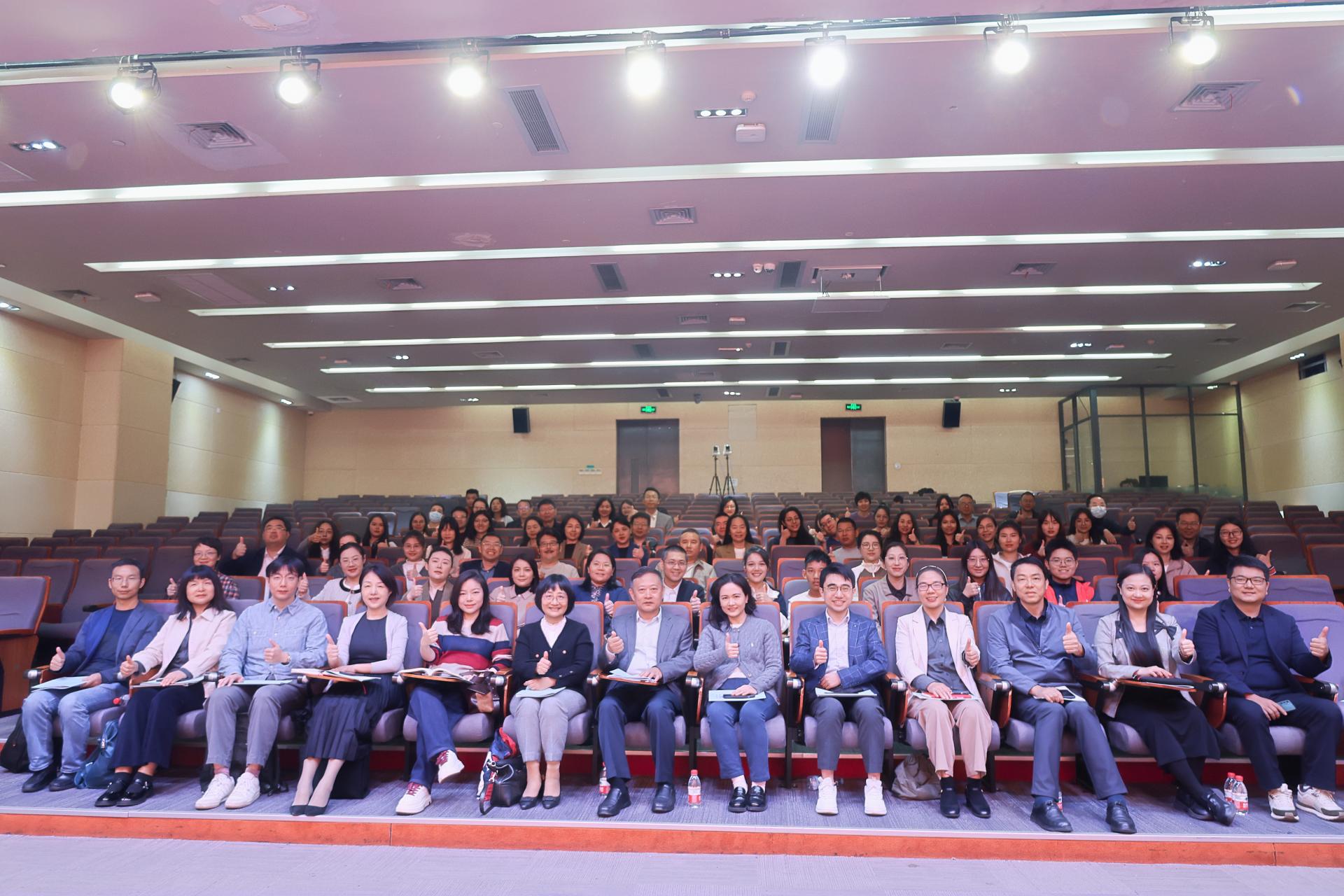
On December 7, 2025, the sub-project of the 17th Shenzhen Academic Annual Conference, the “Symposium on the Learning Revolution in the Age of Artificial Intelligence,” was held at Southern University of Science and Technology (SUSTech). The conference focused on the reshaping of learning environments and the transformation of educational systems driven by AI. It brought together more than a hundred experts, scholars, and frontline practitioners from universities, educational research institutions, primary and secondary schools, and relevant enterprises to engage in in-depth discussions on key topics such as curriculum and pedagogy reform, teacher professional development, innovative learning assessment, data-driven decision-making, and AI ethics. Participants shared the latest research achievements and practical experiences, actively exploring realistic paths and future directions to promote high-quality education amid rapid technological advancements.
The symposium is guided by the Shenzhen Social Sciences Federation and the Learning Science Research Branch of the Chinese Higher Education Society, hosted by SUSTech, organized by the Future Education Research Center of SUSTech and the Education Informatization and Artificial Intelligence Professional Committee of the Shenzhen Education Society, and co-organized by the Artificial Intelligence Education Research Center and the New Generation Artificial Intelligence Education Research Center of SUSTech.
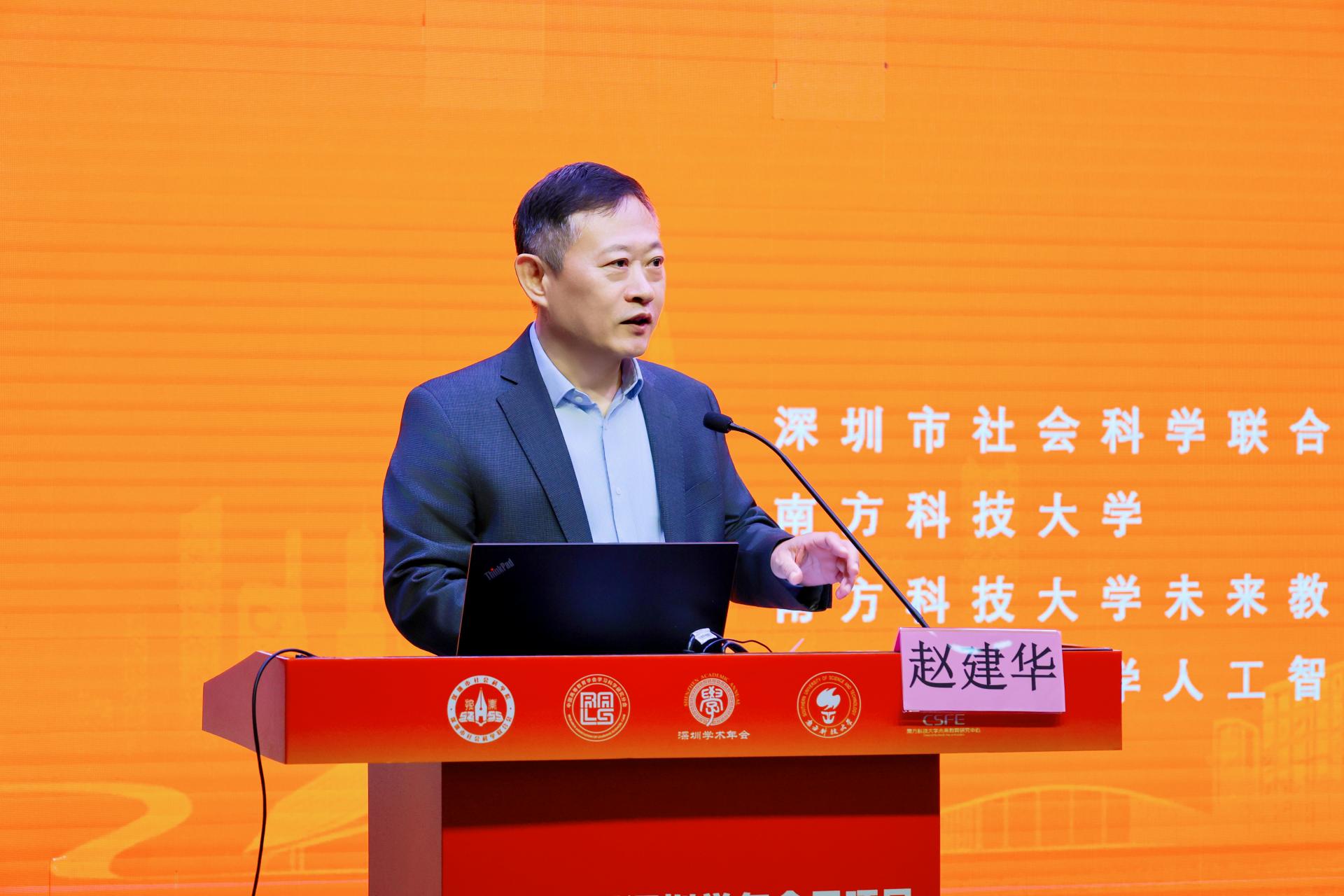
At the opening ceremony, Professor Jianhua ZHAO, Director of the Future Education Research Center at SUSTech, stated that the rapid development of generative AI is profoundly changing educational models and learning environments, driving education from knowledge transmission toward skill cultivation and personalized development. Technological advancements not only bring upgrades at the tool level but also trigger systemic changes in educational philosophy, pedagogical design, and learning ecosystems. SUSTech will continue to promote the deep integration of AI and education, strengthen interdisciplinary research and platform development, and actively explore new educational models that adapt to future development, providing strong support for building a more open, intelligent, and efficient learning system.
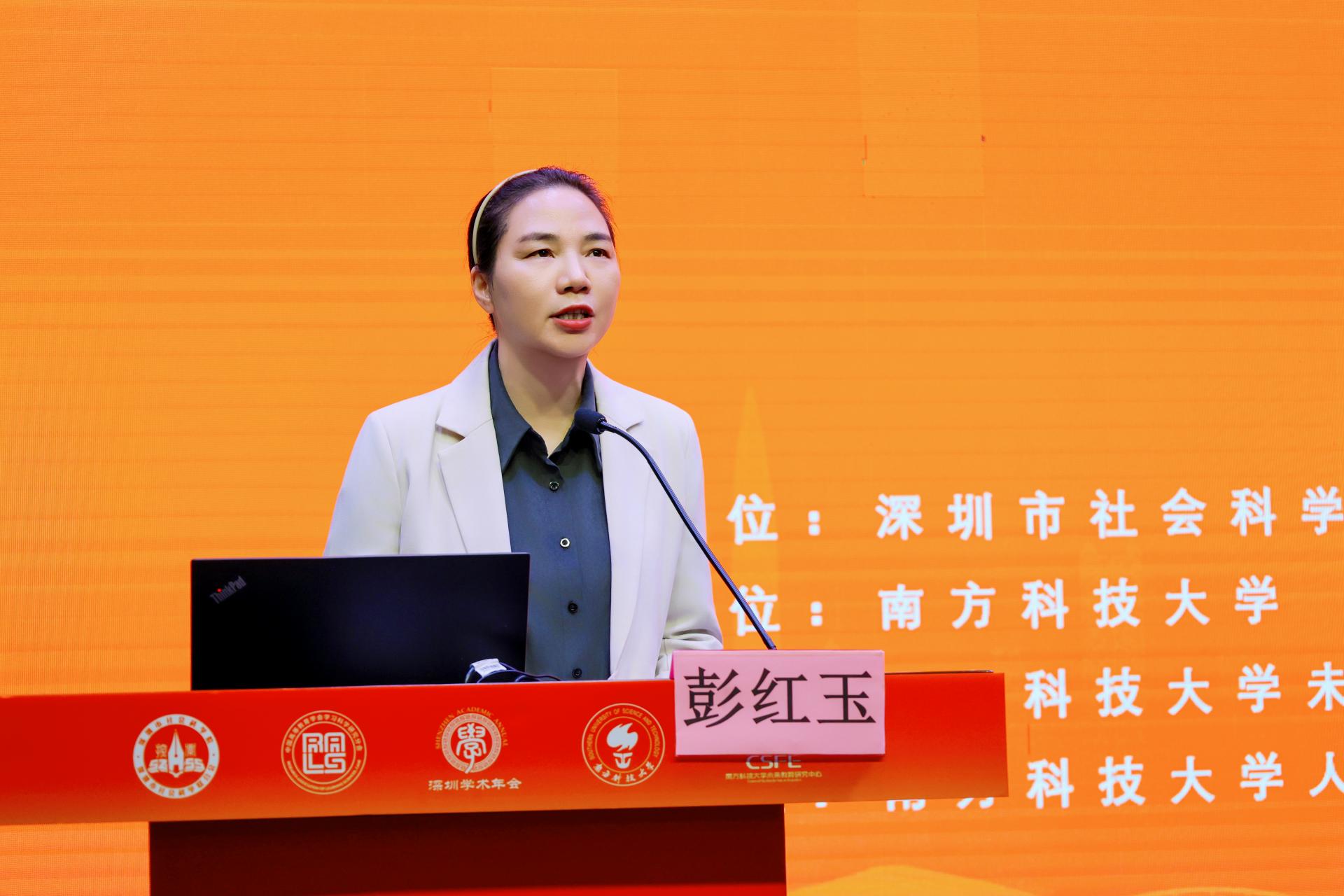
Hongyu PENG, Deputy Director of the Shenzhen Academy of Educational Sciences and Vice President of the Shenzhen Education Society, stated in her speech that the widespread application of AI is injecting new momentum into the development of high-quality education. Shenzhen attaches great importance to the digital development of education and has continuously explored areas such as curriculum reform, teaching innovation, teacher empowerment, and data governance in recent years, forming practical experiences with regional characteristics. This seminar focuses on learning transformation in the context of AI and provides a communication platform that connects theory and practice, and promotes mutual exchange between policy and experience. It will help drive the updating of educational philosophy and the innovation of practical models, further serving the overall development of educational modernization in the new era.
In the morning discussion session, experts and scholars focused on exploring the pathways for AI to empower education, engaging in in-depth discussions on core topics such as instructional design, learning relationships, evaluation mechanisms, and classroom restructuring. Professor Su MU, from South China Normal University, proposed a “dual-track driven” strategy for cultivating AI literacy, advocating for collaborative advancement in daily learning and information technology courses. Associate Professor Yun DAI, from The Chinese University of Hong Kong, suggested a human-machine collaborative learning strategy centered on shared authority and co-creation, emphasizing the construction of knowledge-building learning environments and generative learning activities. Assistant Professor Jinxin ZHU, from The Education University of Hong Kong, proposed an evaluation literacy development pathway guided by autonomous learning, drawing on peer assessment principles to optimize AI-generated feedback. Lulu HUANG, a reporter from China Education Daily, pointed out that the key to integrating educational digital transformation with AI lies in the reconstruction of the teacher’s role, based on frontline research experience.
In the afternoon discussion session, experts and scholars focused on the reshaping philosophy of teaching and learning in the AI era, concentrating on topics such as teacher competency development, transformation of teaching paradigms, and innovations in human-AI interaction, presenting deep exchanges from multiple disciplines and perspectives. Professor Yuxia DU, from Guangzhou University, proposed the “Digital Intelligence Empowered UGSJE” virtual teaching and research room model, building a diversified collaborative ecosystem that integrates teaching, research, and practice, promoting the integrated development of educational informatization and cognitive training. Associate Professor Yang XU, from SUSTech, focused on the indeterminacy issues of large model generation, suggesting that learners’ perception of uncertainty should be strengthened to improve their reflective thinking and judgment to cope with the dynamic complexity of AI-generated content. Professor Xiaoming CAO from Shenzhen University emphasized clarifying the application boundaries of AI in education, promoting the construction of an AI governance system, and guiding the ethical development of technology applications. Research Associate Professor Changwu HUANG, from SUSTech, proposed constructing a responsible AI education pathway, systematically explaining the dual connotations, ethical principles, and potential risks of intelligent education, emphasizing institutional guarantees and practical pathways for trustworthy AI. Assistant Professor Pengcheng AN, from SUSTech, focused on innovations in human-computer interaction, proposing the support of personalized learning processes through multimodal interaction and intelligent feedback mechanisms, reshaping the teaching interaction model in the AI era.
Proofread ByYuwen ZENG
Photo By