As a powerful synthetic tool, ion exchange has been extensively investigated for the precise integration of multicomponent systems into heteronanomaterials with controlled crystalline architectures. Through liquid-phase ion exchange reactions, researchers have systematically developed diverse libraries of multielement heterostructures, including tailored metal sulfide nanoparticles, heterostructured nanorods, colloidal axial superlattice nanowires, two-dimensional materials, and one-dimensional segmented hetero-nanostructures. Liquid-phase synthesis often faces a complex interface for ion exchange, and multi-phase diffusion mechanisms (spanning liquid medium, liquid-solid interfaces, and solid matrices) pose significant challenges in kinetic characterization. The effects of lattice constraints, defect effects, and multi-field coupling (including electric field, stress field, and temperature field) on ion migration pathways in solid phases are not fully understood. Additionally, the performance and service life of the solid device are closely related to the ion transport process on the nanostructure, particularly in heterogeneous structures.
To date, efforts have been devoted to elucidating the dynamic migration mechanism through thermal activation and electrical field modulation. However, existing material designs lack a precise understanding of ion migration pathways and the activation mechanism at heterointerfaces, which hinders the development of next-generation high-ion-conductivity materials.
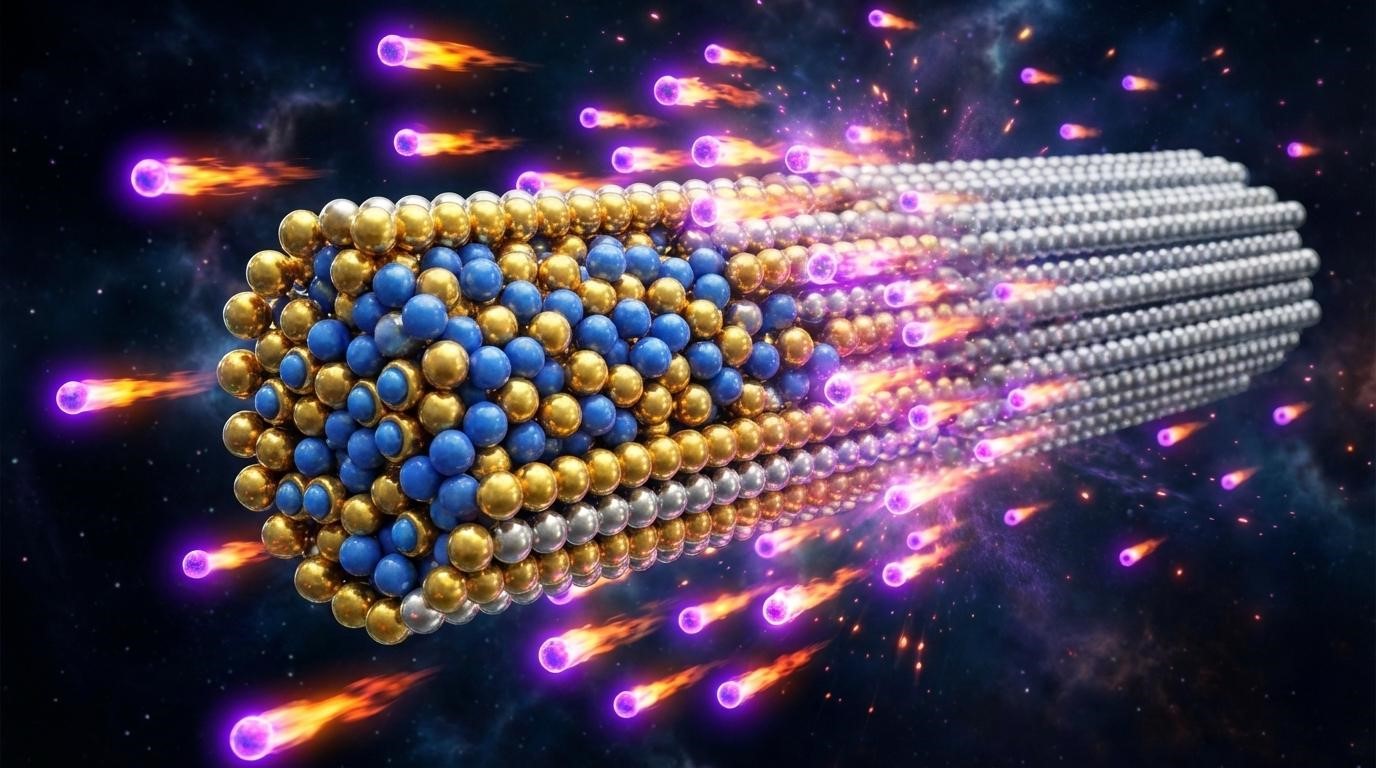
Assistant Professor Zhen HE, from the Department of Material Science and Engineering at the Southern University of Science and Technology (SUSTech), has recently investigated solid ion migration dynamics by applying different external fields via in-situ TEM. They developed a model system comprising individual Ag nanowires (NWs) integrated with an aligned 2D material TeₓSeᵧ@Se core-shell NWs, allowing for the quantitative analysis of formation processes and reaction kinetics under distinct external stimuli. The mechanistic understanding of solid-state ion kinetics and phase transition dynamics establishes a paradigm for intentional interconversion between multiphase heterostructures and monophasic systems, providing a design framework for next-generation functional nanomaterials.
Their related work, entitled “Thermally driven solid-phase ion exchange for in-situ transition from hetero-core-shell to alloy nanostructure”, has been published in the Journal of the American Chemical Society (JACS).
In the present work, thermally activated Ag ions permeate the TeₓSey@Se core-shell NWs and then induce volumetric redistribution of Te, culminating in compositionally homogeneous Ag2SexTe1-x alloys via solid-state interdiffusion. In comparison, Ag diffusion under e-beam irradiation generates dual-core-shell architectures through the selective penetration of a Se shell.
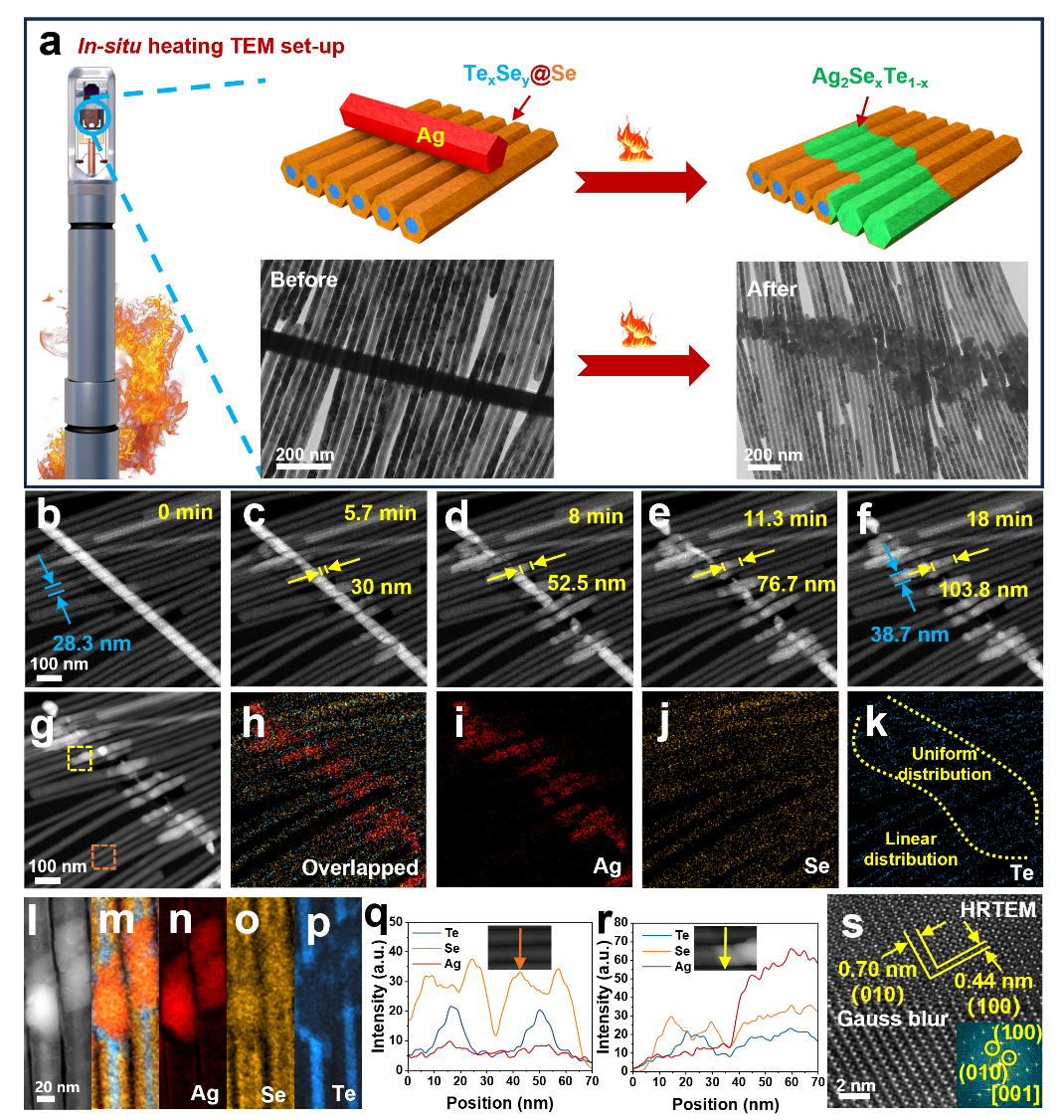
Figure 1. The migration process of Ag ions under the action of the thermal field
The thermally driven migration process initiates with the formation of a metastable Se-binary alloy phase. Progressive Ag diffusion into the core region enables active ions to surmount the interfacial energy barrier at the TeₓSey boundary, thereby inducing the exchange with Te atoms. Through quantitative tracking of interfacial evolution, we reveal that a maximum Ag migration distance of 5.5 mm in ordered 2D TeₓSey@Se NW film under thermal field conditions. This exceptional transport range suggests the methodology’s potential for the scalable fabrication of ordered AgSeTe nanowire arrays and macroscopic heterojunction films, particularly relevant for thin-film optoelectronics and neuromorphic memristor applications.
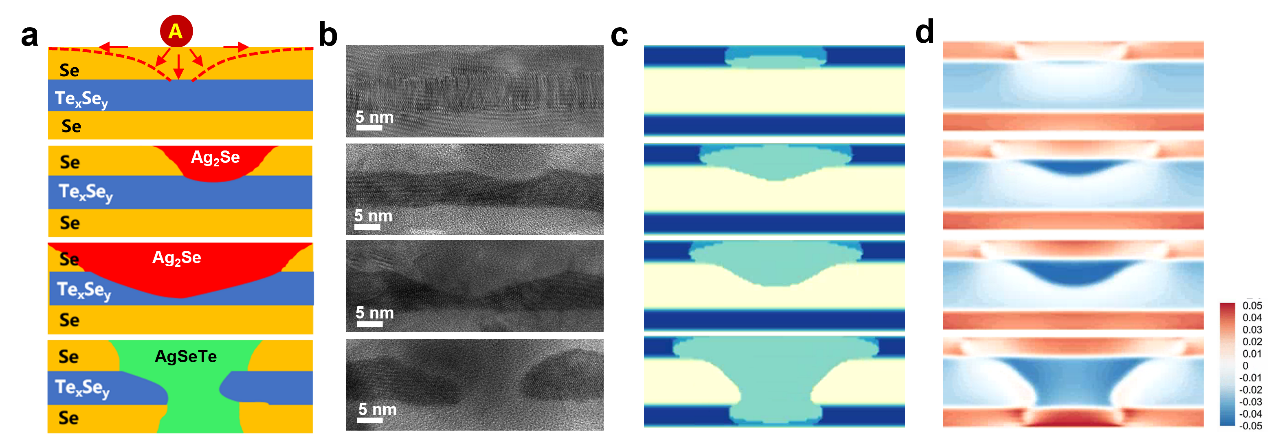
Figure 2. Interdiffusion process and corresponding phase field simulation
As the performance and service life of the solid-phase device are closely related to the ion transport process on the nanostructure, the mutual diffusion with precise control plays a critical role in device fabrication. This work demonstrated the real-time visualization and quantitative investigation of the ion migration process, the transformation from core-shell structure to alloy nanostructures, and the up to 5.5 mm millimeter-scale ion migration distance.
These mechanistic revelations establish fundamental design criteria for orchestrating phase transformations in multicomponent nanosystems, providing a theoretical foundation for the development of field-programmable heterostructured devices.
Chair Professor Shu-Hong YU and Assistant Professor Zhen HE from SUSTech are the co-corresponding authors of the paper.
Paper link: https://doi.org/10.1021/jacs.5c17945
Proofread ByNoah Crockett, Yuwen ZENG
Photo ByYan QIU