An undergraduate student in Associate Professor Aung Ko Ko Kyaw’s research team from the Department of Electronic and Electrical Engineering at the Southern University of Science and Technology (SUSTech) has achieved a significant research milestone with the acceptance of his first-authored paper in ACS Applied Electronic Materials, a leading international journal published by the American Chemical Society.

The paper, titled “High-Throughput Theoretical Analysis of All-Inorganic Mixed Perovskites Using Deep Learning,” has been published in a special issue dedicated to Nobel Laureate Dr. Alan Heeger in celebration of his 90th birthday. The study presents an innovative computational approach that integrates first-principles simulations with artificial intelligence to accelerate the discovery of next-generation optoelectronic materials.
Perovskite materials are widely regarded as promising candidates for high-performance solar cells and other optoelectronic devices. However, identifying optimal material compositions through conventional experimental and computational methods is often time-consuming and resource-intensive. In this work, the research team addressed this challenge by combining density functional theory (DFT) calculations with deep learning techniques, enabling rapid and large-scale theoretical screening of all-inorganic mixed halide perovskites.
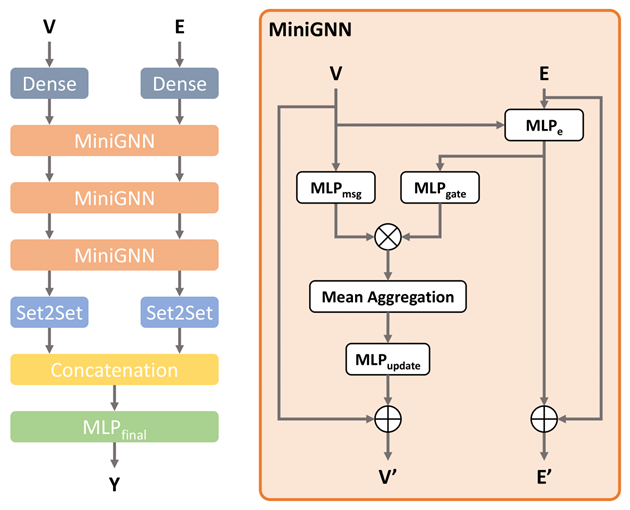
Figure 1. The Architecture of the Entire Model and the Internal of MiniGNN
Using a customized graph neural network model known as MiniGNN (Figure 1), the research team trained the model on 288 DFT-calculated datasets and successfully predicted the optoelectronic properties of more than 400,000 material compositions.
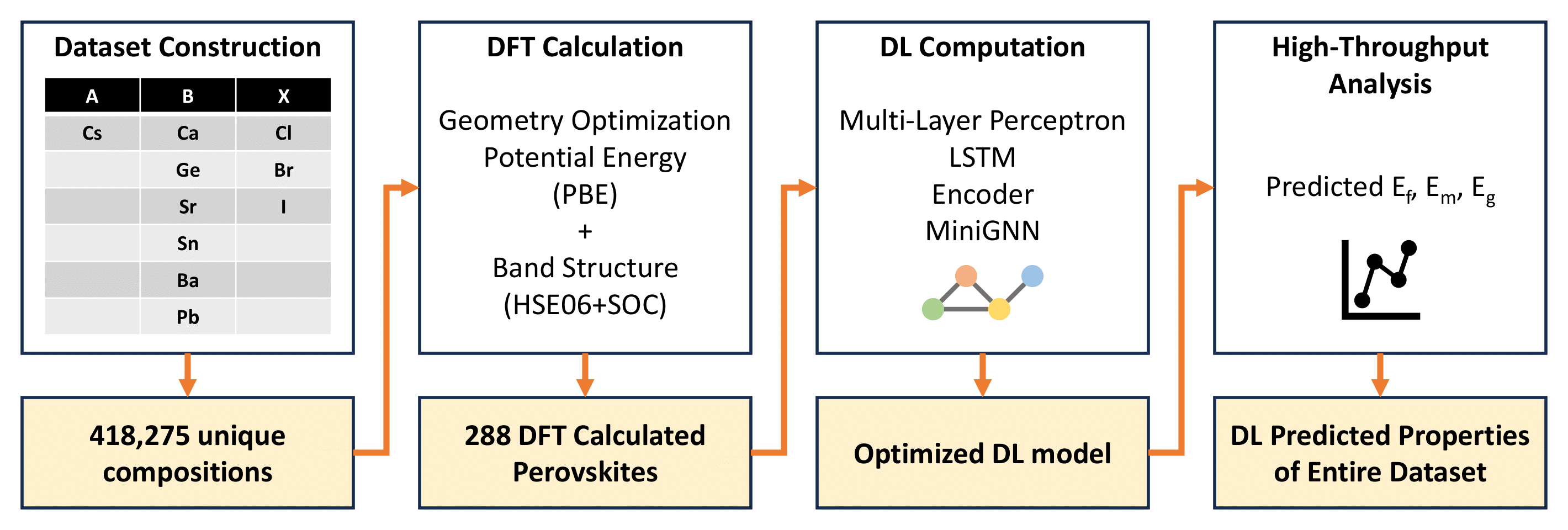
Figure 2. Overview of the DL workflow for property prediction of all-inorganic mixed perovskites
Figure 2 presents a detailed workflow combining deep learning (DL) and DFT to investigate composition–property relationships in perovskites. A comprehensive compositional dataset was first constructed, followed by DFT calculations on 288 representative all-inorganic mixed perovskites to generate structural and electronic properties. These data were then used to train and validate DL models via 5-fold cross-validation, which were ultimately applied to predict and analyze the properties of the full compositional space, guiding the design of high-performance perovskites for photovoltaic applications.
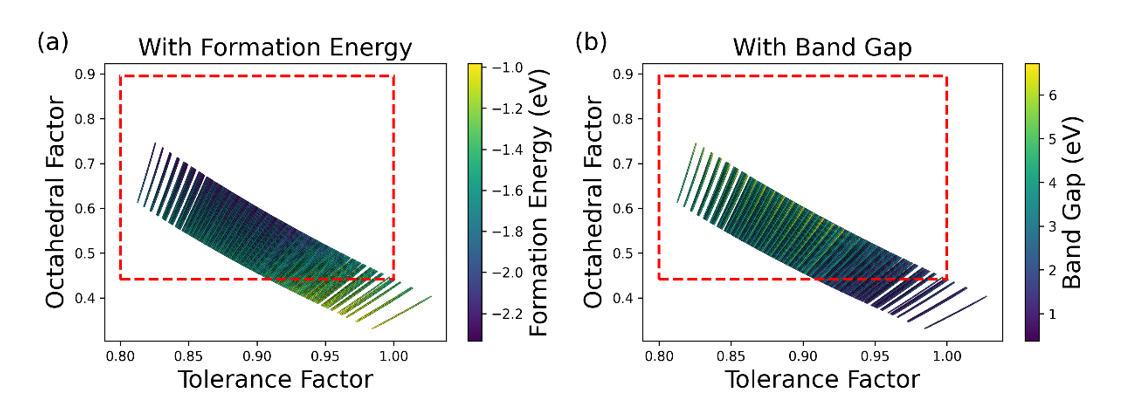
Figure 3. Relationship between the tolerance factor, octahedral factor, and (a) the formation energy, (b) the band gap in all-inorganic mixed perovskites predicted from MiniGNN
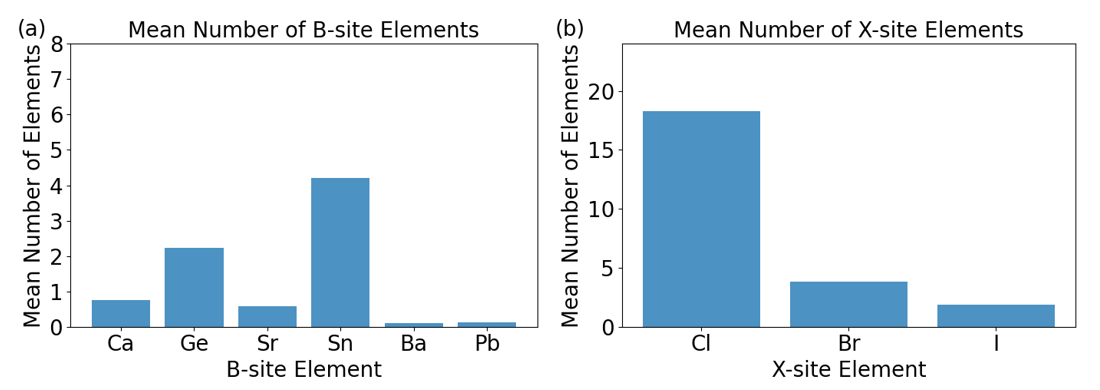
Figure 4. Mean number of atoms for (a) B-site elements (Ca, Ge, Sr, Sn, Ba, Pb) (b) X-site elements (Cl, Br, I) in perovskite solar cell compositions satisfying 0.8 < t < 1.0 , μ > 0.442, Eƒ < —1 .5 eV, and 1.2 < Eg < 1.4
The team evaluated four DL architectures (MLP, LSTM, transformer encoder, and MiniGNN) using 5-fold cross-validation, with performance summarized in Table 1. The proposed MiniGNN clearly outperformed all other models, achieving superior accuracy for band gap prediction (RMSE = 0.188, MSE = 0.036, MAE = 0.149, and R² = 0.97).
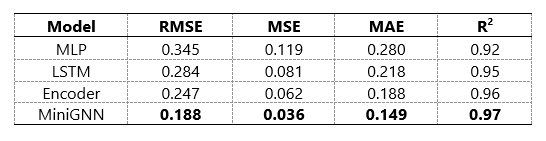
Table 1. Comparison of Model Accuracy in Band Gap Prediction Across Cross-Validation Folds
Using the best-performing model, the study revealed a clear trade-off between thermodynamic stability and band gap in all-inorganic mixed perovskites: highly stable compositions (low tolerance factor [t ≈ 0.8−0.9] and high octahedral factor [μ ≈ 0.6−0.75]) tend to exhibit wide band gaps, whereas narrower band gaps suitable for solar cells occur in less stable regions (Figure 3). After applying strict stability and band gap criteria, optimal single-junction perovskite candidates were found to favour Sn- and Ge-rich B-site compositions with Cl-dominated X-sites (Figure 4), highlighting the importance of compositional balance for achieving both stability and high photovoltaic efficiency.
The theoretical computation and data analysis for this study were completed by Si Thu Khit, an undergraduate student in the Department of Electronic and Electrical Engineering. He is the first author of the paper, SUSTech is the first affiliated institution, and Prof. Kyaw is the sole corresponding author.
Paper Link: https://pubs.acs.org/doi/full/10.1021/acsaelm.5c02078
Proofread ByNoah Crockett, Junxi KE
Photo ByYan QIU