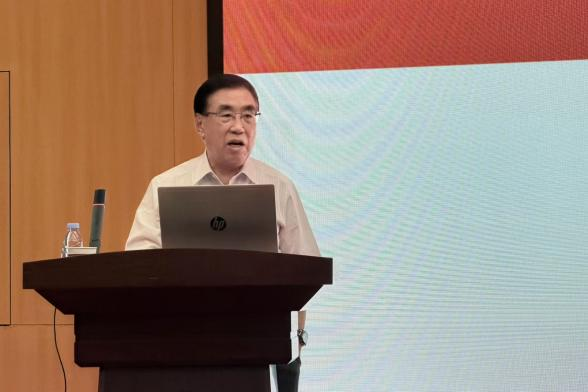
A research group led by Chair Professor Bin TAN, of the Department of Chemistry at the Southern University of Science and Technology (SUSTech), published a groundbreaking study in the top international academic journal Science, titled “A relay energy transfer paradigm for asymmetric photocatalyzed [4+2] cycloadditions.” This study introduces a new paradigm in photocatalysis, Relay Energy Transfer (Relay EnT). Based on this concept, they developed a novel class of chiral organocatalysts, termed chiral energy transfer acid (CETA), that can deliver a high triplet energy of up to 60 kcal/mol. These catalysts successfully liberated the dearomative cyclization reaction between quinolines and alkenes from stoichiometric dependence on catalysts and overcame the challenges in complicated stereoselectivity control.

Photocatalysis has advanced rapidly owing to its unique advantage in activating substrates and reshaping reaction pathways. Photocatalysts activate substrates mainly via two modes, single-electron transfer (SET) and energy transfer (EnT). While SET-based photoredox catalysis has greatly expanded the frontiers of synthetic chemistry, the full potential of EnT catalysis remains underexplored. In the realm of asymmetric EnT photocatalysis, several strategies have been developed, including direct excitation strategy, hybrid catalytic systems, and dual catalytic systems. Among these, the dual catalytic approach combining a photosensitizer with a chiral catalyst offers both the advantages of visible-light compatibility and a tunable chiral environment, enabling the asymmetric photocycloaddition of various alkenes.
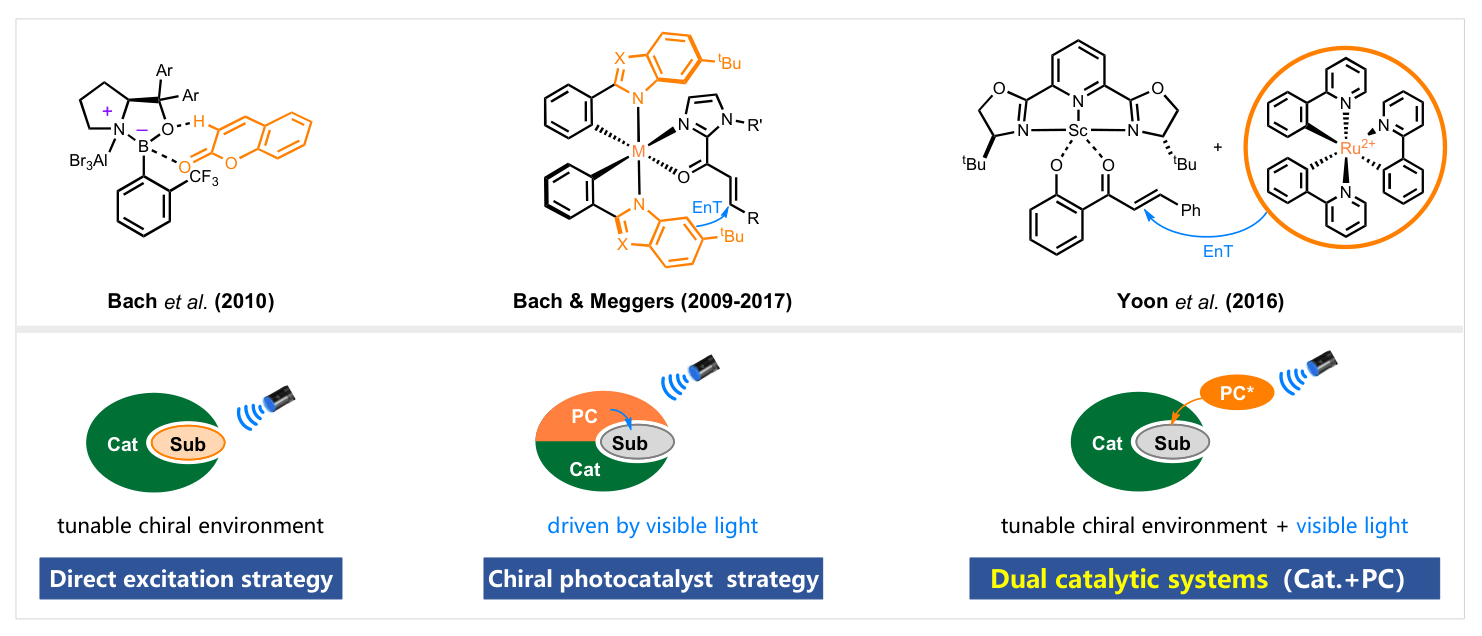
Figure 1. Research background
According to Dexter’s theory, the triplet energy transfer rate decays exponentially with increasing distance between the photosensitizer and the acceptor. In dual catalytic systems, the chiral catalyst inevitably introduces spatial segregation between the photosensitizer and the substrate, thereby imposing an EnT barrier. The group identified this barrier as a critical factor that negatively impacts the efficiency and even the feasibility of EnT photocatalysis, which has not received sufficient attention in previous reports. Addressing this spatial constraint is a key scientific challenge for expanding the boundaries of asymmetric EnT photocatalysis. The team proposed a relay energy transfer photocatalytic strategy, which involves integrating an energy carrier into the catalyst structure to build a bridge for energy transfer from the photosensitizer to the substrate. The paramount challenge lies in designing organocatalysts that seamlessly incorporate the three essential components, an energy carrier, a catalytic center, and a stereogenic element, while preserving the individual tunability of each component for pursuing optimal performance.
Drawing inspiration from the structure of commonly used cyclometalated iridium complexes, the group selected a fluorene-like architecture as the energy carrier, known for its high triplet energy and tunable core substituents. By merging this scaffold with a phosphinamide-based catalytic core and different substituents at C3- and C3’-positions, they successfully constructed a new class of CETA catalysts. These catalysts feature freely tunable chiral side arms and the ability to carry high triplet energy. Notably, the frontier molecular orbitals of CETA are partially delocalized onto the catalytically active phosphinamide moiety near the substrate, providing a structural basis for energy transfer between CETA and the substrate.
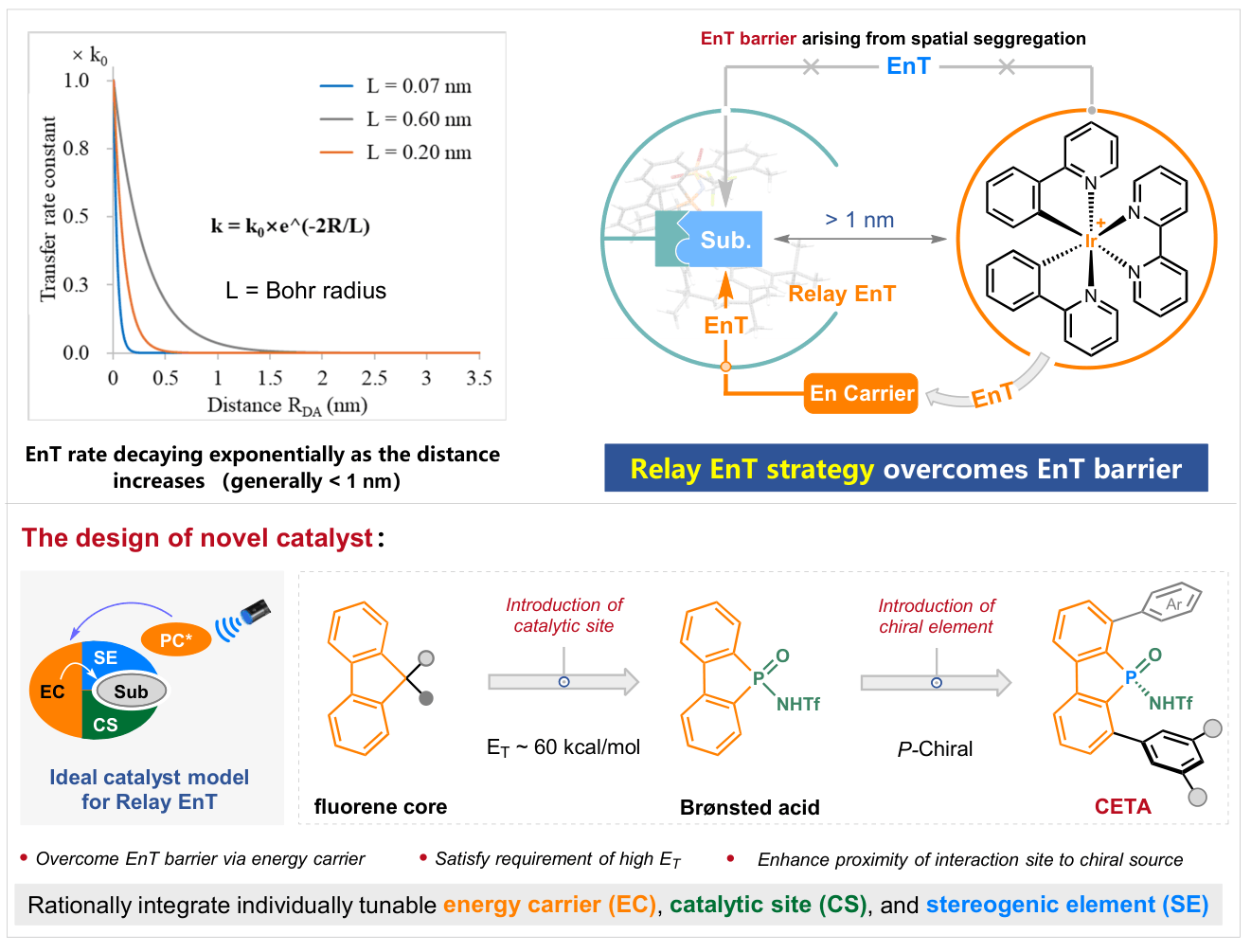
Figure 2. Relay EnT strategy and design of new catalysts
Having established a library of CETA catalysts, the group applied it to asymmetric EnT photocatalysis to validate the effectiveness of the relay EnT concept. In 2021, Glorius and co-workers reported the dearomative cycloaddition (DAC) of quinolines and alkenes via acid-catalyzed substrate activation, offering a highly efficient route to valuable 3D molecules from simple starting materials. However, this transformation suffered from the reliance on stoichiometric acidic activator, as well as limited regioselectivity and stereoselectivity control. Conventional Brønsted acids such as phosphoric acids and phosphoramides showed modest catalytic activity (~25% yield), but the introduction of a chiral scaffold led to a significant loss of activity. Mechanistic studies revealed that the EnT barrier caused by spatial isolation from the catalyst side arms was the primary cause.
CETA exhibited remarkably high catalytic activity in this transformation. Its scaffold-assisted energy transfer ensures that the side arms do not negatively impact catalytic activity. Under optimized conditions, only 5 mol% of CETA was sufficient to achieve full conversion, while the flexible adjustment of the chiral side arms enabled excellent control over regio- and stereoselectivity.
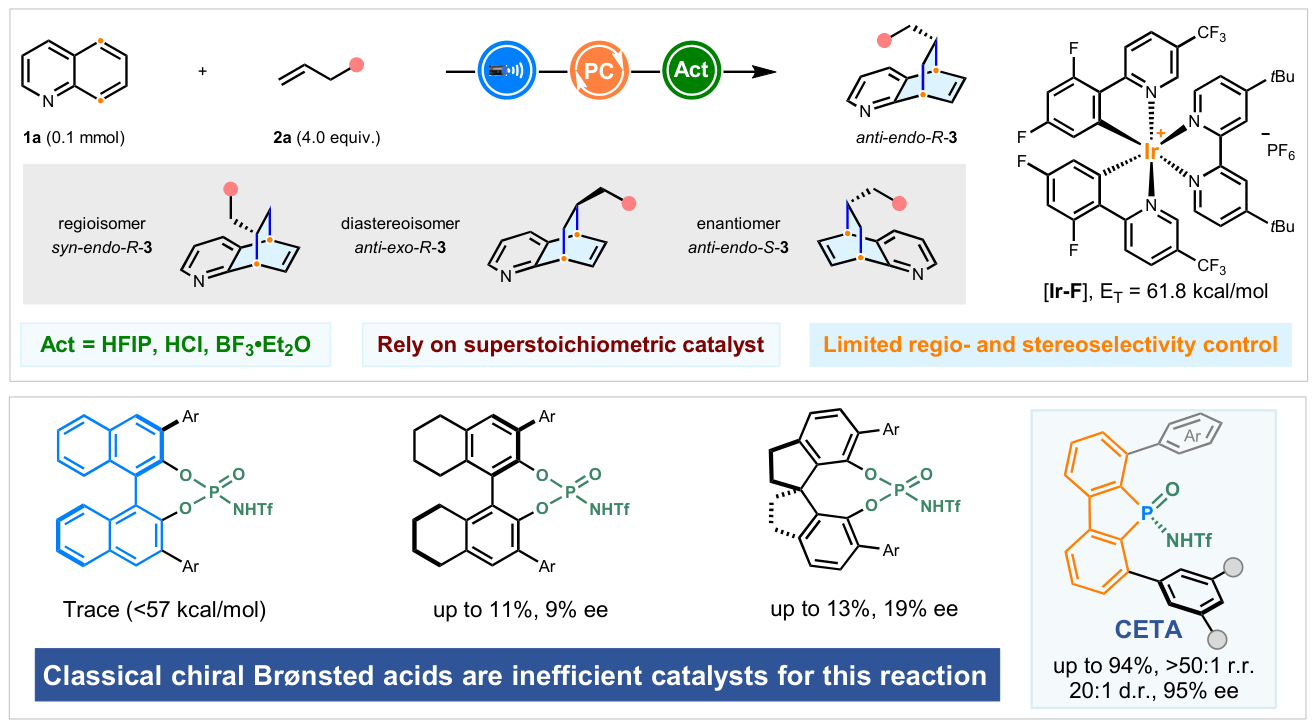
Figure 3. Application of the new CETA catalyst
The catalytic system demonstrated broad substrate scope. Various alkyl and halogen-substituted quinolines, as well as alkyl, electron-rich, and electron-deficient alkenes, all delivered the desired products with satisfactory yields and stereoselectivities. Moreover, CETA showed excellent tolerance toward a wide range of functional groups, including alkyl, halide, cyano, hydroxyl, aryl, carboxyl, and ester groups.
The team conducted extensive mechanistic investigations using steady-state phosphorescence quenching, NMR titration, time-resolved Stern-Volmer analysis, low-temperature phosphorescence, cyclic voltammetry (CV), and nanosecond transient absorption spectroscopy (ns-TA). These studies confirmed that the catalyst side arms can hinder EnT efficiency from the photosensitizer to the substrate by up to 80%. Importantly, the relay energy transfer enabled by CETA significantly improved EnT efficiency by as much as threefold. Most notably, CETA not only facilitates energy transfer but also acts as an energy storage unit, extending the excited-state lifetime of the substrate through reversible energy transfer, thereby increasing the probability of productive transformations. This study establishes a new paradigm in energy transfer photocatalysis, expands the boundaries of organocatalysis and EnT photocatalysis, and offers new insights for the design of chiral catalysts.
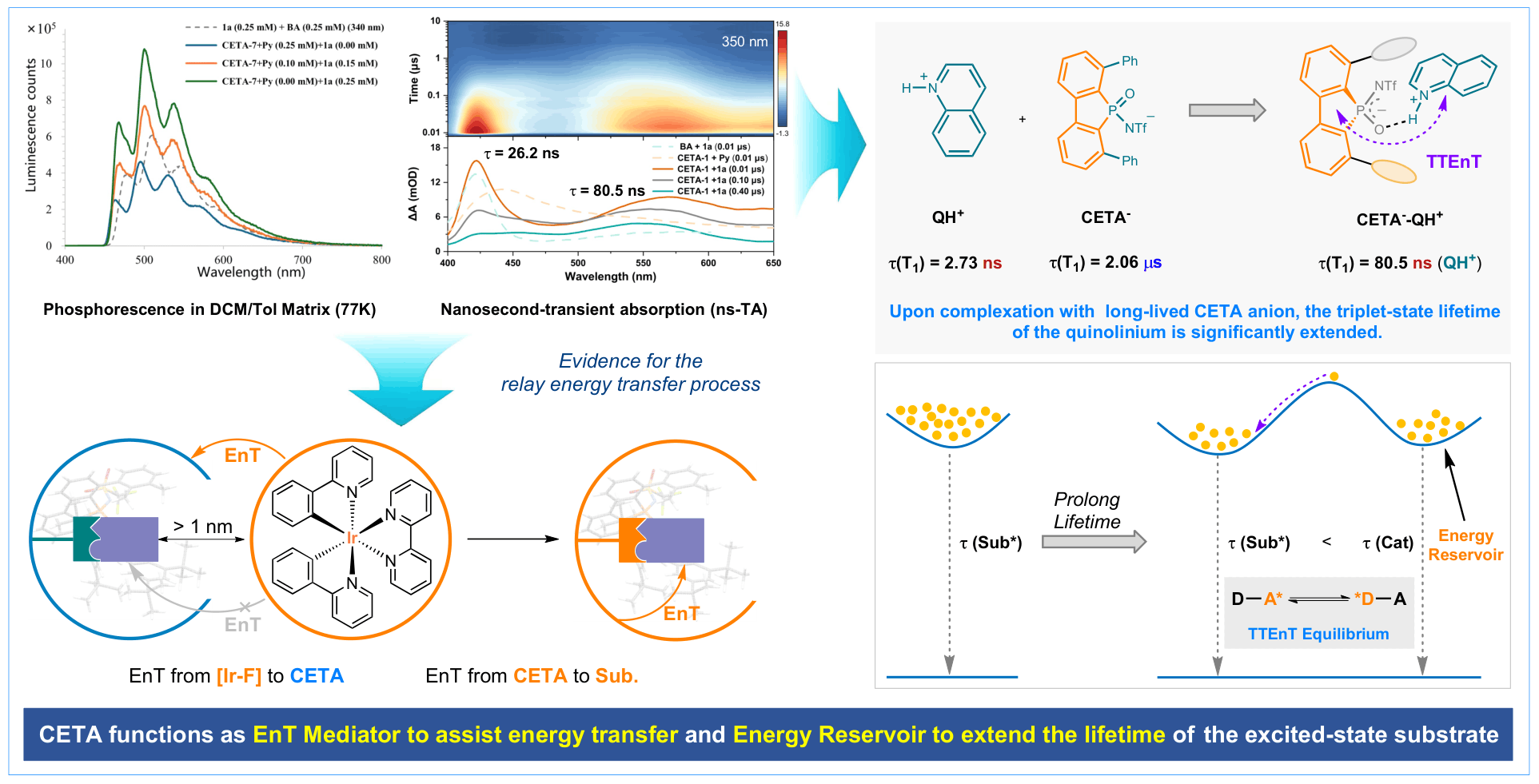
Figure 4. Mechanistic studies and excited-state lifetime modulation
SUSTech is the sole corresponding institution. Professor Bin TAN is the corresponding author, and Associate Research Professor Yong-Bin WANG (Shenzhen Grubbs Institute) is the sole first author. Research Professor Shao-Hua XIANG, Postdoctoral Fellow Cheng LI, and Ph.D. students Yi-An XU and Gang-Ya CHENG (Department of Chemistry) also contributed to this work.
Paper Article: https://www.science.org/doi/10.1126/science.aeb8506
Proofread ByNoah Crockett, Junxi KE
Photo By