Associate Professor Jinhui ZHONG’s team from the Department of Materials Science and Engineering at the Southern University of Science and Technology (SUSTech) developed a Fourier Transform Wide-Field Electrochemical Hyperspectral Imaging technique (FT-WEHI), which allows in-situ, high-throughput, and simultaneous monitoring of electrochemical reactions on hundreds of single nanoparticles. The related research results were published under the titles “Wide-field Fourier transform hyperspectral imaging for real-time probing of electrochemical reactions” and “High-Throughput Monitoring of Electrochemical Reactions on Single Nanoparticles via Fourier Transform Wide-Field Electrochemical Hyperspectral Imaging” in Advanced Scientific Instruments and ACS Nano, respectively.

Electrochemical interfaces are widely found in energy and chemical processes like electrocatalysis, lithium-ion batteries, and sensing. Since electrode surfaces often have spatial heterogeneity, different areas can show significant differences in particle size, shape, and composition, which also affects their electrochemical activity. At the same time, these interfaces continue to evolve over time and with applied voltage. Developing in situ imaging techniques that can capture both spatial and spectral information in real-time over a wide field of view is important for understanding and controlling complex electrochemical processes.
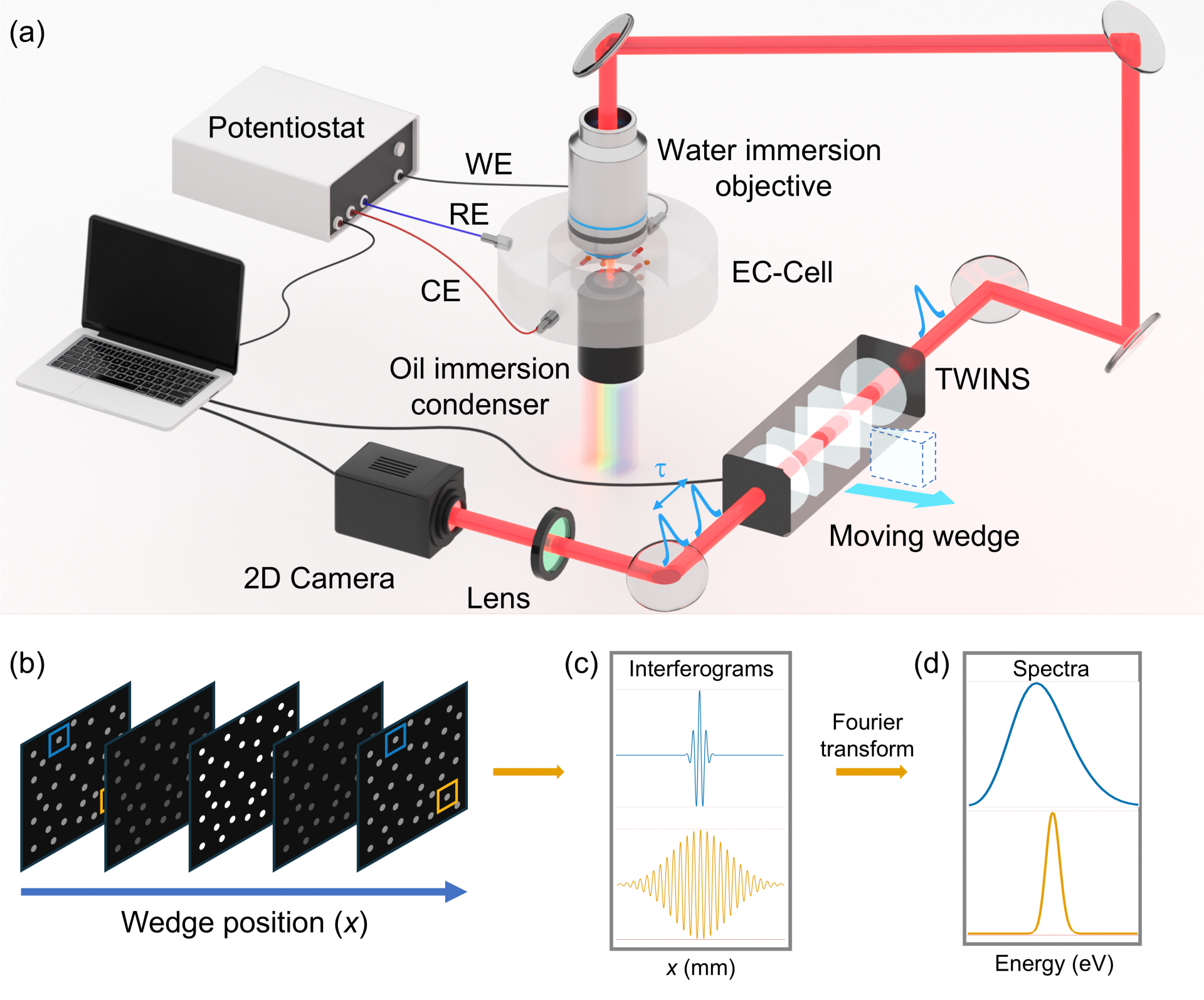 Figure 1. Schematic of Fourier Transform Wide-Field Electrochemical Hyperspectral Imaging Principle
Traditional hyperspectral imaging usually relies on point-by-point scanning or wavelength tuning, making it difficult to simultaneously achieve fast imaging speed, wide field of view, and spectral information acquisition. This limits its application to monitor rapid, non-uniform electrochemical reactions. The research team combined a Translation-Wedge-based Identical pulse Encoding System (TWINS) with a high-speed 2D camera to build a Fourier transform wide-field electrochemical hyperspectral imaging system. The system controls the time delay between two scattered fields by scanning the wedge in TWINS, while continuously recording wide-field images with the camera. The scattered spectrum at each spatial position is subsequently recovered through Fourier transform, enabling the simultaneous spectral measurement of a large number of single nanoparticles in a short time.
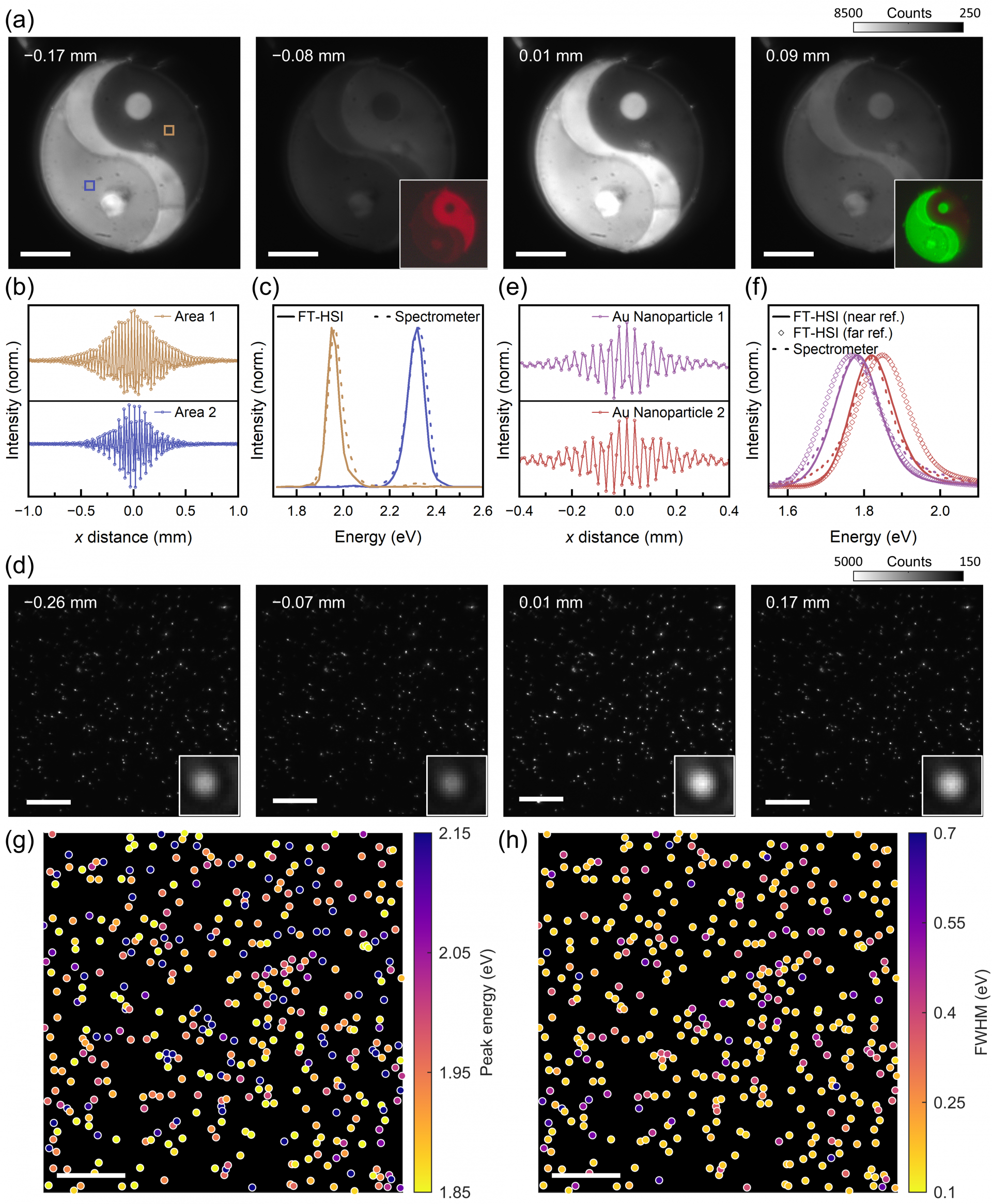 Figure 2. Hyperspectral imaging results under photoluminescence and dark-field scattering modes
Compared with traditional single-particle spectroscopy experiments that require repeated measurements to get statistical results, FT-WEHI can simultaneously capture 2D images and spectral information of a large number of randomly distributed nanoparticles across a wide field of view, significantly improving the experimental efficiency for single-particle electrochemistry studies. This technique can operate in various spectral measurement modes, including photoluminescence, dark-field scattering, transmission/absorption, and Raman spectroscopy. The peak positions, shapes, and linewidths of the spectra obtained in photoluminescence and dark-field scattering modes match well with those from commercial spectrometers.
The research team used electrodeposition of Pt on Au nanospheres and Au nanorods as a model reaction to verify the technique’s performance in situ electrochemical studies. In the experiments, the team dispersed Au nanoparticles on an indium tin oxide conductive substrate and gradually scanned the potential in an electrolyte containing sodium hexachloroplatinate and sulfuric acid. FT-WEHI can continuously acquire a complete hyperspectral data cube every 8 seconds and simultaneously record dark-field scattering spectral changes of hundreds of individual nanoparticles in a single experiment. The results show that as the applied potential decreases, the resonance peaks of Au nanospheres and nanorods generally red-shift and broaden, reflecting the Pt deposition process on the nanoparticle surfaces. Compared with traditional electrochemical methods that monitor overall current changes, this method can construct “optical voltammograms” for each single particle, like linear voltammetry curves, allowing the reaction process to be directly analyzed at the single-particle level.
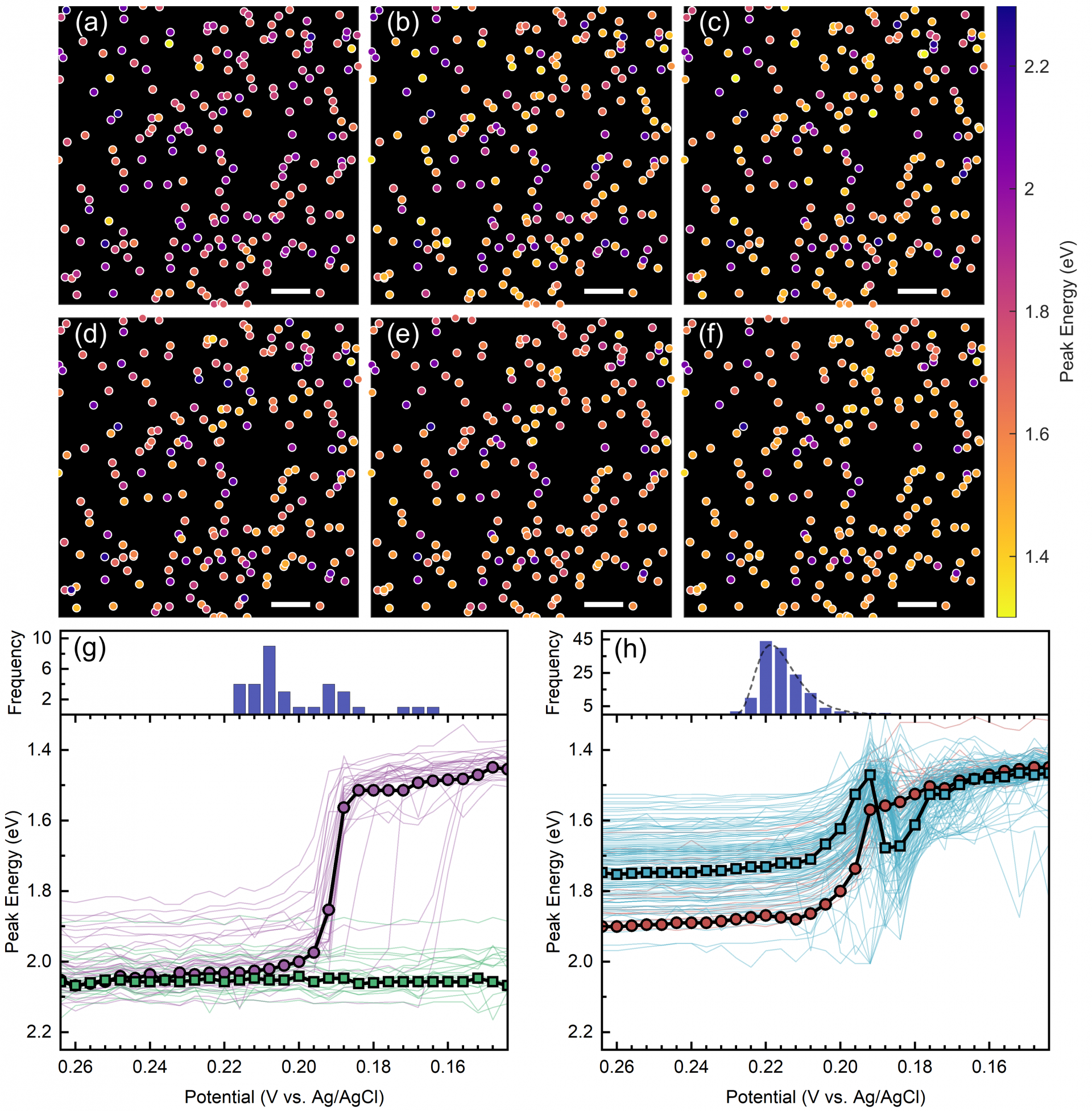 Figure 3: In-situ wide-field hyperspectral imaging of the Pt deposition process on Au nanospheres and Au nanorods
Further analysis shows significant heterogeneity in reactions between different particles. The onset potential distribution for Pt deposition on Au nanospheres is relatively broad, with about 40% of the nanospheres showing no spectral change within the experimental potential window. The onset potential of Au nanorods followed a narrower, quassi-Gaussian distribution centered around 0.216 V, and almost all nanorods show spectral response. This difference highlights the important influence of nanoparticle morphology on electrochemical reaction pathways. Combining scanning electron microscopy characterization and theoretical simulations, it was found that Pt tends to deposit preferentially at the tips of Au nanorods rather than on the sides. As the overpotential increases, Pt deposition gradually extends from the tips to the sides, further forming island-like or spike-like structures, leading to the complex evolution of the nanorods’ scattering spectra from “redshift—blueshift—redshift.” The simulation results match well with the experimental spectral changes, confirming the ability of FT-WEHI to analyze single-particle electrochemical structural evolution.
The research team successfully developed a Fourier transform wide-field electrochemical hyperspectral imaging system and demonstrated its high spatial and spectral resolution, enabling in-situ high-throughput monitoring of electrochemical reactions in many single nanoparticles. This method can quickly obtain high-throughput hyperspectral datasets and is expected to be combined with data-driven strategies like machine learning in the future, accelerating material development and mechanism studies in catalysis, energy, and biology.
PhD candidate Weiming SONG and Master’s student Zhenhao LIAO from the Department of Materials Science and Engineering at SUSTech are co-first authors of the paper, while Associate Professor Jinhui ZHONG from the same department is the corresponding author. SUSTech is the first affiliated institution of the work, with collaboration from the related team at Xiamen University.
Paper Links:
Proofread ByNoah Crockett, Junxi KE
Photo By