On July 21, 2026, at the invitation of Qinghu MENG, Chair of the Department of Electronic and Electrical Engineering and Academician of the Canadian Academy of Engineering, Tongwen CHEN, a Fellow of IEEE, the International Federation of Automatic Control, the Royal Society of Canada, as well as the Canadian Academy of Engineering, visited the Southern University of Science and Technology (SUSTech) for the 444th session of the SUSTech Lecture Series. He delivered a lecture titled “Intelligent Alarm Monitoring of Complex Industrial Processes.”
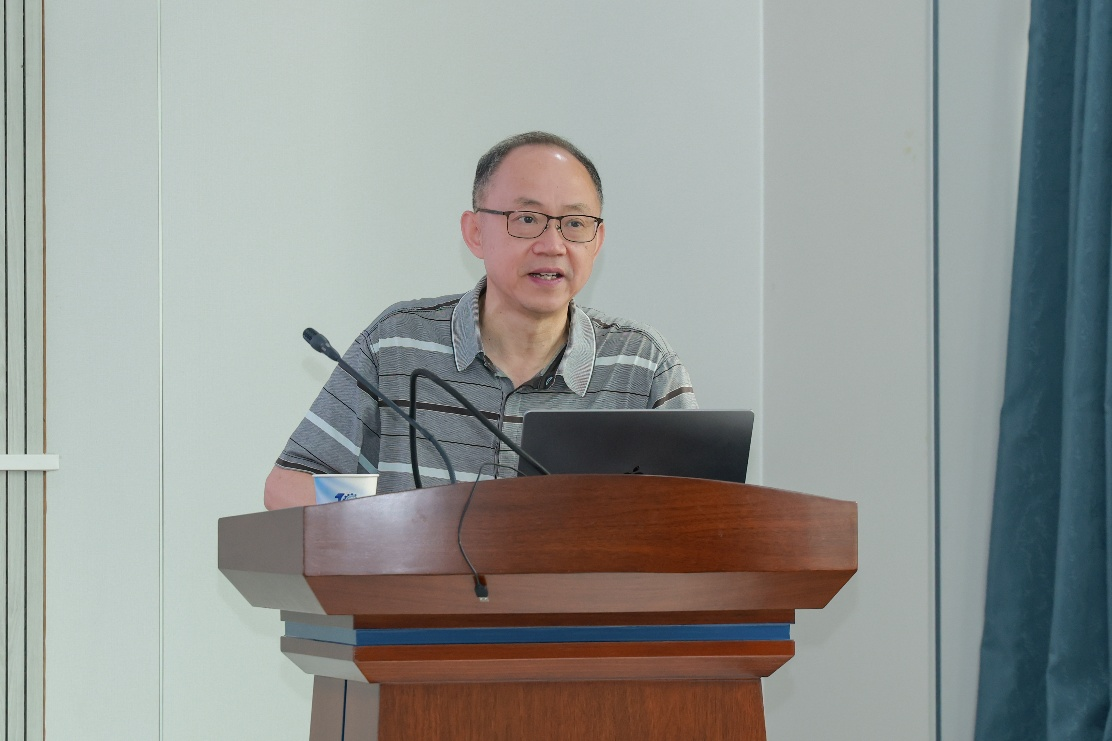
Prof. Tongwen CHEN highlighted the practical challenges faced by industrial alarm systems. In the operation of large-scale industrial facilities, alarm systems play a crucial role in promptly alerting operators to abnormal conditions, thereby ensuring production safety and operational efficiency. Industry standards stipulate that operators should receive no more than six alarms per hour on average. However, in actual production, operators often face alarm volumes far exceeding this threshold. A massive influx of repetitive, false, and nuisance alarms not only increases the workload for operators but can also obscure critical abnormal information, hindering fault diagnosis and reducing response efficiency.
To address this issue, he shared his team’s recent development of intelligent, data-driven “alarm analytics” methodologies. He pointed out that modern industrial systems accumulate vast amounts of alarm and process data over long-term operation. The key to enhancing industrial alarm system performance lies in identifying alarm patterns from this data, analyzing the correlations between alarms, and further tracing the root causes of anomalies.
Focusing on the analysis, management, and optimization of industrial alarm systems, Prof. Tongwen CHEN systematically introduced a series of intelligent analysis tools and their applications, including alarm information visualization, system performance evaluation and analysis, rational alarm design, alarm flooding classification, and root cause analysis. These methodologies enable engineers to identify repetitive, chattering, and correlated alarms from massive alarm records, thereby reducing the interference of invalid information on operators and improving the accuracy and interpretability of alarm systems.
Drawing on real-world industrial data and engineering application cases, Prof. Tongwen CHEN also presented the testing and practical deployment of these tools. He emphasized that industrial alarm monitoring should not be limited to setting alarm thresholds. Instead, it requires the comprehensive utilization of historical data, process knowledge, and data analytics methods to continuously evaluate and optimize alarm systems. The technologies developed by his team have been tested and deployed in industrial practices in Canada and other regions, providing technical support for industrial facilities to meet new alarm management standards and enhance their safe operation.
During the Q&A session, faculty and students asked about integrating alarm and process data, as well as the practical challenges of deploying these technologies in industrial systems. Prof. Tongwen CHEN answered each question by drawing on his experience in both scientific research and engineering practice. He also encouraged young scholars to focus on real industrial demands and promote the deep integration of control theory, data analytics, and engineering applications.
Proofread ByJunxi KE
Photo By