From July 17 to 20, 2026, Joseph Sifakis, a Distinguished Long-term Visiting Professor at the Southern University of Science and Technology (SUSTech), Turing Award laureate, and Foreign Academician of the Chinese Academy of Sciences, participated online in the 2026 World Artificial Intelligence Conference (WAIC) and the High-Level Meeting on Global Governance of Artificial Intelligence, currently being held in Shanghai. During the event, he was remotely interviewed by CCTV News’ “Leaders Talk.” He emphasized the need to promote collaborative artificial intelligence.
Sifakis: Collaborative AI Should Be Promoted
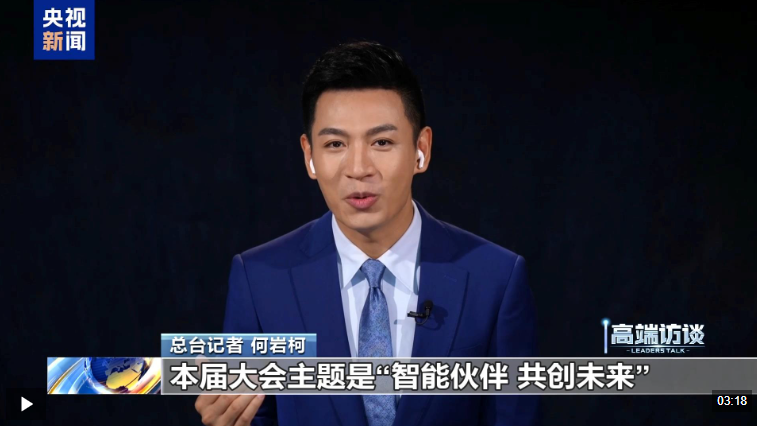
CCTV Reporter Yanke HE: Professor Sifakis, thank you so much for joining us on “Leaders Talk.” We’ve learned that you will join the 2026 World Artificial Intelligence Conference online. The theme of this year’s conference is “Intelligent Partners, Co-create the Future.” What’s your take on this theme?

Joseph Sifakis, Turing Award Laureate and Foreign Academician of the Chinese Academy of Sciences: Thank you for inviting me. First, I am delighted to see that WAIC this year promotes a vision of collaborative AI, in which machines work together with humans to advance the development of knowledge and harvest intelligence for the well-being of humanity and society. So today, AI is primarily focused on, as you know, asking questions, and it gives you answers without giving you a choice. It is either take it or leave it. Now, collaborative AI must interact with humans, and to do so, AI must be able to explain its suggestions in a way that is clear and understandable to humans. We are far from having this type of AI today, and we must work actively to develop collaborative AI.
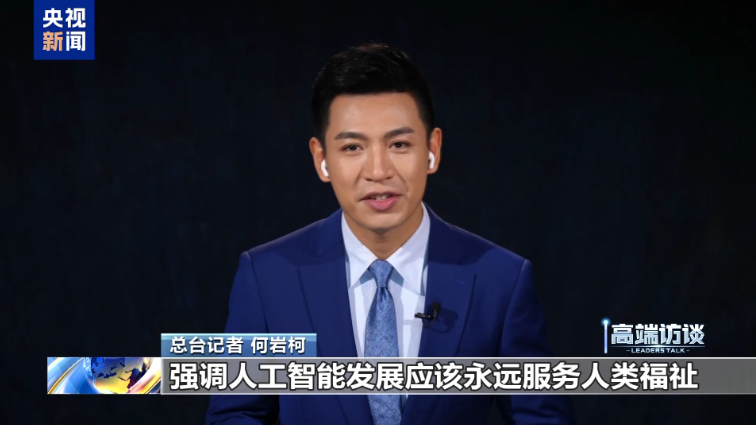
CCTV Reporter Yanke HE: As we know, Chinese President Xi Jinping has proposed the principle of putting people first and promoting AI for good, emphasizing that AI development should always serve humanity. It basically establishes AI’s value framework from legal, ethical, and humanitarian perspectives to ensure it is safe, reliable, and controllable. So, what is your take on this principle?
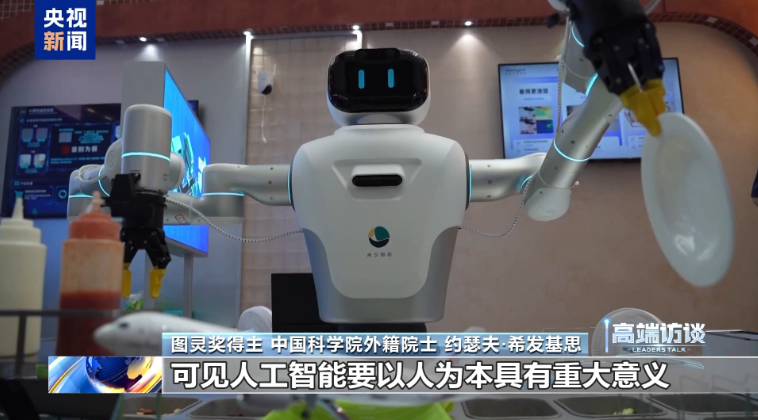
Joseph Sifakis, Turing Award Laureate and Foreign Academician of the Chinese Academy of Sciences: I fully agree with this principle, and I believe no one would disagree with it. All technologies, including AI, should serve humanity and the common good. This statement coming from a country like China is of great significance. Some tech giants believe that it’s up to humanity to adapt to machines, not for machines to serve humanity. They seek to convince us that our subordination to machines is inevitable, for instance, by perpetuating the theory of technological determinism. What does this theory say? It predicts the triumph of machines over humans. Thereby, they consider that humans are not key actors in their own history and destiny. This is too bad. So, I’m quite glad that China openly adopts such a position.
Sifakis Commends China’s Advocacy for “AI for Good”

During his remote interview with CCTV News’ “Leaders Talk,” Turing Award Laureate and Foreign Academician of the Chinese Academy of Sciences Joseph Sifakis also noted that China has a solid industrial foundation and a massive, diverse digital infrastructure. He strongly agreed with China’s philosophy of advocating for “AI for good” and promoting the synergistic development of AI.
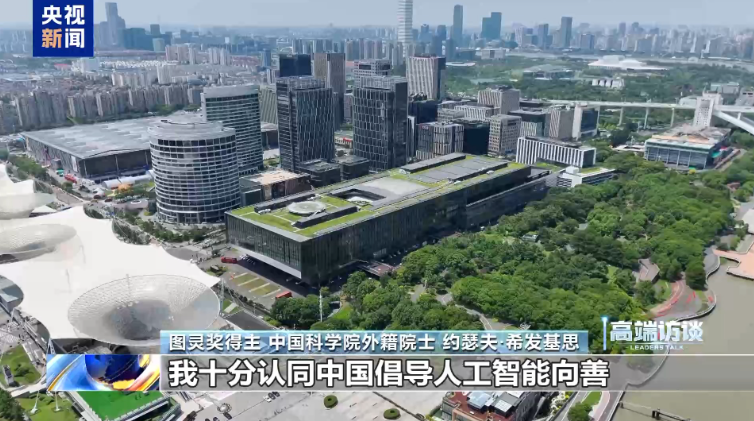
CCTV Reporter Yanke HE: Actually, many developing countries still face gaps in technology, computing power, and talent, limiting their access to AI opportunities. As we see, China has launched the “AI Capacity-Building Action Plan for Good and for All.” How do you evaluate this initiative, and what more is needed to bridge the AI divide and ensure AI benefits all humanity?
Joseph Sifakis, Turing Award Laureate and Foreign Academician of the Chinese Academy of Sciences: I think that one obstacle to making AI beneficial to the world and humanity is that we should control the risks. We should set the rules of the game. As long as we don’t have standards and there is no agreement about how to control the risks, this is a problem. I know that in China, you have defined standards per sector. I am glad that China emphasizes AI for good and collaborative AI, and this is great. Of course, you have to convince everybody to make this move and to take another direction.
Proofread ByNoah Crockett
Photo By