Associate Professor Jun XU from the School of Medicine at the Southern University of Science and Technology (SUSTech) and his collaborators published a research paper online in Nature titled “A biased allosteric modulator is a molecular glue for β2AR dimerization.” They revealed that the biased allosteric modulator AP-7-168 can act as a kind of molecular glue to stabilize β₂-adrenergic receptor (β₂AR) homodimers, explaining a new molecular mechanism by which Class A G protein-coupled receptors (GPCRs) achieve signal bias regulation through dimerization. This discovery lays an important foundation for airway diseases like asthma and chronic obstructive pulmonary disease (COPD), as well as the development of new GPCR-targeted drugs (Figure 1).
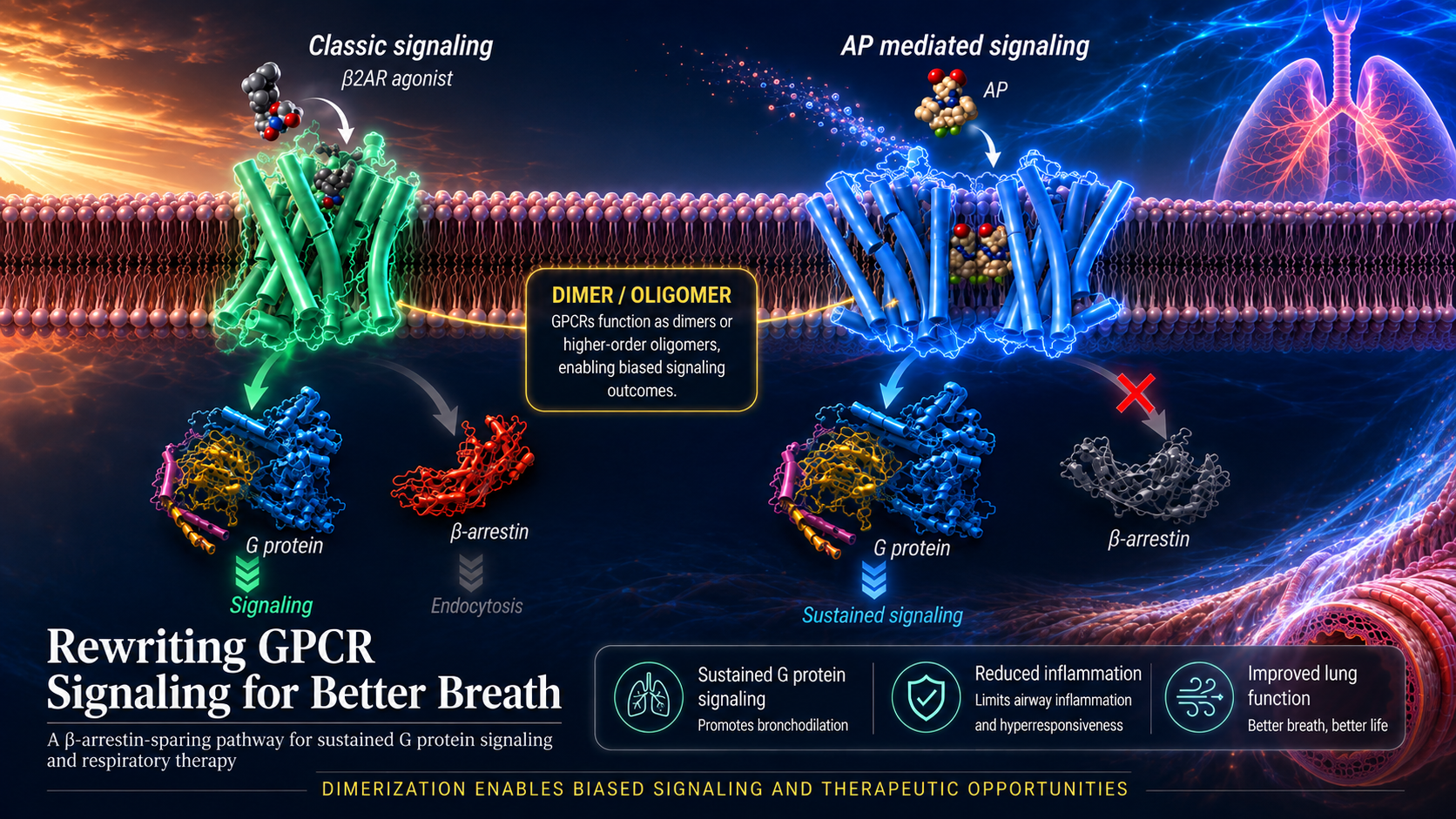
Figure 1. Schematic of how the small molecule compound AP mediates β₂AR dimerization to regulate downstream cellular signaling
Adrenaline receptors are key functional proteins in the human sympathetic nervous system. Among them, β₂AR is mainly concentrated in airway smooth muscle tissue and is a core target for treating respiratory diseases like asthma and COPD. However, traditional β₂AR agonists, after long-term use, can cause desensitization and internalization mediated by β-arrestin proteins, leading to a gradual loss of drug effectiveness and seriously affecting long-term treatment results. The newly discovered biased allosteric modulator AP-7-168 can act like “molecular glue,” sticking two β₂AR monomers together and stabilizing their dimer structure. This conformation creates significant steric hindrance, completely blocking the binding of β-arrestin and GRK kinases, thereby preventing receptor desensitization. At the same time, the dimer structure doesn’t block the binding and activation of stimulatory G protein (Gs), so it can still normally trigger the cAMP signaling pathway related to airway relaxation, achieving a “keep the therapeutic effect, shut down the desensitization pathway” biased signaling regulation.
For a long time, the academic community generally believed that Class A (rhodopsin-like) GPCRs mainly function as monomers. Although there is evidence showing that these receptors can form dimers and generate unique signaling characteristics, the molecular mechanisms of receptor dimerization, their physiological roles, and strategies for drug development targeting dimers have remained unresolved. To uncover this mystery, the research team used the small molecule AP-7-168, previously discovered in Professor Jeffrey Benovic’s lab, as a tool, and combined multiple biophysical and structural biology techniques, including cryo-electron microscopy, single-molecule FRET imaging, bioluminescence resonance energy transfer, and double electron-electron resonance spectroscopy, to dissect the interaction mode between AP-7-168 and β₂AR. The researchers unexpectedly found that two molecules of AP-7-168 embed into a pocket formed by transmembrane helices 3, 4, and 5 of two β₂AR monomers, tightly binding through π-π stacking, van der Waals forces, and hydrogen bonds, locking the receptor like a “molecular glue” and stabilizing its homodimer conformation. The team ultimately captured the AP-7-168-bound β₂AR dimer structure in a nanodisc at a resolution of 2.5 Å, clearly showing the detailed interaction interface between the ligand and the receptor dimer.
The study also confirmed that an intact cell membrane lipid environment is key for AP-7-168 to induce β₂AR dimerization. The receptor nearly fully dimerizes only when the compound is pretreated on the cell membrane; mixing the ligand directly with monomeric receptors in a detergent system drastically reduces dimerization efficiency. Cell experiments further showed that AP-7-168 can stabilize β₂AR dimers on the cell membrane in a dose- and time-dependent manner and promote the assembly of receptors into larger nanoclusters, which might act as signaling hubs to further reshape intracellular signaling networks.
Functional experiments and structural analysis together revealed the core mechanism behind the signaling bias of this dimer: the AP-7-168-stabilized β₂AR dimer conformation creates significant steric hindrance, fully blocking β-arrestin from binding to the G protein-coupled receptor kinase (GRK) and thus preventing receptor desensitization. At the same time, the dimer structure doesn’t stop stimulatory G protein (Gs) from binding and getting activated, so the airway relaxation-related cAMP signaling pathway can still function normally. In simple terms, this molecular “glue” lets β₂AR “keep its therapeutic effect while shutting down the desensitization pathway,” achieving biased signaling regulation. Comparative studies show that AP-7-168 and another non-biased allosteric modulator, AS408, bind to highly overlapping sites, but their binding orientations are flipped 180°, and this subtle difference directly causes their vastly different functions, providing key structural insights for designing drugs that target allosteric pockets.
The research team also found that the AP-7-168 stabilized β₂AR dimers can further assemble into higher-order oligomers like tetramers and hexamers, revealing a “dimer tandem” assembly mode and explaining the molecular basis for receptor nanocluster formation on the cell membrane. Single-molecule fluorescence dynamics monitoring showed that AP-7-168 restricts the outward movement of β₂AR’s transmembrane helix 6, locking the receptor in a kind of inactive-like state; meanwhile, Gs binding can partially reverse this effect, and the dynamic balance together regulates receptor signaling. This series of findings updates the scientific community’s understanding of the correlation between the conformational dynamics, oligomerization, and signal transduction of Class A GPCRs.
This work is the first to show that small molecules can act like molecular glue to stabilize Class A GPCR dimers and achieve biased signaling regulation. This mechanism could help solve the problem of desensitization in clinical asthma medications, and it also works for other Class A GPCRs, which could drive innovative drugs targeting the nervous system, cardiovascular system, metabolism, and more.
The collaborators on this study include Professor Brian Kobilka from Stanford University, Professor Jeffrey Benovic from Thomas Jefferson University, as well as researchers from the University of Wisconsin School of Medicine and Hanyang University in South Korea.
Jun XU and Brian Kobilka are co-corresponding authors of this paper. Stanford postdoc Jieming SHEN and graduate student Teja Peddada are co-first authors. The Jeffrey Benovic lab made significant contributions to the discovery and functional study of small molecules. Professor Michael Lerch from the University of Wisconsin School of Medicine and Professor Pil Seok Chae from Hanyang University provided key support for the biochemical and biophysical characterization in this study. SUSTech is the co-corresponding affiliation.
Paper Link: https://www.nature.com/articles/s41586-026-10892-y
Proofread ByNoah Crockett, Junxi KE
Photo BySchool of Medicine