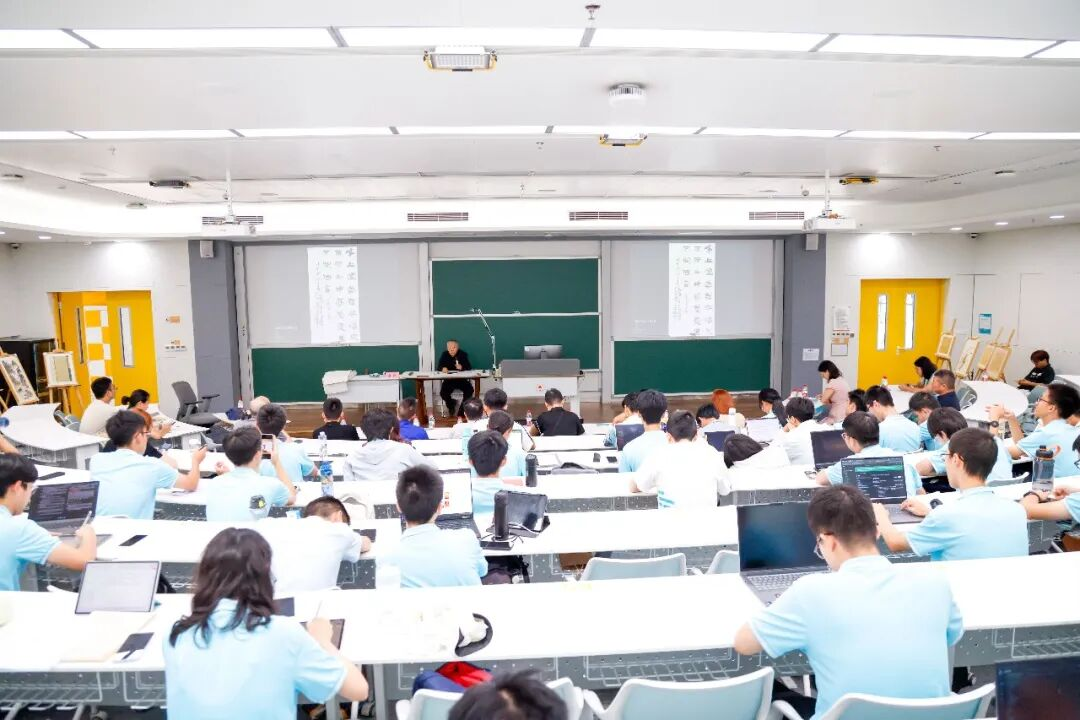
Professor Chuangchuang LI’s research team from the Department of Chemistry of the College of Science at the Southern University of Science and Technology (SUSTech) published a paper titled “Total Synthesis and Structural Confirmation of Curcusone I” in the internationally renowned Journal of the American Chemical Society (JACS). The team cleverly designed a synthesis route and achieved the asymmetric total synthesis of the target molecule in just 13 steps, confirming its stereostructure through X-ray diffraction. This study solved the long-standing puzzle of Curcusone I’s structure and completed the first total synthesis of this unique Curcusone diterpenoid.
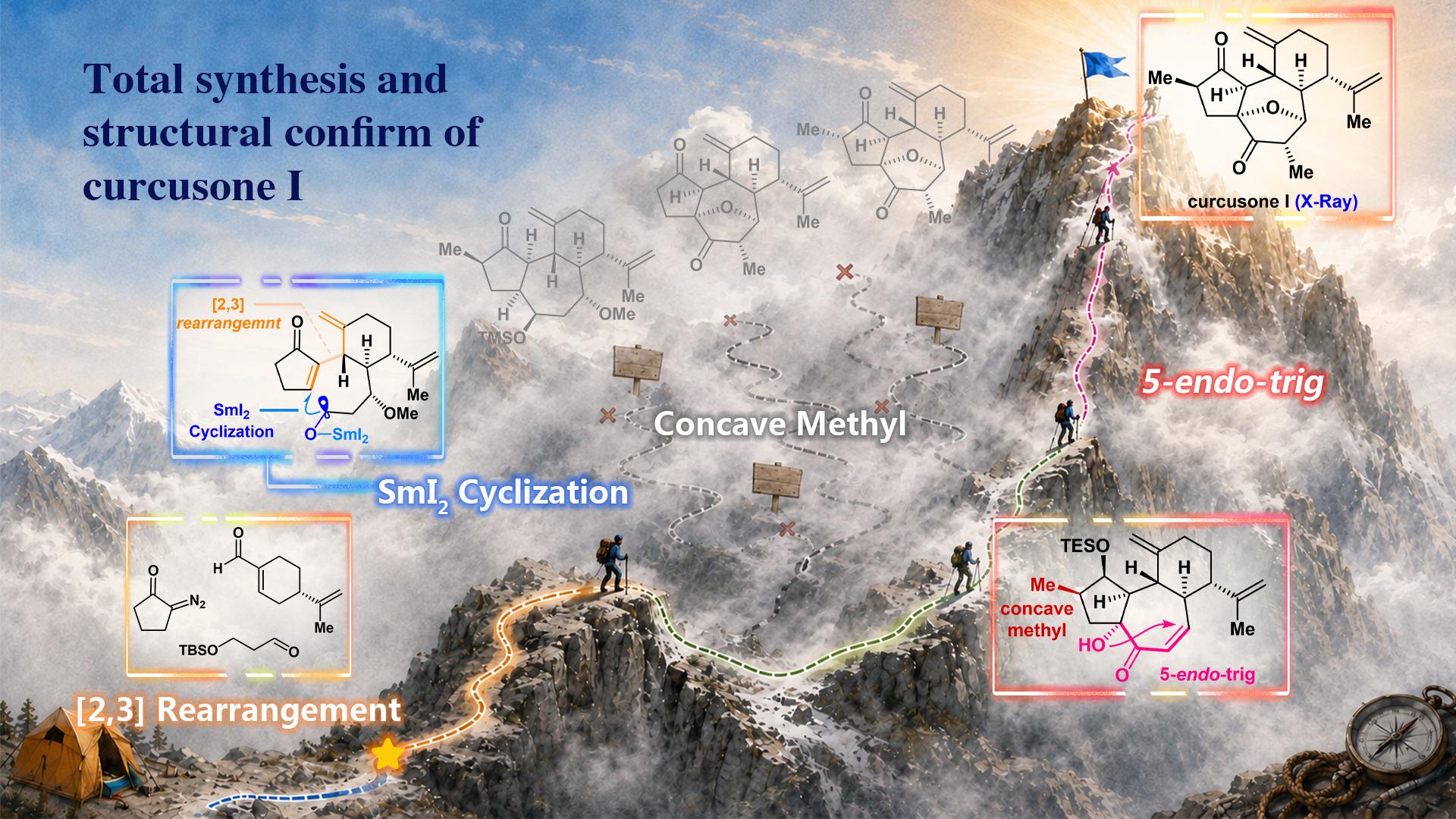
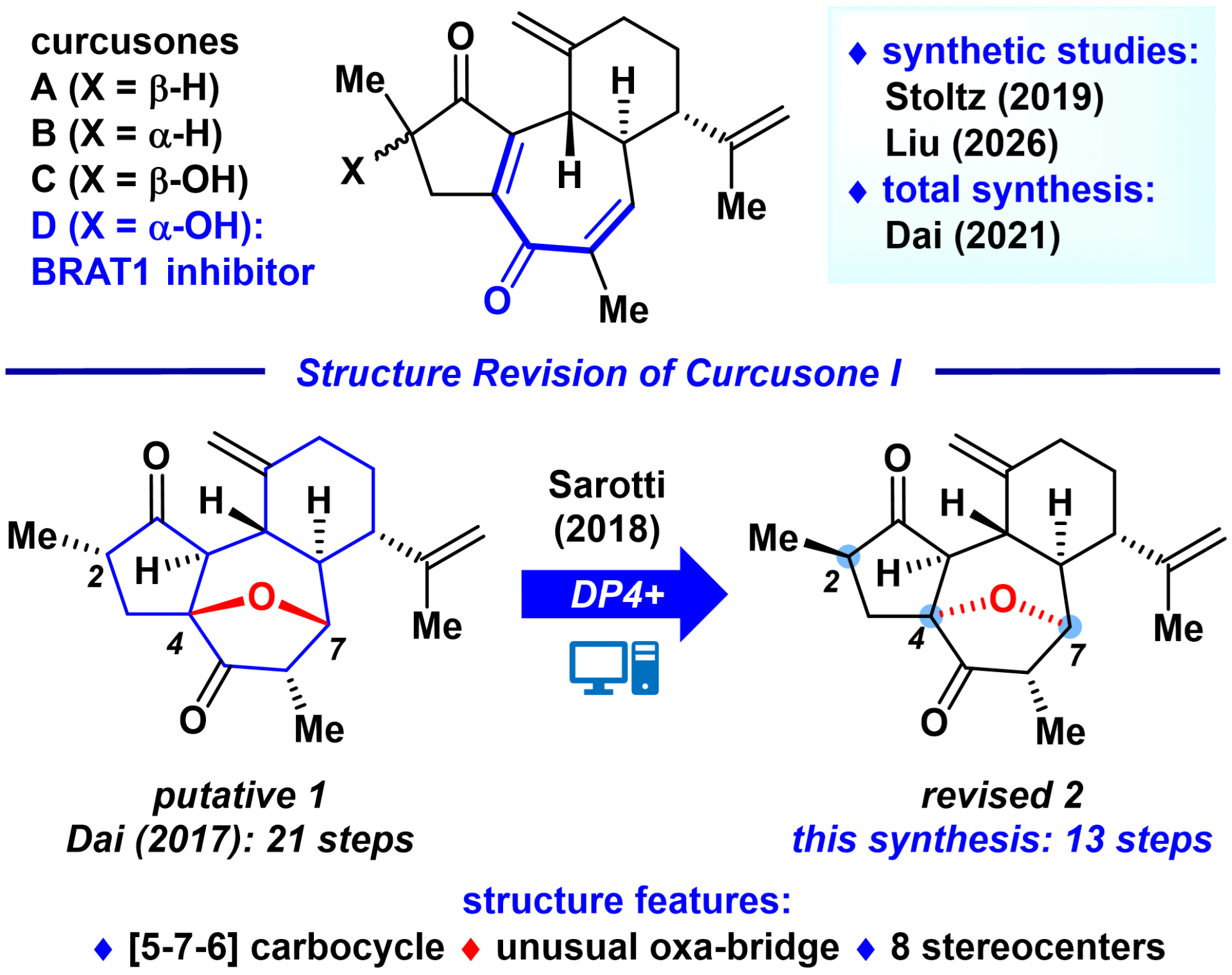
Figure 1. Structural identification and related synthesis of Curcusones A−D and Curcusone I
Curcusone I (Figure 1) is a diterpenoid from the Euphorbiaceae family that was isolated and identified from Jatropha by Minghua QIU’s team at the Kunming Institute of Botany, the Chinese Academy of Sciences, in 2013. Its structure features the classic [5-7-6] tricyclic carbon skeleton (blue part) typical of rhamnofolane-type natural products. However, unlike Curcusones A-D, which have flat dienone structures with strong anticancer activity, Curcusone I has a unique oxygen-containing oxabicyclo[3.2.1]octane framework and contains eight chiral centers, seven of which are consecutive. The tightly packed bridged ring structure and dense stereochemistry make it a highly challenging target for total synthesis. In 2017, the team led by Mingji DAI at Emory University completed a 21-step racemic total synthesis of the reported structure of Curcusone I. However, the NMR data of the synthetic samples didn’t match the natural product, leaving the real structure of Curcusone I unresolved. Later, Professor Sarotti at Rosario University in Argentina proposed a revised structure for Curcusone I using DFT-calculated NMR and DP4 analysis, but this still awaits verification by total synthesis experiments.
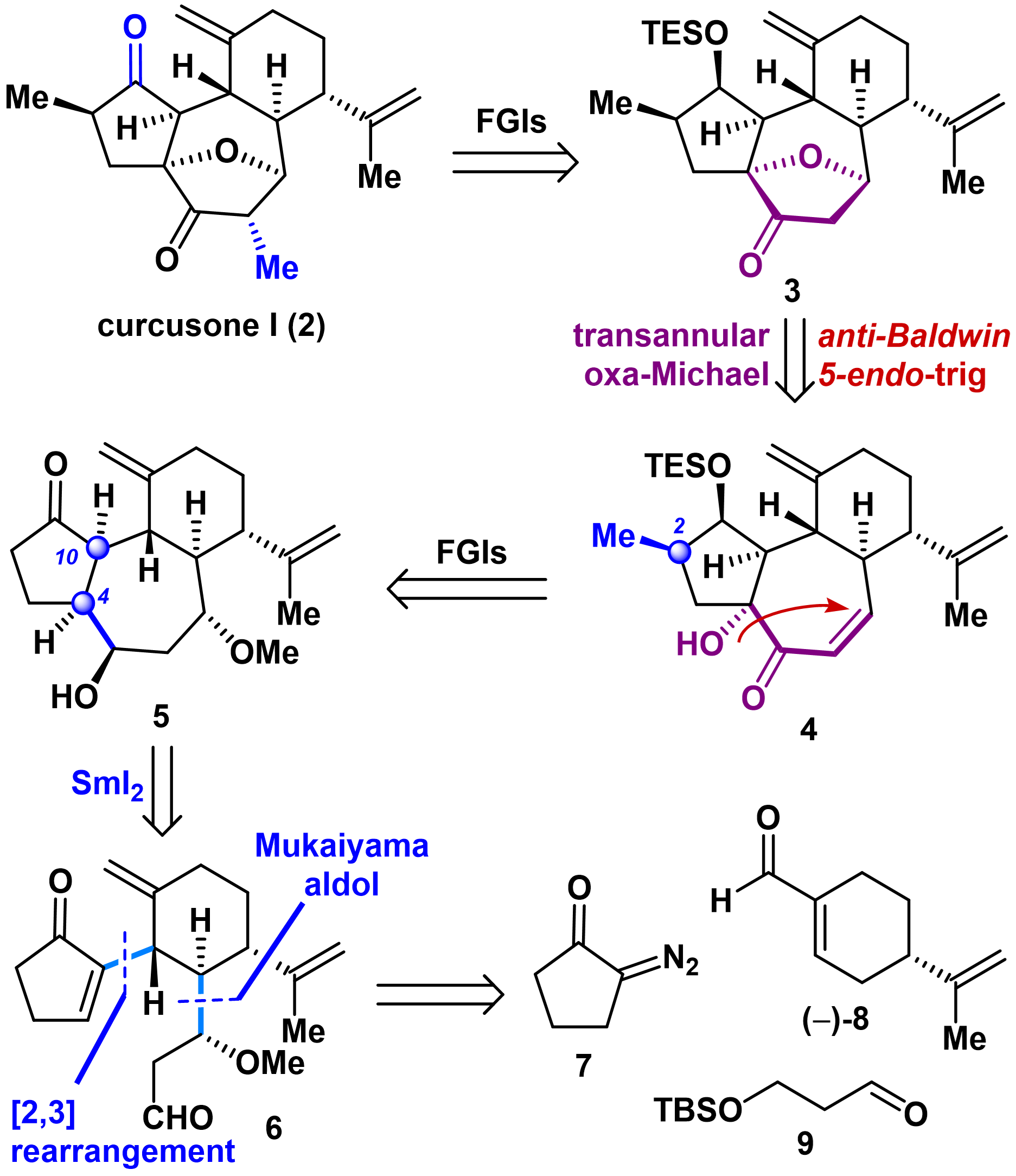
Figure 2. The retrosynthesis strategy of Curcusone I
After continuous research, the team completed the first asymmetric total synthesis of Curcusone I in 13 steps, confirmed by X-ray diffraction, finally resolving the long-standing structural determination issue of Curcusone I. For the first time in total synthesis, the team used a Rh-catalyzed selenoxide [2,3]-σ rearrangement cascade under mild conditions to link fragments (Figure 2) and achieved precise control over SmI2 radical cyclization stereochemistry by adjusting additives, efficiently constructing the common [5-7-6] tricyclic core in Euphorbia diterpenes. This route not only shows that overcoming the formally Baldwin-unfavorable cyclization geometry through cross-ring preorganization can turn what seems like an “impossible” 5-endo-trig cyclization into a feasible reaction, offering new ideas for challenging cyclizations in complex molecule synthesis, but also provides valuable strategic insights for synthesizing related diterpene natural product analogs of the Daphnane, Rhamnofolane, and Tigliane families.
PhD student Yangchao PENG, Master’s student Dongyun LIN, and undergraduate Xuanhao DENG from the Department of Chemistry at SUSTech are co-first authors of this paper. Undergraduates Fanbo ZHOU and Xiening KE made important contributions to experiments and calculations. SUSTech is the first affiliation of the paper. Professor Chuangchuang LI and Associate Professor Wen ZHANG are co-corresponding authors.
Paper Link: https://doi.org/10.1021/jacs.6c13015
Proofread ByNoah Crockett, Junxi KE
Photo By