Associate Professor Jia-Xin YIN from the Department of Physics at the Southern University of Science and Technology (SUSTech), the State Key Laboratory of Quantum Functional Materials, the Guangdong Basic Research Center of Excellence for Quantum Science, and the Quantum Science Center of Guangdong-Hong Kong-Macao Greater Bay Area, together with collaborators, recently published a Perspective titled “Topological pair density waves in kagome superconductors” in Nature Reviews Physics. Focusing on topological pair density waves (TPDWs) in kagome superconductors, the article systematically reviews their theoretical origins, key experimental evidence, outstanding questions, and proposes a research framework that cross-validates microscopic mechanisms, local probes, and macroscopic transport.

Superconductivity typically arises from electrons with opposite momenta pairing to form a nearly uniform condensate. When Cooper pairs carry finite momentum, the superconducting order parameter varies periodically in real space, forming a Pair Density Wave (PDW). This concept is closely related to the Fulde-Ferrell-Larkin-Ovchinnikov (FFLO) state, but does not require a strong magnetic field; instead, it can be driven jointly by lattice geometry, electron correlations and multicomponent order parameters. When a specific phase winding develops among multiple PDW components, the system may also break time-reversal symmetry, generating Berry curvature, chiral superconducting loop currents and vortex-antivortex textures, thereby realizing a Topological Pair Density Wave (TPDW).
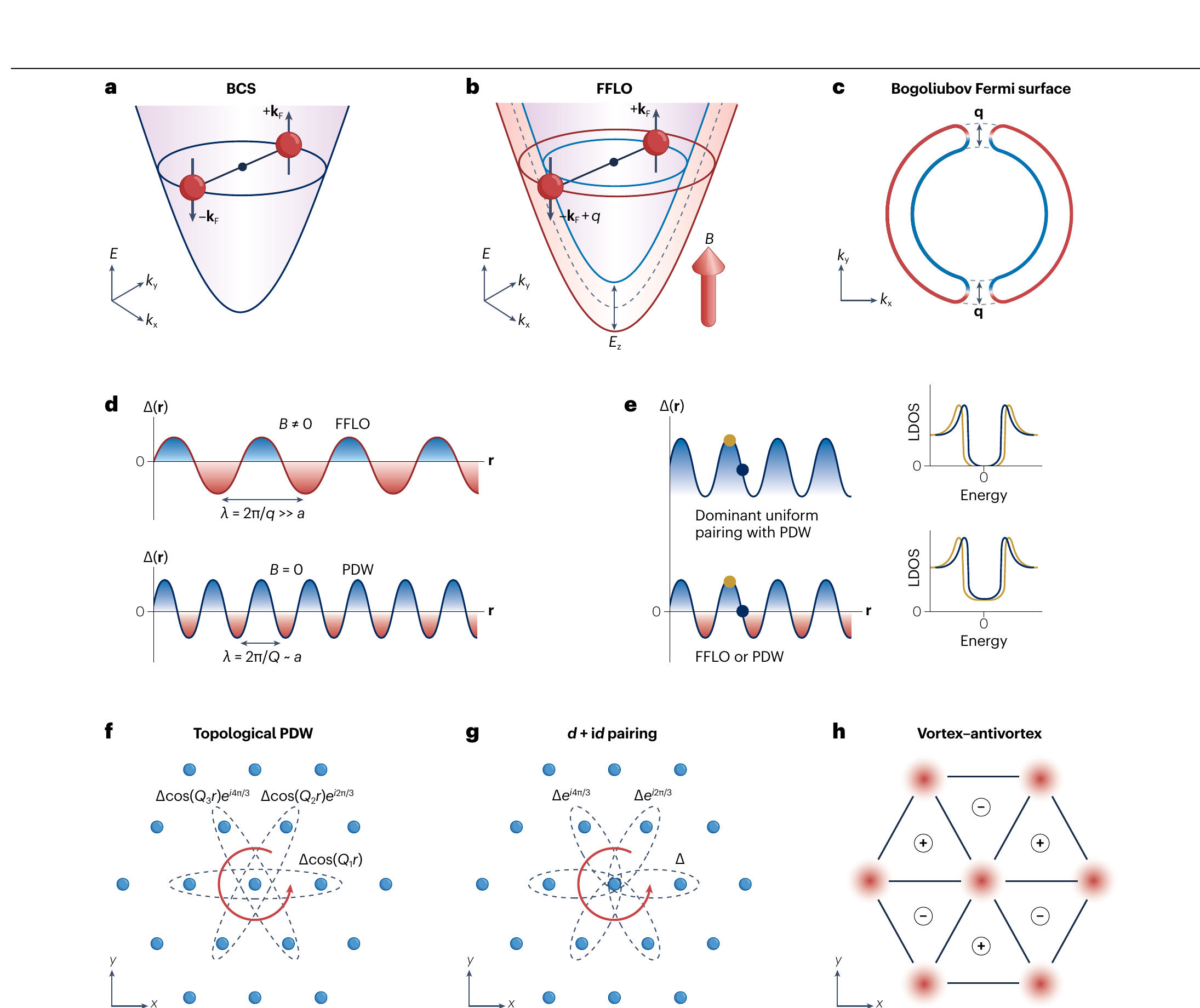
Figure 1. From finite-momentum pairing to topological pair density waves: schematics of BCS, FFLO, PDW, TPDW and the associated vortex-antivortex structure.
The kagome lattice provides a unique platform for studying this unconventional superconducting state. Its triangular geometry, van Hove singularities and sublattice interference collectively shape distinctive scattering and pairing channels. Near p-type van Hove filling, three equivalent wave vectors can support three-component finite-momentum pairing; the phase relationships among these components are locked by the lattice geometry, giving rise to a 2 × 2 TPDW intertwined with superconducting loop currents. The article further connects this mechanism with two classic loop-current models: the Haldane model, which predicts the quantum anomalous Hall effect even without an external magnetic field (Haldane received the 2016 Nobel Prize in Physics for his work on topological phases of matter), and the Varma loop-current model for understanding the pseudogap phase of cuprate superconductors. The article points out that a TPDW can convert the “frustration” inherent to kagome geometry into chirality and topology of the superconducting order parameter.
Overall, TPDW research in kagome superconductors still faces three key challenges. First, PDWs are often intertwined with charge orders, making it difficult to determine whether the observed spatial modulation originates from intrinsic pairing. Second, uniform superconductivity on the same orbital may mask the quantum effects of PDWs. Third, although Josephson scanning tunnelling microscopy can directly measure spatial oscillations of pair density, implementing this technique in kagome superconductors remains highly challenging.
Moreover, identifying a TPDW is not simply a matter of observing spatial modulation. The modulation amplitude of the pairing gap is typically very small and can easily be confused with effects from tunnelling matrix elements, surface structures or other electronic orders. Therefore, establishing a TPDW requires assessing real-space pairing modulations, phase chirality, quasiparticle excitations and thermal transport within a common framework, while distinguishing between “phenomena consistent with a TPDW” and “phase-sensitive evidence that can rule out alternative explanations.”
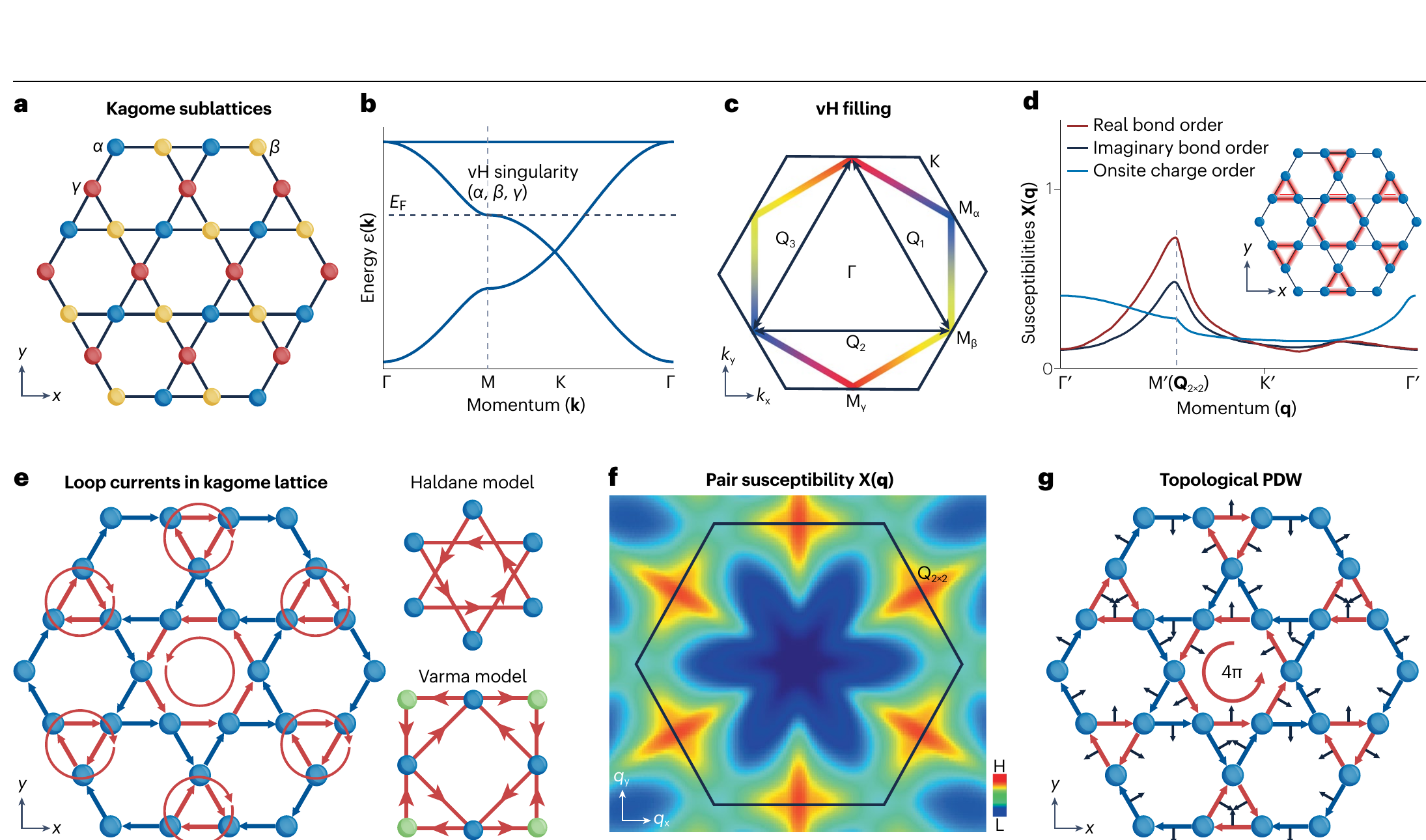
Figure 2. Topological pair density waves in the kagome lattice and their intertwining with superconducting loop currents.
The article further examines AV₃Sb₅ (A = K, Rb, Cs) as the principal material platform for TPDW studies. In these compounds, V atoms form kagome layers and alkali-metal atoms are intercalated between the layers. Upon cooling, charge order and superconductivity emerge successively, providing a natural setting for studying the competition and intertwining among different electronic orders. In KV₃Sb₅, different real-space regions can exhibit opposite chiralities of the pairing modulations; more importantly, the chirality of the pair density wave can be switched by reversing the direction of an applied magnetic field, revealing time-reversal symmetry breaking in the pair density wave state.
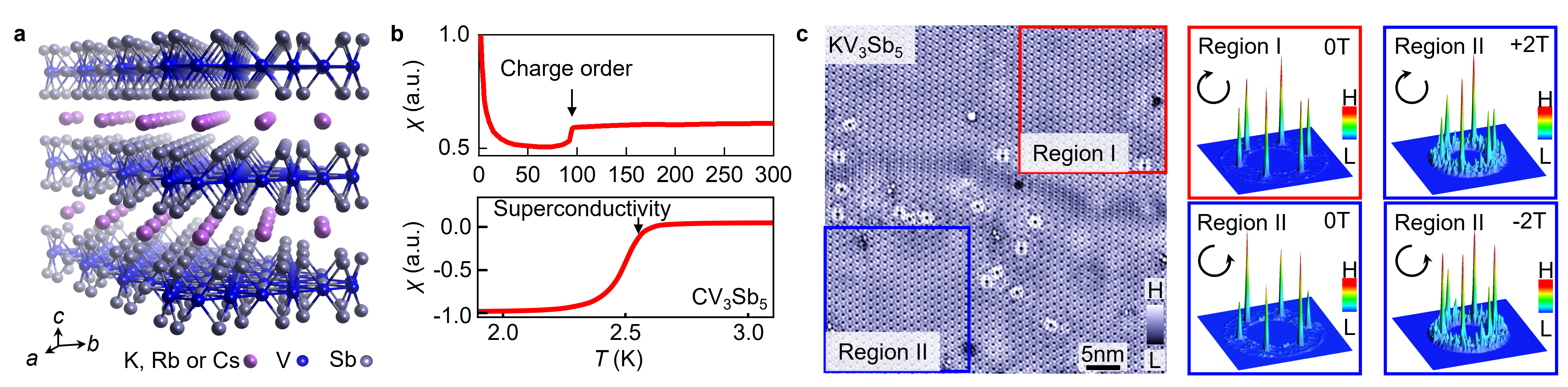
Figure 3. Material context of AV₃Sb₅ kagome superconductors and magnetic-field-switchable chiral pairing modulations.
Local spectroscopy provides some of the most direct experimental evidence. The local pair density N_J(r), measured by Josephson scanning tunnelling microscopy, and the superconducting gap Δ_SC(r), obtained by conventional scanning tunnelling spectroscopy, both exhibit 2a-periodic modulations; the three modulation components in Fourier space show rotational chirality. Meanwhile, zero-energy quasiparticle-interference imaging reveals Bogoliubov Fermi arcs, suggesting that finite-momentum pairing may open a gap only on parts of the Fermi surface. Moreover, 2 × 2 pairing modulations have been observed in all three AV₃Sb₅ materials, with A = K, Rb, and Cs, indicating the universality of this phenomenon across kagome superconductors. Together, these results support the PDW picture from the perspectives of pairing strength, gap structure and low-energy quasiparticles.
Bulk measurements provide complementary information. Some thermal-transport, muon spin rotation/relaxation (μSR), and nuclear quadrupole resonance (NQR) results have been interpreted as evidence for low-energy excitations or nodal-like behavior. The zero-field superconducting diode effect and possible charge-6e oscillations further point to a multicomponent, chiral superconducting order parameter. However, the article emphasizes that these macroscopic signals are consistent with a TPDW but are not decisive evidence on their own. Only by cross-comparing them with real-space pairing modulations, phase chirality and the momentum-space gap structure can alternative explanations based on other unconventional superconducting states be ruled out.
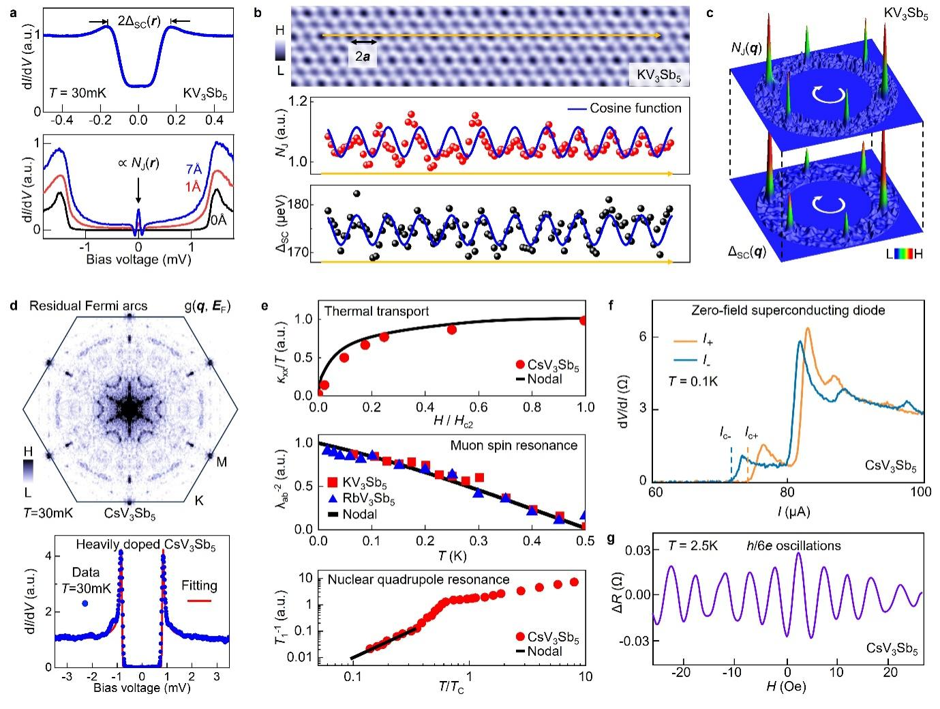
Figure 4. Local spectroscopy, low-energy excitations and macroscopic transport signals associated with topological pair density waves in kagome superconductors.
The apparently contradictory gap characteristics reported by different experiments can also be understood within an “orbital selectivity” framework: uniform pairing resides mainly on the Sb p-orbital bands, whereas the TPDW more strongly affects the V d-orbital bands. This orbital separation prevents uniform pairing from readily masking the quantum effects of the TPDW. Consequently, near-conventional superconducting behavior seen in some bulk measurements can coexist with the pairing modulations and residual quasiparticles detected by local probes. The disappearance of residual states in heavily doped samples further indicates that changes in Fermi-surface structure and orbital composition directly affect the low-energy electronic states on which the PDW acts.
To further test the TPDW scenario, the article discusses three interrelated criteria. First, finite-momentum pairing should produce pronounced superconducting-gap anisotropy in momentum space, which can be tested by angle-resolved photoemission spectroscopy (ARPES). Second, chiral superconducting order may generate an anomalous thermal-Hall response. Third, a PDW with phase sign reversals is expected to exhibit a characteristic pair-breaking response to non-magnetic scattering. Recent phase-sensitive experiments on Ta-doped KV₃Sb₅ found that non-magnetic impurities strongly suppress the 2 × 2 pairing modulations while charge order and overall superconductivity remain relatively robust, placing strong constraints on the intrinsic nature of the finite-momentum pairing.
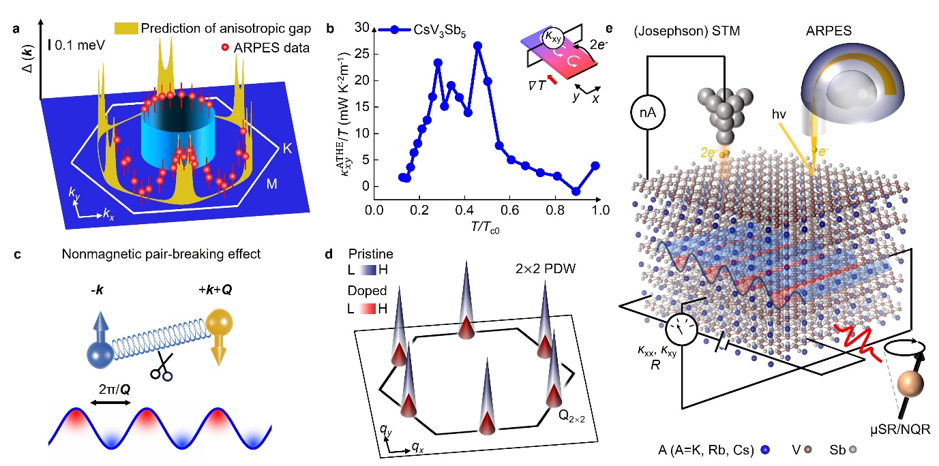
Figure 5. Further experimental tests of topological pair density waves and a multi-probe research framework.
For the next stage, the article highlights three research priorities. First, to develop many-body theories capable of treating strong correlations, disorder and multiorbital effects within a unified framework, and to refine the topological classification of TPDWs. Second, to directly image the vortex–antivortex lattice, fractional vortices and domain walls, and to search for edge states and quantized thermal-Hall responses. Third, to combine scanning tunnelling microscopy, Josephson scanning tunnelling microscopy, angle-resolved photoemission spectroscopy, transport measurements and μSR/NQR, and to tune different pairing components through controlled defects, strain, and magnetic fields, thereby establishing reproducible and comparable experimental criteria. These efforts will help address how unconventional superconductors can simultaneously break translational, rotational, and time-reversal symmetries in real materials, and provide new material platforms and experimental routes for controlling higher-charge condensates and topological superconductivity.
This Perspective centers on kagome superconductors, bringing observations from local spectroscopy, angle-resolved photoemission spectroscopy and transport measurements into a unified TPDW picture while clearly distinguishing established evidence, theoretical inferences and predictions that remain to be tested. The authors argue that only cross-validation among phase-sensitive, momentum-resolved and macroscopic transport measurements can ultimately establish the TPDW and its boundary excitations. The framework may also be extended to twisted two-dimensional materials, heavy-fermion systems and other quantum materials with multicomponent pairing. The article integrates results from Josephson microscopy, control of chirality and doping, Bogoliubov Fermi arcs, reproducibility and universality, phase-sensitive experiments, detection of magnetic Bogoliubov quasiparticles and self-consistent microscopic theory into a single evidence chain, summarized as “topological pair density waves with quantum effects;” on this basis, it outlines a preliminary physical picture for a new class of magnetic superconducting states.
Focusing on TPDWs with quantum effects in kagome superconductors, Jia-Xin YIN’s team has conducted systematic research with collaborators in China and abroad. Using Josephson scanning tunnelling microscopy, they directly observed 2 × 2 pairing modulations, discovered chiral pair density waves and Bogoliubov Fermi arcs, and established their universality across K-, Rb- and Cs-based AV₃Sb₅ materials. They further revealed magnetic-field-switchable chirality and time-reversal symmetry breaking, and obtained phase-sensitive evidence for sign reversal of the pair density wave order parameter through the pair-breaking effect of non-magnetic impurities. Together with self-consistent theoretical studies conducted by the team and collaborators, these works have gradually established a systematic evidence chain from local pairing and low-energy quasiparticles to symmetry breaking, providing experimental and theoretical support for the physical picture of a “new magnetic superconducting state – topological pair density wave” and preliminarily establishing a new theory of magnetic superconductivity. Related results have been published in Nature, Nature Materials, Physical Review Letters, PNAS, Chinese Physics Letters, and Physical Review B.
Associate Professor Jia-Xin YIN from the Department of Physics at SUSTech is the first author and corresponding author of the paper. Researcher Xianxin WU from the Institute of Theoretical Physics, Chinese Academy of Sciences, and Professor Mark H. Fischer from the University of Zurich, Switzerland, are co-corresponding authors. Graduate student Xiao-Yu YAN from SUSTech, Researcher Yigui ZHONG, and Professor Kozo Okazaki from the University of Tokyo are co-authors of the paper. SUSTech is the first affiliation of the paper.
Paper Link: DOI: 10.1038/s42254-026-00974-1
Proofread ByNoah Crockett, Junxi KE
Photo By