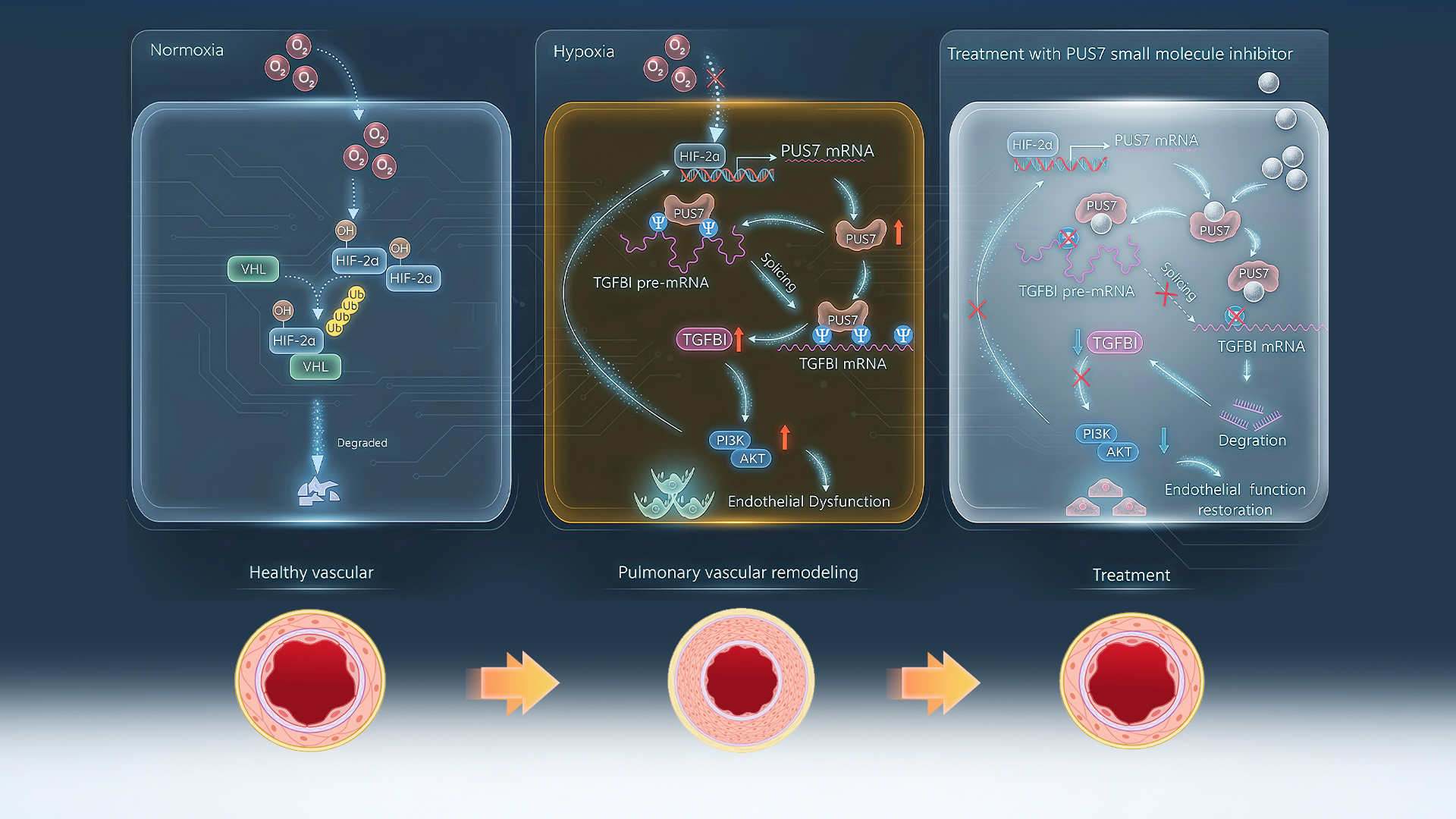
Associate Professor Xiaowei NIE’s team from the Department of Human Cell Biology and Genetics at the School of Medicine at the Southern University of Science and Technology (SUSTech) published a research paper in the international cardiovascular journal Circulation titled “PUS7-Mediated Pseudouridylation of TGFBI Drives Vascular Remodeling in Pulmonary Hypertension.” The study revealed, for the first time, a new molecular mechanism in which the pseudouridine synthase PUS7 regulates pulmonary vascular remodeling, providing fresh scientific ideas and treatment strategies for precise therapy of pulmonary hypertension.
Pulmonary hypertension (PH) is a serious cardiovascular disease with a very high mortality rate. Its core pathological features are the progressive remodeling of pulmonary blood vessels and abnormally increased pulmonary vascular resistance, which seriously threatens patients’ lives and health. Currently, the main clinical treatment focuses on vasodilators, which can only partially improve patients’ heart and lung function and cannot stop the disease from progressing at its root, so the overall prognosis for patients is very poor. Clinically, most patients who cannot receive a timely lung transplant usually die from right heart failure within two to three years. Discovering new targets that regulate pulmonary vascular remodeling and verifying their clinical effectiveness are key to breaking through the treatment bottleneck of pulmonary hypertension and developing new therapeutic strategies, making this research highly valuable for clinical translation and scientific study.
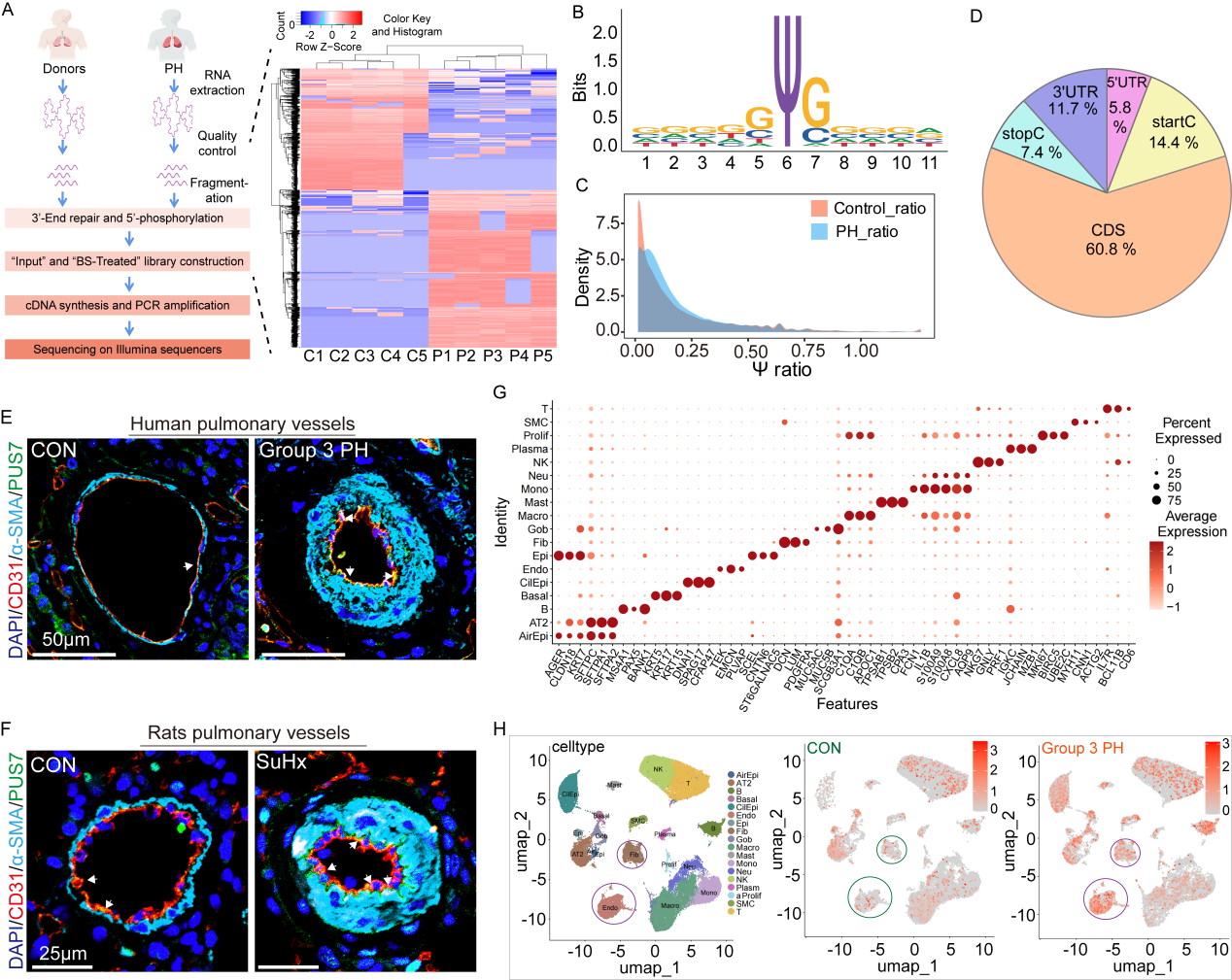
The team used bisulfite-induced deletion sequencing technology (BID-seq) and, for the first time, mapped the single-base resolution pseudouridine modification landscape in lung tissues of PH patients, filling a research gap in the field. At the same time, through sample validation, the research team found that the pseudouridine synthase PUS7 is specifically highly expressed in pulmonary artery endothelial cells of PH patients, suggesting it might be involved in the development and progression of the disease.
To clarify the causal relationship between PUS7 and pulmonary hypertension (PH), the research team created global and endothelial cell-specific PUS7 knockdown mouse models and conducted multi-omics animal experiments for verification. The results confirmed that knocking down the PUS7 gene significantly improved the pathological phenotypes of PH induced by three classic methods: hypoxia, hypoxia combined with SU5416 (SuHx), and bleomycin (BLM). At the cellular level, experiments showed that knocking down PUS7 in pulmonary artery endothelial cells effectively alleviated endothelial dysfunction caused by hypoxia, while overexpressing PUS7 worsened endothelial cell damage, further supporting that PUS7 is a key driver in the progression of PH.
On the molecular mechanism side, the team integrated RNA high-throughput sequencing, BID-seq, RNA immunoprecipitation sequencing, and site mutation techniques to fully explain the pathogenic regulatory mechanism of PUS7. The study confirmed that PUS7 specifically binds to the 688 site of TGFBI (transforming growth factor β-induced) mRNA, catalyzing pseudouridylation at this site, which stabilizes TGFBI expression and continuously activates the PI3K-AKT signaling pathway. For the first time, the study identified the HIF-2α/PUS7/TGFBI/PI3K-AKT signaling loop and clarified that this positive feedback loop continuously worsens pulmonary vascular lesions and exacerbates PH.
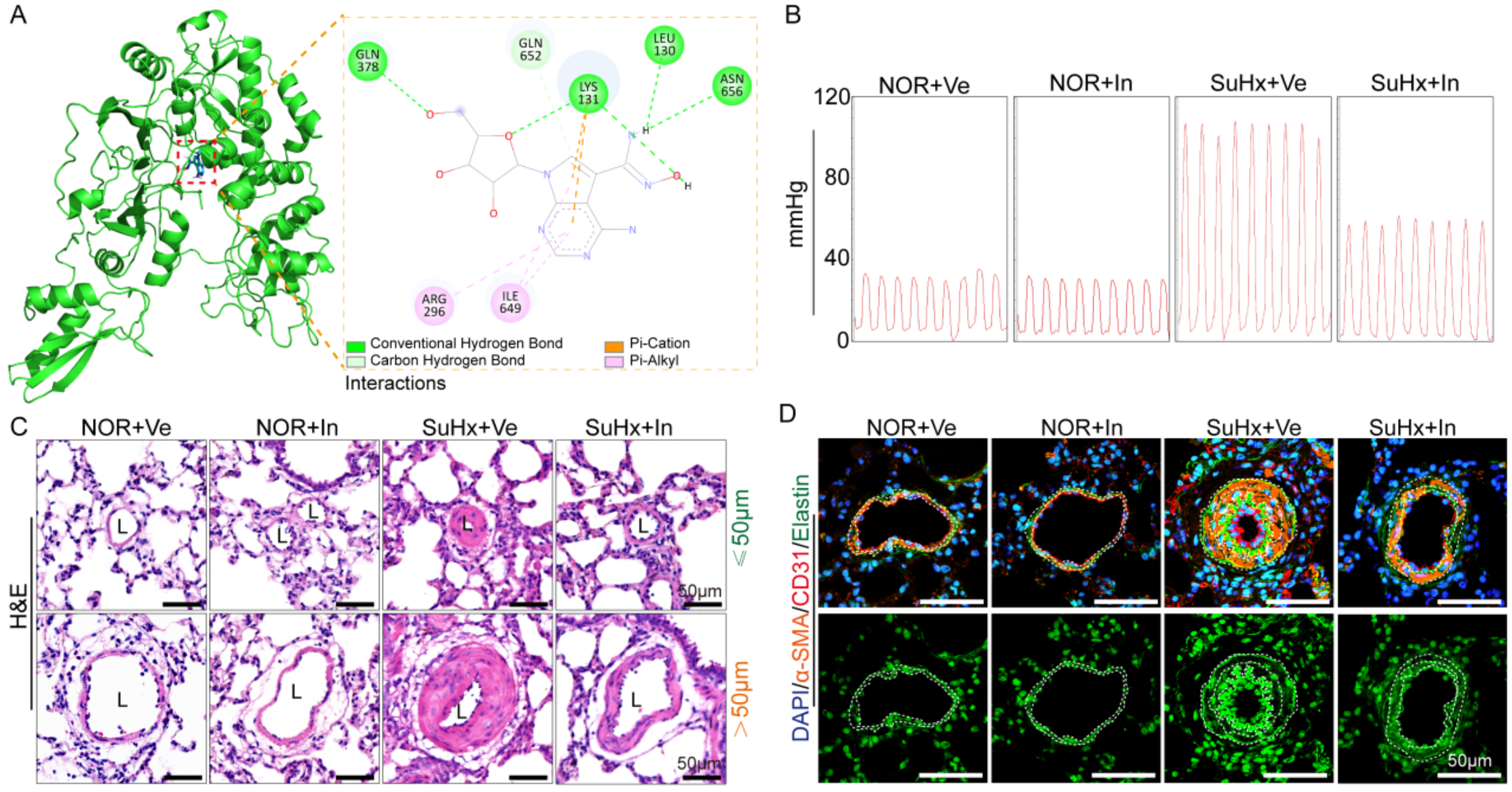
Of greater clinical translation value, the team’s drug intervention experiments showed that the small-molecule PUS7 inhibitor NSC107512 can effectively intervene in SuHx- and BLM-induced PH, showing excellent therapeutic effects. This discovery not only validates the feasibility and effectiveness of PUS7 as a therapeutic target for PH but also provides a precise direction for developing new targeted drugs for PH, offering fresh avenues for tackling this difficult-to-treat cardiovascular disease.
Associate Research Professor Junting ZHANG from the School of Medicine at SUSTech and Dr. Yiying LI from the First Affiliated Hospital of SUSTech (Shenzhen People’s Hospital) are co-first authors of the paper, with Xiaowei NIE as the corresponding author. SUSTech is the primary affiliation for the paper.
Paper Link: https://www.ahajournals.org/doi/10.1161/CIRCULATIONAHA.126.080714
Proofread ByNoah Crockett, Junxi KE
Photo By