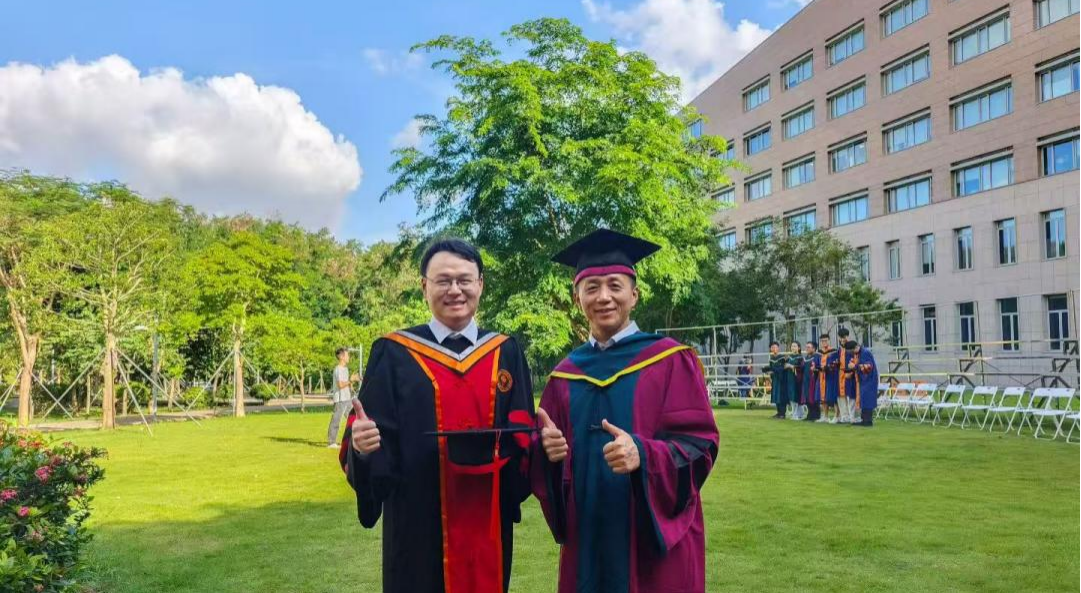
Recently, the 2026 China College Students Mechanical Engineering Innovation and Creativity Competition Digital Design of Mechanical Products wrapped up in Wuhan. An undergraduate team from the Department of Mechanical and Energy Engineering at the College of Engineering of the Southern University of Science and Technology (SUSTech) won the national second prize.
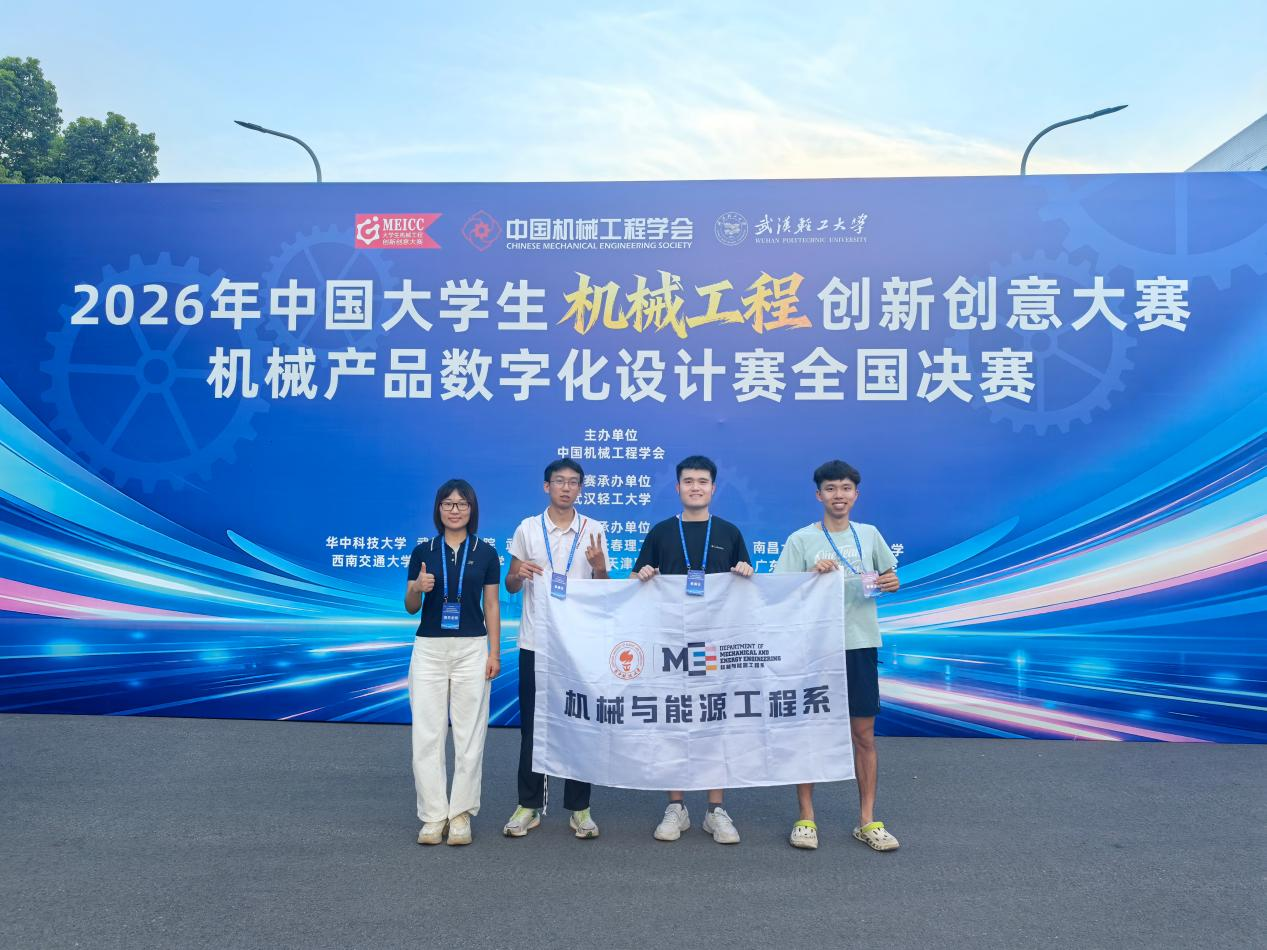
This competition is organized by the Chinese Mechanical Engineering Society. The Digital Design of Mechanical Products Contest, as one of the events of the China College Students Mechanical Engineering Innovation and Creativity Competition, is co-hosted by 12 universities, including Huazhong University of Science and Technology and Wuchang Shouyi University. In 2026, the Digital Design of Mechanical Products Contest attracted 1,338 teams from universities across the country, with a total of 246 participating schools and 4,014 students submitting nearly 1,400 projects. In the end, 391 outstanding works advanced to the national finals. The competition focuses on innovative mechanical structure design for humanoid robots, guided by principles of bionics and combined with digital design methods, aiming at breakthroughs in the innovative design of humanoid robot legs and feet, arms and hands, joints, transmission, and actuating mechanisms.
Under the careful guidance and support of Lecturer Yixuan GUO and Associate Professor Huijuan FENG from the Department of Mechanical and Energy Engineering, a team of undergraduate students from SUSTech, Yiyang WU, Jiahong LI, and Yutian CHEN, stood out among hundreds of teams nationwide with their innovative project, “Flexible Multi-Terrain Wheeled Service Robot That Adapts to Object Shapes for Grasping,” and won the national second prize.
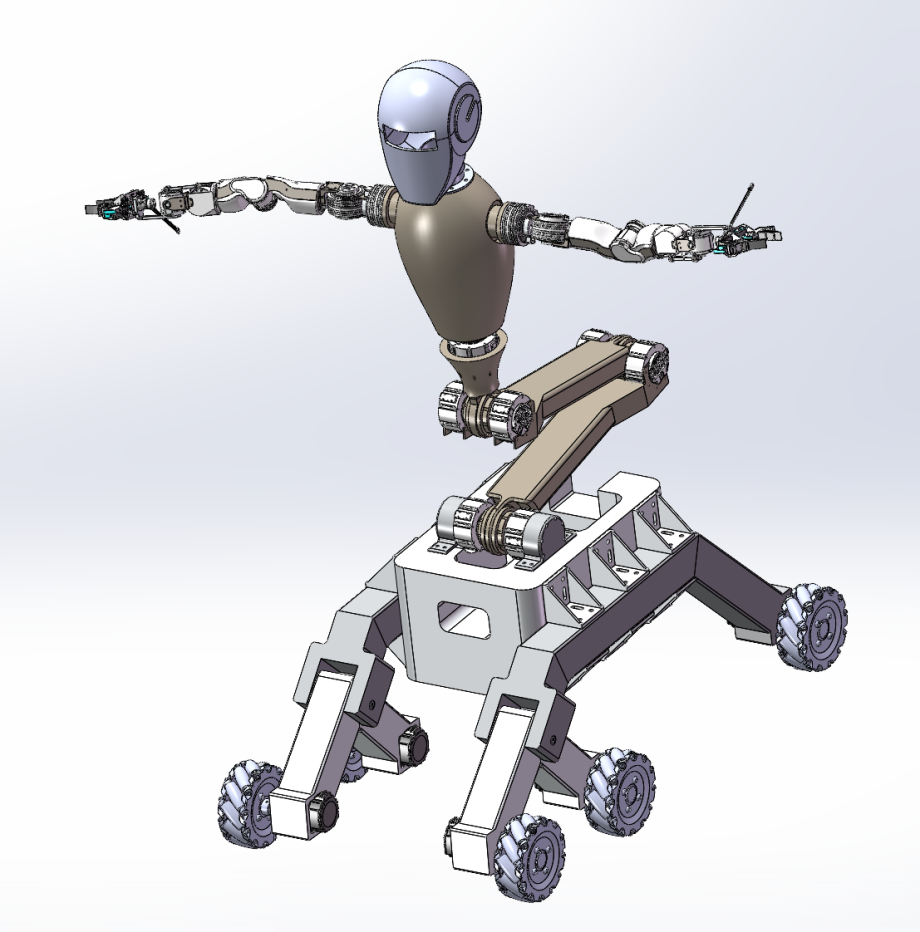
A diagram of the Flexible Multi-Terrain Wheeled Service Robot That Adapts to Object Shapes for Grasping proposed by the SUSTech team
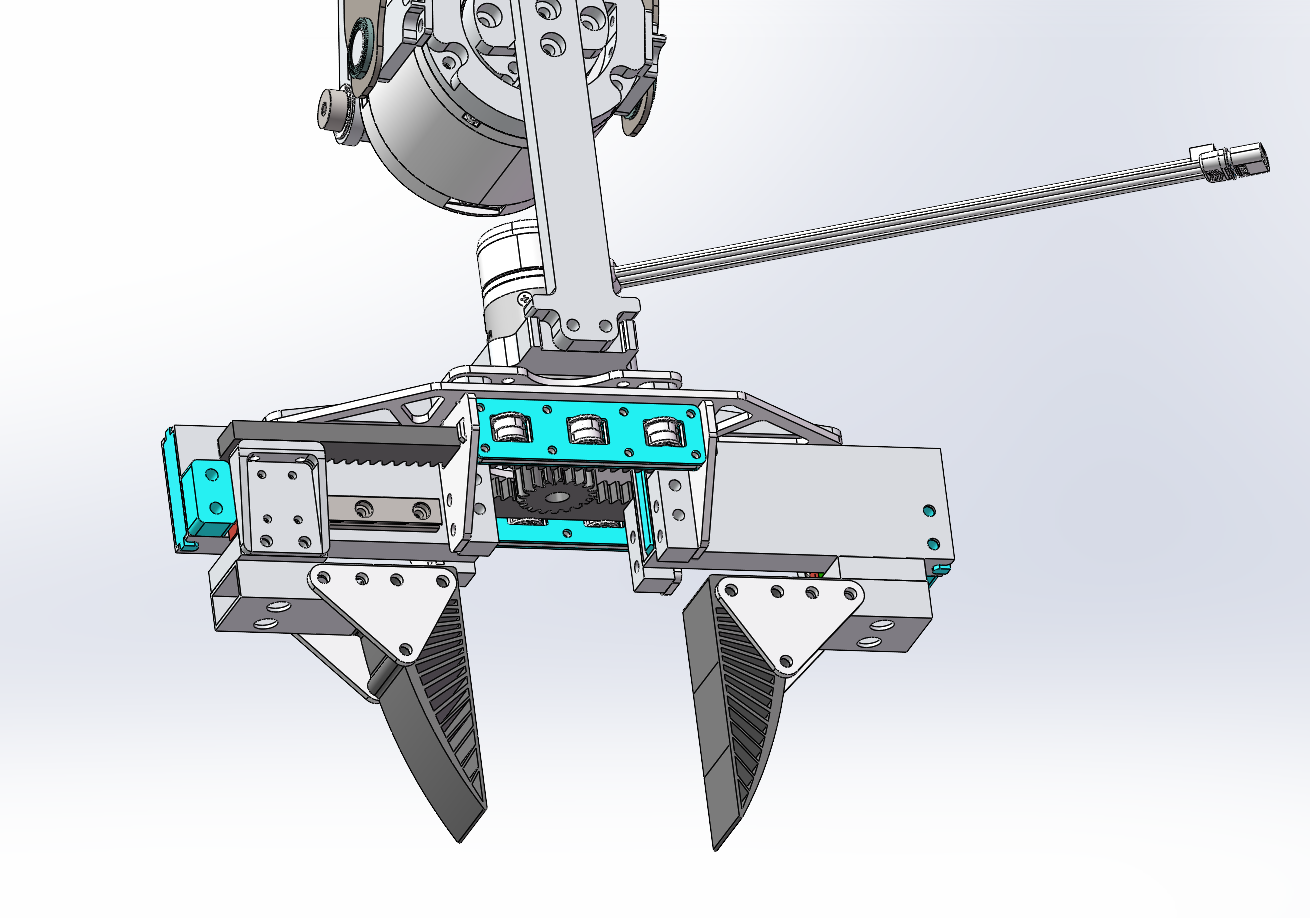
Main Innovation: Translation-Type Fish Fin Flexible Gripper Robotic Arm
SUSTech’s award-winning team project proposes a multi-terrain wheeled service robot with flexible, adaptive grasping capabilities. The robot consists of a multi-terrain direct-drive wheeled chassis, an active posture leveling body, a waist rotation mechanism, dual 7-degree-of-freedom robotic arms, and translation-type fish fin flexible grippers. This robot can maintain controllable mobility in environments where conventional service robots struggle, such as stairs, thresholds, courtyard steps, and uneven ground. After moving across floors, it also has high stability in picking up, transporting, and organizing items. Overall, the main value of this design lies in addressing two core pain points of service robots: “Poor mobility” and “an unstable grasp.” Future work can include wheel-end anti-slip control, visual recognition, force-feedback gripping, and full prototype testing, giving it the potential to develop into a practical home service robot platform.
Proofread ByJunxi KE
Photo ByDepartment of Mechanical and Energy Engineering