The team led by Associate Professor Huizhong SHEN from the School of Environmental Science and Engineering at the Southern University of Science and Technology (SUSTech), along with their collaborators, made progress in studying the composition of atmospheric Black Carbon and its climate effects. Their research, titled “Increase in global warming potential of atmospheric black carbon since 1750,” was published in Nature Geoscience.
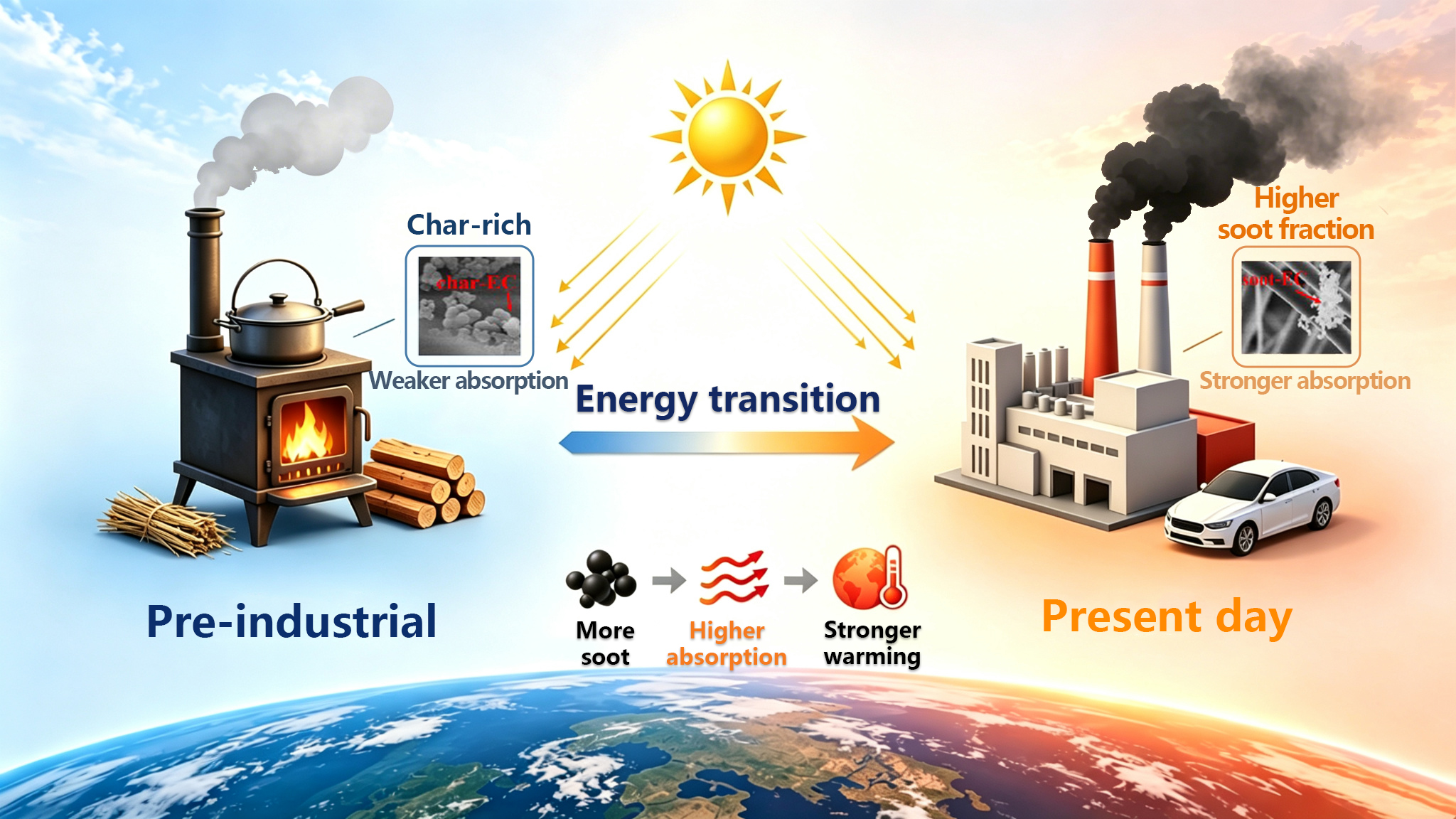
Black carbon (BC) is a light-absorbing carbon particle produced by the incomplete combustion of fuels and is also an important short-lived climate forcer in the Earth’s climate. Compared to carbon dioxide, BC stays in the atmosphere for a shorter time. Reducing BC emissions can quickly impact the Earth’s radiation balance. As a result, it has drawn widespread attention in climate change research and air pollution control. BC isn’t a uniform substance; it’s a mixture containing different structures and optical properties. Based on its formation mechanisms, it can be further divided into two typical components, char and soot. Char is mainly formed from the pyrolysis of organic matter or incomplete combustion of materials under oxygen-limited conditions, while soot is mainly formed from hydrocarbons condensing through gas-phase processes at high temperatures. The two differ in both formation mechanisms and light-absorbing ability.
In current global climate assessments, BC is usually treated as a whole, with little consideration of variations in its internal components. Since industrialization, energy consumption and combustion methods have changed and intensified significantly, leading to different ratios of char and soot from various sources. It’s still not fully understood whether these changes have altered the average light-absorbing capacity of BC and how this affects climate impact assessments.
The research team integrated about 2,500 carbon component measurements to build a database of component ratios covering 141 emission sources. By combining this with BC emission data from the Global Emissions Modeling System (GEMS), which includes high-resolution greenhouse gas and air pollutant emission inventories, they established a char and soot emission inventory covering 224 countries and regions from 1750 to 2019. On this basis, through optical experiments, comparisons with lake sediment records, and Earth system model simulations, they evaluated how changes in BC composition affect climate impacts.
Thermal–optical measurements show that, under conditions with minimal interference from organic carbon and comparable measurement settings, soot generally has stronger light absorption per unit mass than char. The researchers also found, through source analysis, that emission sources with higher combustion efficiency, such as coal-fired power plants, diesel vehicles, and industrial boilers, tend to have more soot in their BC emissions. In contrast, lower-efficiency sources, like residential burning and wildfires, are dominated by char (Figure 1). This indicates that BC’s light-absorbing effect depends not only on emission amounts but also on its sources and composition.
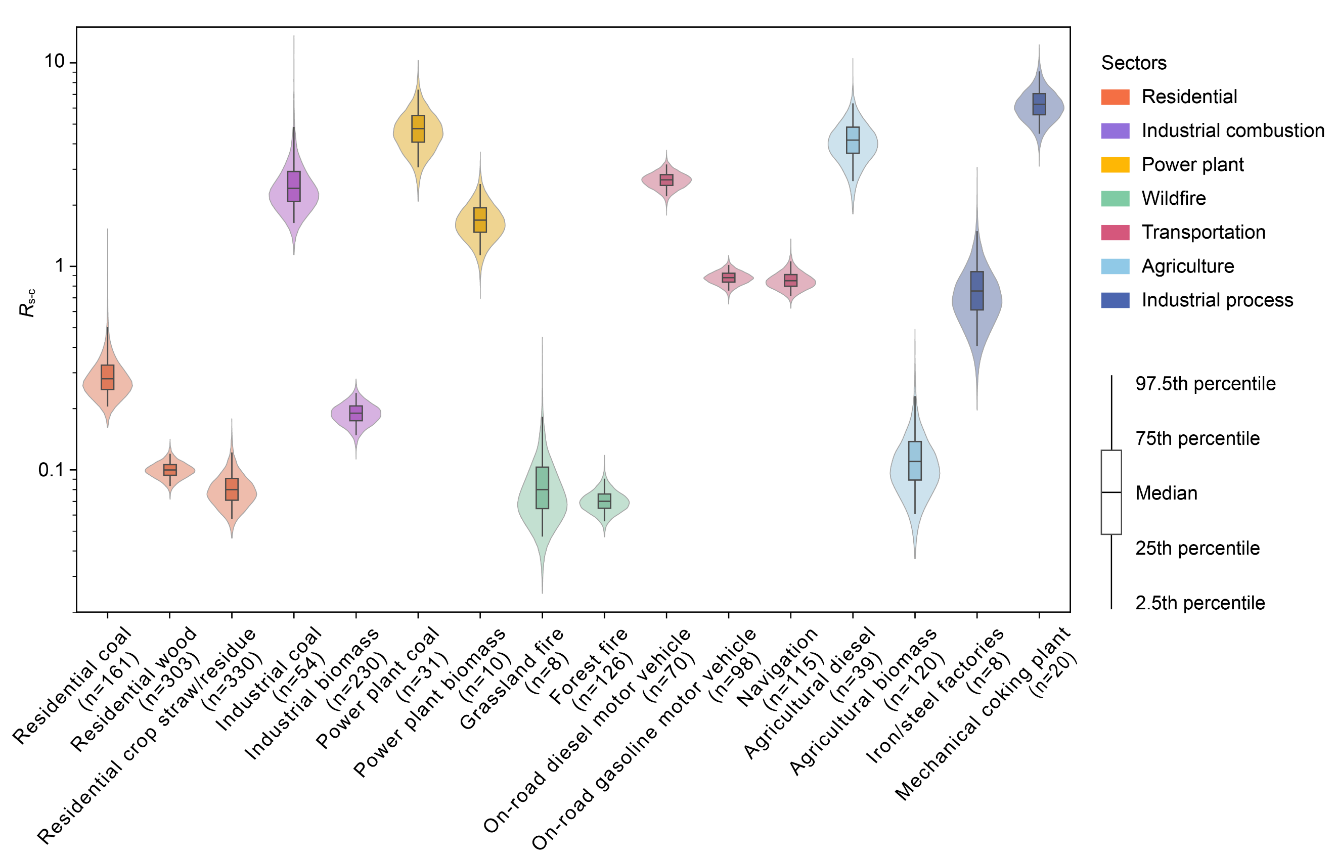
Figure 1. Soot-to-char carbon mass ratio (Rs-c) of major BC sources
The composition of BC shows clear regional differences. In 2019, anthropogenic soot emissions in Europe, North America, and East Asia were roughly similar to char emissions, while South Asia, Southeast Asia, and parts of Africa were dominated by char, mainly reflecting the different contributions from industry, transportation, and household solid fuel use. Further combining emission amounts and absorption differences between components, it was found that compared to treating BC as a whole, separating char and soot led to higher emission-weighted absorption potential estimates in regions like Europe and East Asia, while some African regions saw a decrease (Figure 2). This suggests that ignoring component differences could affect assessments of BC’s absorption contribution in different regions.
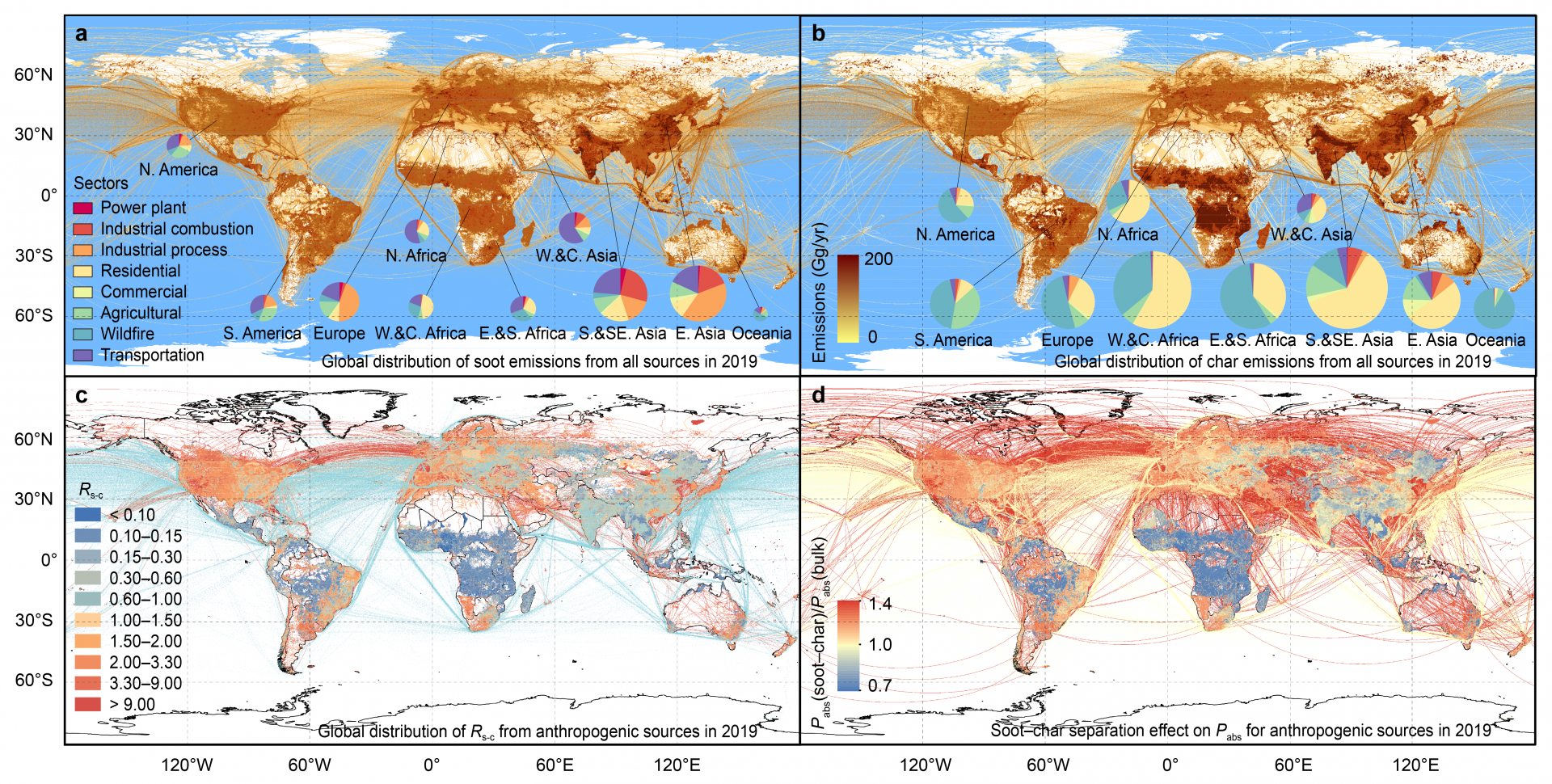
Figure 2. Global char and soot emissions in 2019, the proportion of anthropogenic emission components, and the spatial distribution of relative light absorption potential.
Looking at historical changes, the growth in fossil fuel consumption by the industry and transport sectors has driven a rapid increase in soot emissions, while the use of solid fuels by households has been an important driver of the growth in char emissions. From 1750 to 2019, global anthropogenic soot emissions increased from about 0.11 Tg to 1.99 Tg, while char emissions rose from about 0.59 Tg to 3.66 Tg, with the former growing noticeably faster than the latter. With stricter emission standards and the development of clean fuel technologies, soot emissions in developed countries have decreased faster than char in recent years, showing that pollution control is also changing the composition of BC emissions (Figure 3).
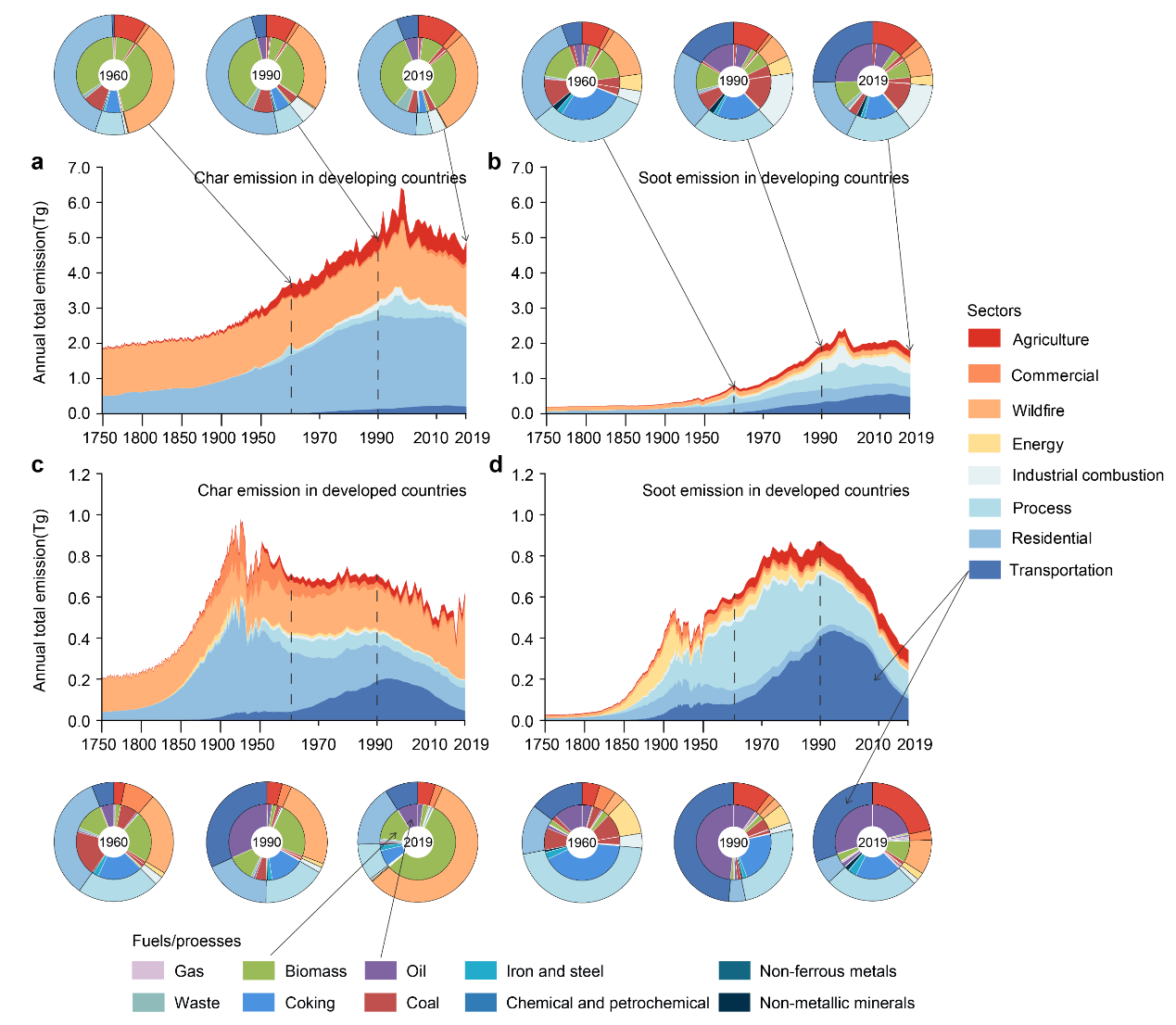
Figure 3. Changes in char and soot emissions from different sectors in developing and developed countries from 1750 to 2019
The different emission trends of these two components have caused the share of soot in global anthropogenic BC emissions to rise from 16% in 1750 to 35% in 2019. The long-term increase in the soot/char ratio observed in some lake sediment records also matches the overall trend reconstructed from emission inventories. Researchers estimate that this change in composition has increased the mass absorption cross-section of newly emitted global anthropogenic BC by about 16% over the same period (Figure 4). So, changes in energy use and emission source structures have not only altered the amount of black carbon emitted but also enhanced its light absorption per unit mass.
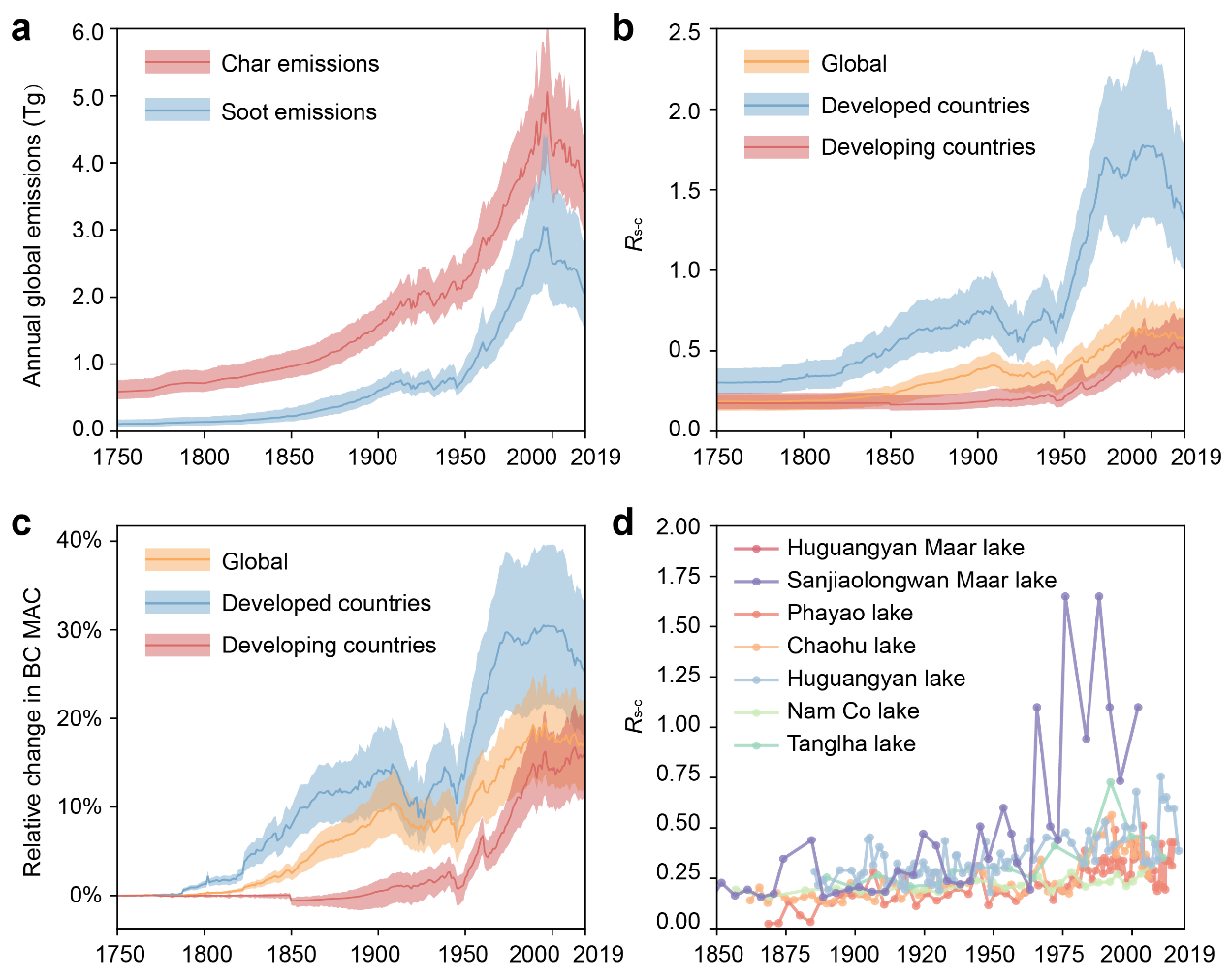
Figure 4. Historical changes in global anthropogenic BC emissions, soot/char ratio, and relative mass absorption cross-section, compared with lake sediment records.
These changes further affect the assessment of BC’s climate effects. Analytical estimates show that under the assumptions set in the study, considering the historical evolution of components and their light-absorbing ability, the direct radiative forcing of BC in 2019 is about 13.6% higher than when treating BC as a whole. Earth system model CESM simulations further indicate that after distinguishing the optical properties of char and soot, global all-sky industrial-era BC direct radiative forcing increased from 0.37 W/m² to 0.41 W/m², an increase of about 11%. Both approaches suggest that ignoring differences between BC components and their evolution may underestimate its direct radiative warming effect.
The study emphasizes that evaluating the climate impact of BC requires attention to both emissions and component changes, providing a scientific basis for targeted reductions from soot-rich sources like diesel traffic and industrial combustion. Future research is still needed on the coating, aging, deposition, and cloud interactions of char and soot in the real atmosphere to improve climate models and support coordinated pollution and carbon reduction strategies.
Han SHEN, a PhD student at the School of Environmental Science and Engineering at SUSTech, is the first author of the paper, and Huizhong SHEN is the corresponding author. SUSTech is the first affiliated institution of the paper. The research involved scholars from the Guangzhou Institute of Geochemistry of the Chinese Academy of Sciences, Fudan University, Peking University, and the Max Planck Institute for Chemistry in Germany.
Paper Link: https://doi.org/10.1038/s41561-026-02085-z
Proofread ByNoah Crockett, Junxi KE
Photo ByYan QIU