The team led by Chair Professor Hongwei GUO from the School of Life Sciences at the Southern University of Science and Technology (SUSTech), along with collaborators, published a research paper titled “A spatiotemporal lifecycle atlas decodes spatial coordination in rice” in the top journal Cell. They built a 3D single-cell spatiotemporal transcriptomic atlas covering the entire “seed to seed” lifecycle of rice, providing an important framework for understanding how cell types, spatial structures, and regulatory networks work together during rice development.
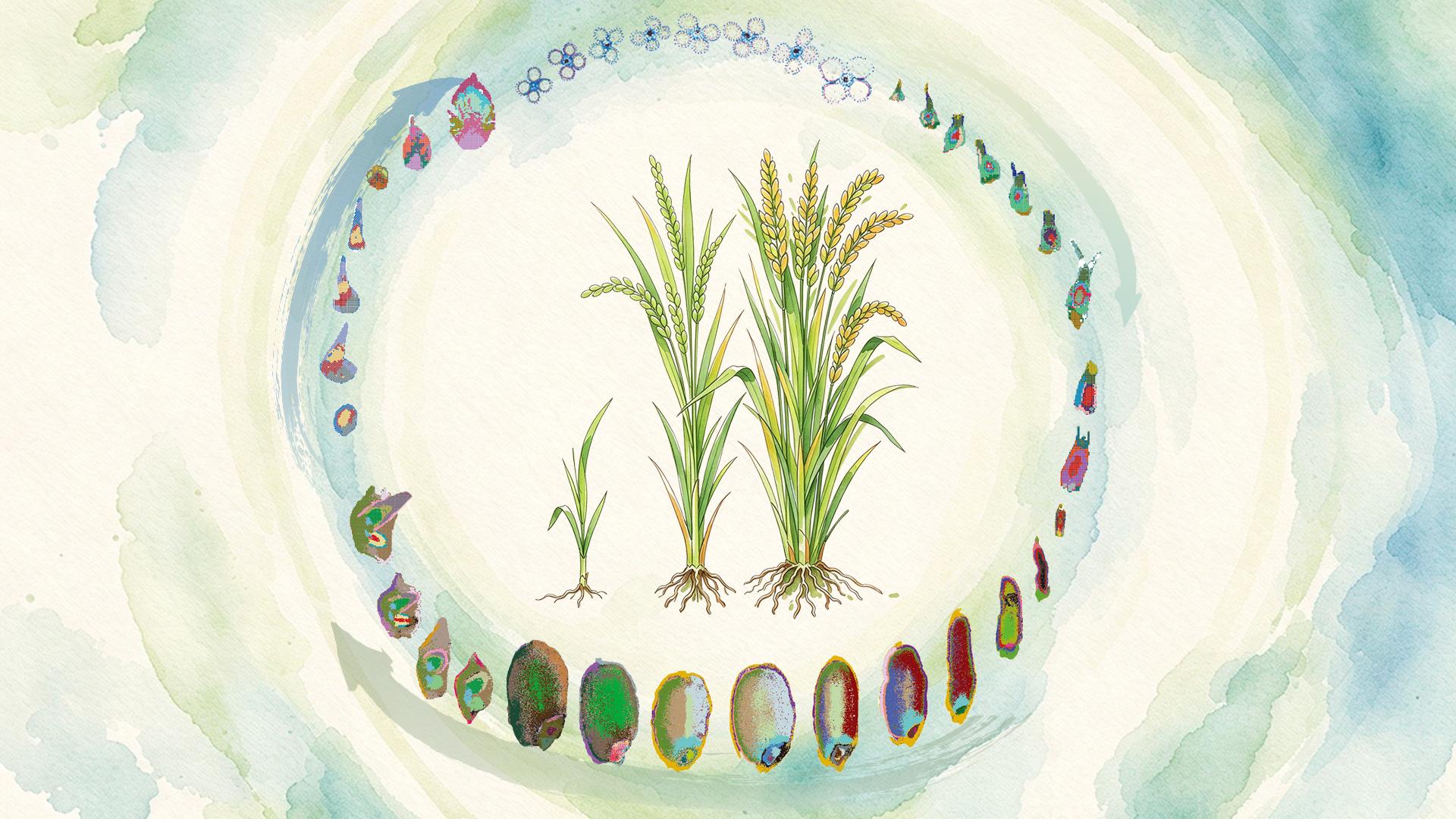
A single rice seed goes through germination, rooting, leaf growth, tillering, heading, flowering, and fertilization, eventually producing a new generation of seeds. This process might seem ordinary, but it’s actually a highly coordinated developmental program through space and time. Different cells need to form at specific stages and locations, activate the right gene expression modules, and cooperate with each other to assemble a complete plant correctly. The transitions between rice development stages and the formation of its structure are driven not only by its genetic program but also influenced by hormone signals, environmental cues, and external stimuli. Whether the right developmental events start at the right time directly affects how well it adapts to the environment and reproduces. Properly regulating the pace of rice development is crucial for improving its yield and quality. However, most research over the years has focused on a single tissue, stage, or type of study, making it hard to understand how cell identity, spatial positioning, timing, and transcriptional regulation are connected throughout the rice lifecycle. As an essential food crop, there’s still a lot we don’t know about how rice coordinates cell types, organ cooperation, and gene regulatory networks across its whole growing period. Systematically analyzing its lifecycle regulation network and identifying key developmental genes will provide theoretical support and genetic resources for precisely managing rice growth and improving yield and quality.
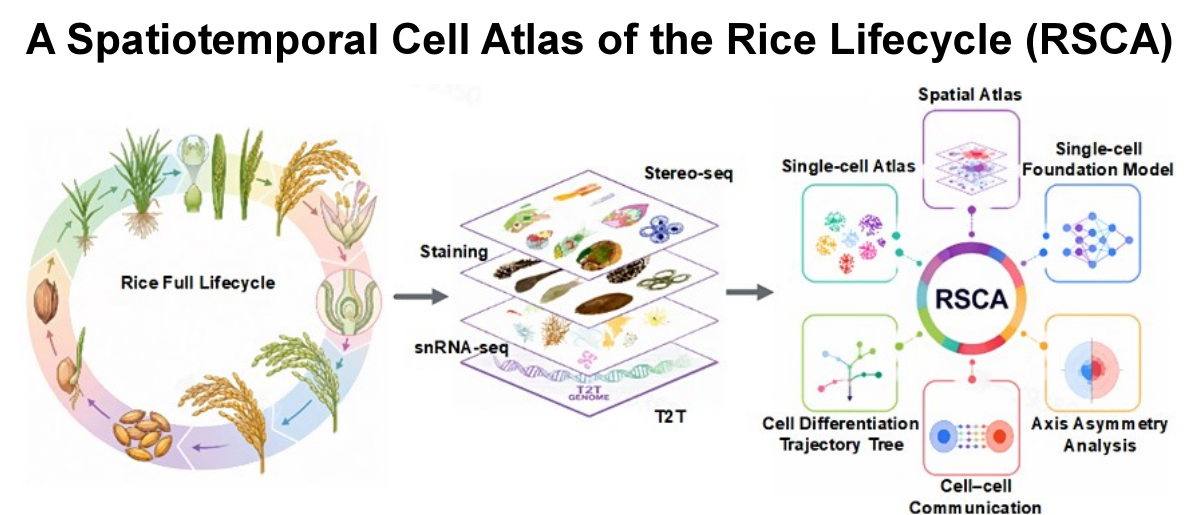
Figure 1. Overview of the 3D single-cell spatiotemporal atlas of the rice lifecycle
The research team successfully built a 3D spatiotemporal cell atlas covering the entire rice lifecycle from “seed to seed” based on the BGI’s spatiotemporal omics technology Stereo-seq, single-nucleus RNA sequencing (snRNA-seq) and AI-driven developmental trajectory analysis along with the rice single-cell foundational model RICE scGPT. This atlas helps to explain, at both single-cell and spatial levels, the dynamic coupling of cell fate, tissue development, and gene regulation during rice development.
The team, using Stereo-seq, mapped the spatial transcriptome of fresh tissues at 43 key developmental stages of the representative japonica variety Zhonghua 11 (ZH11). They also combined snRNA-seq data from 47 stages covering 10 major organs/tissues, including the embryo, root, tiller, leaf, inflorescence, spikelet, stamen, pistil, fertilized tissues, and seed. By jointly analyzing spatial positions, tissue anatomy, marker gene expression, and single-nucleus data, 119 cell types and 133 cell subtypes were well-annotated, greatly expanding our understanding of rice cell diversity. This atlas not only shows the spatial distribution of different cells within tissues but also captures dynamic changes in cell states during development, providing a systematic resource for understanding how a single fertilized egg develops into a complete rice plant.
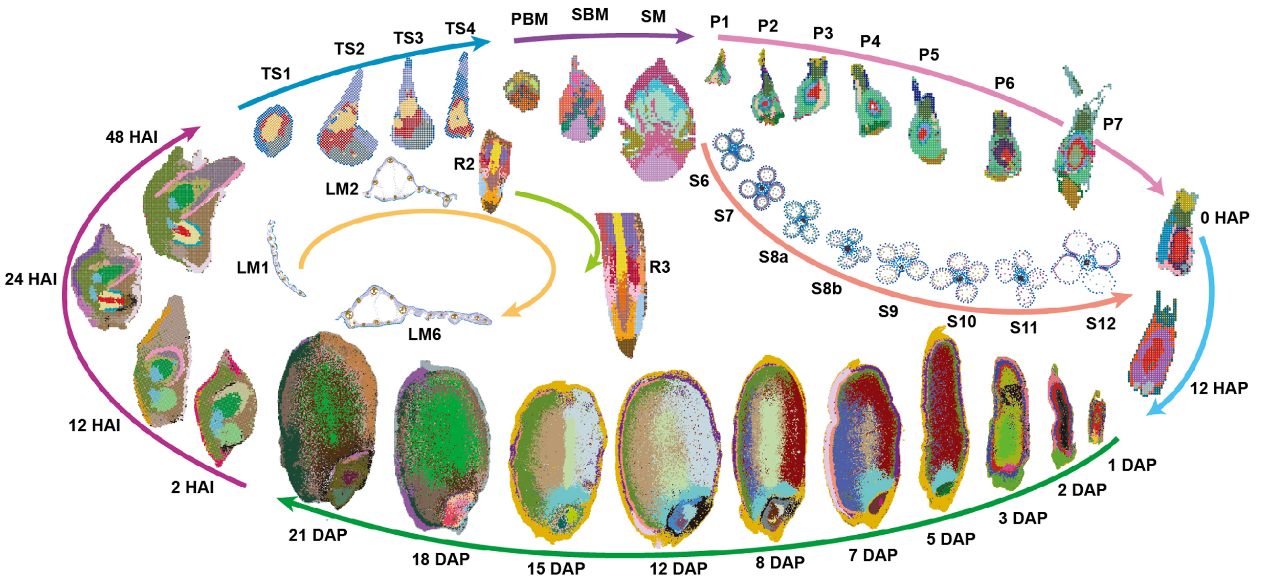
Figure 2. Spatiotemporal map of the entire rice lifecycle
Based on the spatiotemporal map of the rice full lifecycle, the research group further reconstructed the inferred developmental trajectory from the embryo to mature organs and mapped the global regulatory landscape of rice development. The results showed that a group of core transcription factors play a key regulatory role in various tissues and developmental trajectories, but their functional output is context-dependent depending on spatial location and cellular microenvironment differences. Taking the pleiotropic main regulatory factor OsARF1 as an example, this factor can achieve functional differentiation through context-specific regulatory networks at different cellular spatial locations and participate in endosperm nutrient allocation and source-sink communication. This discovery provides a new perspective from spatial omics for understanding pleiotropy phenomena in plant development and lays a theoretical foundation for precise regulation of complex agronomic traits.
The research group found that various rice organs generally exhibit axial asymmetric gene expression patterns. In the developing endosperm, the group captured for the first time potential evidence of dorso-ventral axis gene transcription asymmetry. The dorsal peripheral endosperm (DPE) tends to enrich genes related to carbohydrate metabolism and starch synthesis, while the ventral peripheral endosperm (VPE) tends to be more prone to the expression of genes related to storage protein synthesis. Altering such asymmetric expression genes can reshape the accumulation patterns of starch and proteins. This result not only provides a new research entry point for investigating rice seed development, grain filling, spatial allocation of nutrients, and quality formation, but also indicates that future spatial partitioning regulation can be used to explore new paths for crop quality improvement.
To promote open data sharing and collaboration, the research team also built the Rice Spatio Temporal Atlas (RSTA) interactive online platform (link below) and developed the rice single-cell foundational model RICE scGPT. This model is trained on data from this study and publicly available rice single-cell data, assisting in identifying cell types lacking clear marker genes and supporting rapid integration of datasets from different sources, thereby improving comparability and reusability in rice single-cell research.
This study integrates BGI high-resolution spatial transcriptome Stereo-seq, snRNA-seq, and AI large models to construct, for the first time, a 3D single-cell spatiotemporal atlas covering the entire “seed-to-seed” lifecycle of rice, systematically analyzing the synergistic patterns among cell identity, spatial location, developmental trajectory, and regulatory networks during rice development. The study not only reveals the functional differentiation of key regulatory factors such as OsARF1 in different spatial cellular environments but also reveals the relationship between endosperm dorso-ventral axis gene transcription asymmetry and spatial allocation of starch and proteins. This achievement provides important resources and new ideas for plant developmental biology, crop trait analysis, and molecular design breeding.
Dr. Wei YAN, Associate Professor in Hongwei GUO’s research group; Dr. Yi JING, Dr. Yuejing GUI, and Mumu QIN from the BGI Research; Dr. Qiong CHEN and Dr. Han ZHANG from Yazhouwan National Laboratory; Dr. Yifan CHEN from Huazhong Agricultural University; and Dr. Yicheng ZHONG from Wuhan University are co-first authors of the paper. Professor Hongwei GUO, Deputy Director Chen FAN of Yazhouwan National Laboratory; Researcher Xun XU at the BGI Research; Professor Yidan OUYANG from Huazhong Agricultural University; Researcher Yue ZHEN from BGI Research; Professor Zhao PENG from Wuhan University; and Senior Engineer Pengfei JIA from the Institute of Genetics and Developmental Biology of the Chinese Academy of Sciences are co-corresponding authors of the paper. SUSTech is the corresponding affiliation.
Paper Link: https://doi.org/10.1016/j.cell.2026.09.023
RSTA Online: https://db.genomics.cn/stomics/rice
Proofread ByNoah Crockett, Junxi KE
Photo ByYan QIU