Associate Professor Wei SHU’s team from the Department of Chemistry at the Southern University of Science and Technology (SUSTech)/Shenzhen Grubbs Institute tackled the challenge of “Asymmetric Cross-Hydroformylation of Alkenes.” They developed a new nickel-catalyzed system that works without gaseous CO, operates under mild conditions, and has excellent selectivity. They’ve made progress in cutting-edge areas like building chiral α-heteroaryl ketones, synthesizing asymmetric chiral α-aryl ketones, adaptively creating chiral alkyl ketones, and stereodivergent synthesis of C-acyl glycosides. Their research provides a new, green, and efficient method for making chiral ketone compounds, with results published in international journals like Nature Communications, Journal of the American Chemical Society, and Angewandte Chemie.
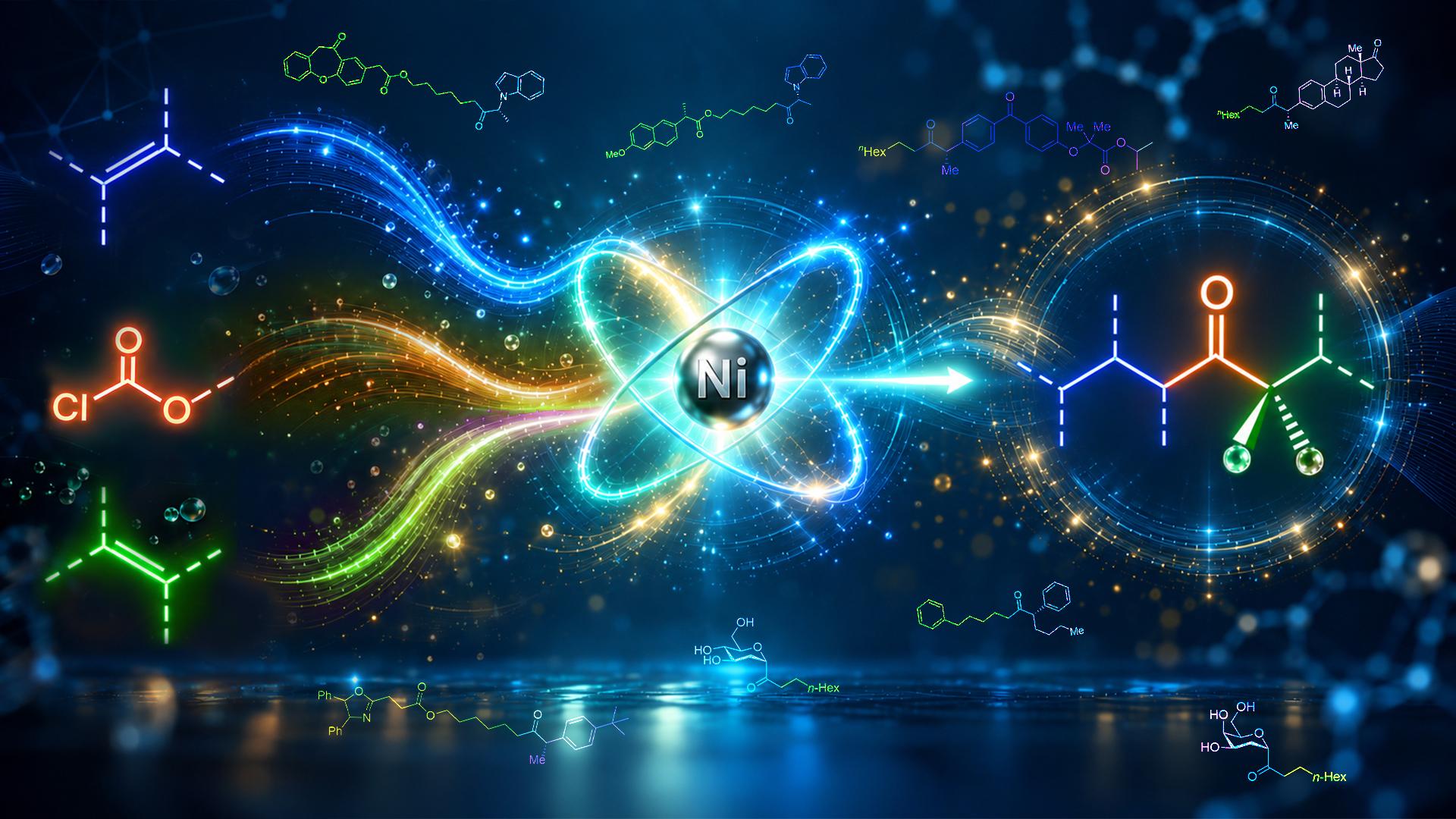
Nickel-Catalyzed Three-Component Cooperative Transformation Pioneers a New Strategy for Gas-Free Insertion of Chiral Ketones
Precise sorting of dienes for a one-step modular construction of chiral α-heteroaryl ketones
Chiral α-amino ketones (including α-azaaryl ketones) are essential pharmacophores and key synthetic building blocks in medicinal chemistry and life sciences. To tackle the bottlenecks of traditional dialkyl electrophile carbonyl insertion reactions, which often lead to self-coupling side reactions and require excess metal reductants, Wei SHU’s team developed the first Ni-catalyzed three-component carbonyl insertion reaction between unactivated aliphatic alkenes and N-alkenyl heteroarenes, achieving chemical, regio-, and enantioselectivity, based on the concepts of “precise substrate sorting” and “reductive-oxidative carbonyl insertion” (Fig. 1).
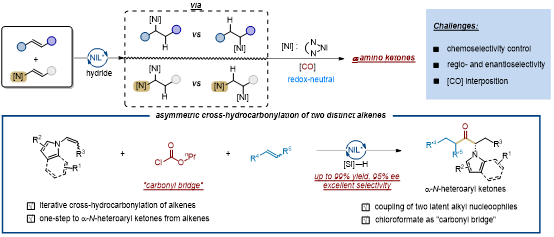
Figure 1. One-step modular construction of chiral α-heteroaryl ketones
This strategy cleverly uses n-propyl chloroformate as both a carbonyl precursor and a mild oxidizer, using silane as the hydrogen source, efficiently achieving carbon-carbon bond “stitching” between two different olefins under a redox-neutral system. By optimizing the large-block chiral dioxazolin (BOX) ligand, the reaction can construct target molecules with yields up to 92% and ee values of 92%. The system has broad substrate compatibility, and internal olefins can also achieve end-selective conversion via chain walking. Mechanistic studies show that the reaction involves precise addition of acyl nickel(II)-hydrogen intermediates and N-alkenyl heteroaromatics. This catalytic system has achieved gram-scale preparation and later derivatization of various non-steroidal anti-inflammatory drugs, providing a highly efficient new tool for modular synthesis of nitrogen-containing complex chiral drug molecules.
The above research results are titled “Synthesis of α-N-Heteroaryl Ketones by Nickel-Catalyzed Chemo-, Regio- and Enantioselective Carbonylation of Alkenes and N-Alkenyl Heteroarenes,” published as a “Very Important Paper” in Angewandte Chemie. Xiaoyi CHEN, a Master’s student at SUSTech, is the first author of the paper, and Wei SHU is the corresponding author. SUSTech is the first institution of the paper.
Nickel-Catalyzed Olefin-Olefin Cross-Carbonylation for Making Chiral α-aryl Ketones
Chiral α-aryl ketones are highly valuable precursors for drug synthesis, but due to the risk of racemization at α-protons and challenges in stereocontrol, efficient synthesis of non-cyclic tertiary chiral α-aryl alkyl ketones has always been a major challenge. Wei SHU’s team reported a new asymmetric coupling model of inactivated terminal olefins and styrene, achieving efficient construction of such molecules through selective diolefin hydrocarbonylation strategies (Fig. 2).
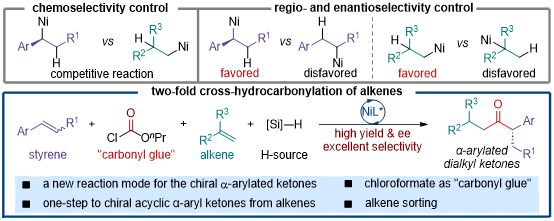
Figure 2. Nickel-catalyzed synthesis of chiral α-aryl ketones by cross-hydrocarbonylation of olefin-olefins
To address the challenges of self-polymerization and isomerization in the coexistence of two olefins, the team developed a 6-position large chiral blockade PyOX ligand catalytic system. This catalyst has excellent spatial recognition capabilities: first, it promotes the anti-Marschlin addition of aliphatic olefins to form a beralkyl nickel intermediate; then induces in situ decarbonylation of propyl chlorocarbate by carbonyl insertion to form acylnickel; and ultimately guides styrene to achieve high stereoselectivity for benzyl hydrometallation and reductive elimination, constructing the target product in one step with a maximum yield of 93% and an ee value of 95%. This system has excellent functional group tolerance, making it suitable for precise post-modification of complex drug molecules, providing a new strategy for the creation of drug molecular libraries.
The above research findings, titled “Rapid Assembly of Enantioenriched α-Arylated Ketones via Ni-Catalyzed Asymmetric Cross-Hydrocarbonylation Enabled by Alkene Sorting,” were published in Nature Communications. Yiming DU, a Doctoral student at SUSTech, is the first author of the paper, and Wei SHU and Minyu XU from the National University of Singapore are corresponding authors.
First Proposed Concept of “Adaptive Migration” for Alkyl Metal Intermediates
Wei SHU’s team proposed for the first time the concept of “adaptive migration” of alkyl metal intermediates. In traditional catalysis, the kinetic and thermodynamic migration pathways of alkyl metal active intermediates under a single catalytic system with completely opposite directions have never been realized. The team overcame this challenge by using aryl groups to replace chiral PyOX-nickel catalytic systems (Fig. 3).
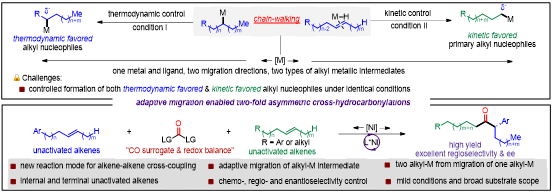
Figure 3. Adaptive Migration-Nickel Catalyzed Cross Asymmetric Carbonylation of Unactivated Alkenes
In the reaction, a part of the alkenes undergo kinetic chain walking to generate terminal alkyl nickel species, which capture CO equivalents to form acyl nickel; another part of the alkenes undergo thermodynamic chain walking to generate benzyl nickel. These two species converge precisely at the nickel catalytic center to complete asymmetric hydrocarbonylation. This strategy shows excellent tolerance toward alkene isomers, allowing pure terminal alkenes, internal alkenes, or mixtures of cis-trans isomers to all adaptively convert into a single chiral product (up to 71% yield, 90%-94% ee), and can be scaled up to the millimole level, providing a highly promising new approach for the high-value utilization of petrochemical alkene mixtures.
These findings were published in the Journal of the American Chemical Society under the title “Nickel-Catalyzed Adaptive Migration Enabled Asymmetric Cross-Hydrocarbonylation of Unactivated Alkenes.” Yiming DU, a PhD student at SUSTech, is the first author, and Wei SHU is the corresponding author. SUSTech is the primary affiliation.
Stereodivergent Synthesis of 2-deoxy-C-glycosides from Natural Glycals
C-glycosides have excellent metabolic stability and medicinal value, but directly constructing acyl glycosides via asymmetric hydrogen metalation of inexpensive and stable glycals has long been limited by low reactivity and challenges in terminal stereocontrol. Wei SHU’s team reported the first nickel-catalyzed asymmetric hydrocarbonylation reaction between glycals and unactivated alkenes, achieving stereodivergent synthesis of 2-deoxy-C-acyl glycosides (Fig. 4).
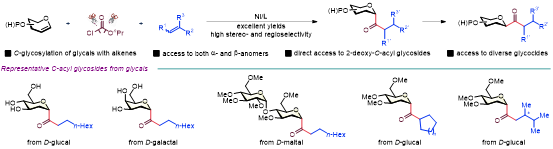
Figure 4. Stereodivergent Synthesis of 2-Deoxy C-Glycosides from Natural Glycals
This study completely breaks away from traditional methods that rely on unstable glycosyl halides, using cheap and readily available glycals directly as precursors. Through a chiral PyOX-nickel catalysis system, highly selective formation of kinetically controlled α-C-glycosides is achieved (α:β up to >20:1); then, using the mild organic base DBU to induce epimerization, they are converted almost quantitatively at room temperature into the thermodynamically more stable β-isomers (β:α up to 20:1). This reaction can even directly tolerate fully unprotected natural free glycals, providing a breakthrough new path for the efficient synthesis of complex carbohydrate drugs.
These research results were published under the title “Stereodivergent Synthesis of C-Glycosides from Glycals by Ni-Catalyzed Cross-Hydrocarbonylation of Alkenes” in the Journal of the American Chemical Society. Visiting Master’s student Chengtao WANG from SUSTech is the first author, while Wei SHU from SUSTech and Ablajan Keyimu from Xinjiang University are the corresponding authors.
Wei SHU’s team addressed the selectivity bottleneck in the conversion of unactivated alkenes, establishing a new nickel-catalyzed asymmetric hydrocarbonylation mode based on “alkene sorting and chain walking.” This strategy does not require CO gas or stoichiometric metal powders (Zn, Mn, etc.), and in a single system, it precisely controls the migration rate of alkyl-nickel species, the reaction sequence, and stereoselectivity, significantly simplifying synthesis steps and opening a green pathway for converting cheap petrochemical alkenes into chiral drug molecules.
Paper Links:
https://doi.org/10.1002/anie.202423426
https://doi.org/10.1038/s41467-025-57967-4
https://doi.org/10.1021/jacs.5c03451
https://doi.org/10.1021/jacs.6c13660
Proofread ByNoah Crockett, Junxi KE
Photo ByYan QIU