The research team led by Jinhui ZHONG from the Department of Materials Science and Engineering at Southern University of Science and Technology (SUSTech) has conducted in-depth studies on metal plasmon–organic molecule hybrid systems. By designing metal nanoparticle–molecule hybrid systems and metal nanostructure array–molecular aggregate systems, they achieved efficient generation of molecular triplet states under weak coupling conditions and anisotropic transport and regulation of exciton-polaritons under strong coupling conditions. These two achievements were published in the international journals Nano Letters and ACS Nano, respectively.
Achievement 1. Efficient generation of molecular triplet states under weak coupling conditions
Molecular triplet states have important applications in fields such as photodynamic therapy and photocatalysis, but their efficient generation has always been a research challenge. Developing new sensitizers and understanding sensitization mechanisms are at the forefront of this field. In this study, 9-anthracenecarboxylic acid (ACA) was used as a model molecule to construct gold (Au) and platinum (Pt) nanoparticle–molecule hybrid systems, revealing a new mechanism by which metal nanoparticles promote the generation of molecular triplet states. Experimental results show that after molecular photoexcitation, holes are transferred to the metal nanoparticles, followed by electron spin flipping and charge recombination within the metal to form the triplet state. The Pt-ACA system exhibits a faster hole transfer process, whereas the Au-ACA system demonstrates a higher triplet state generation efficiency.
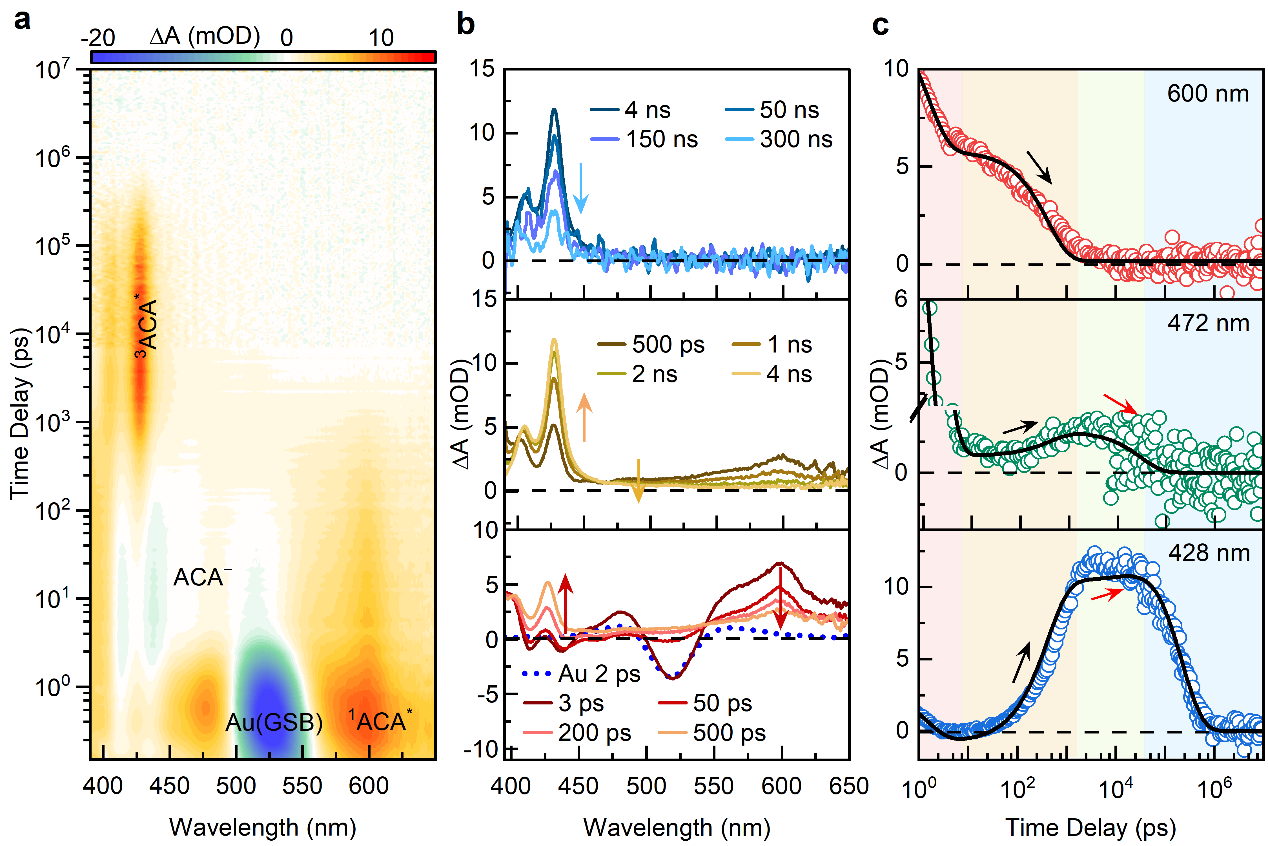
Figure 1. Ultrafast spectral characterization of the Au nanoparticle-ACA hybrid system
Based on the above findings, the team applied this hybrid system to the production of highly active singlet oxygen. In terms of performance, the singlet oxygen quantum yields of the Au-ACA and Pt-ACA systems were significantly enhanced, reaching 67.8% and 42.3%, respectively, which is noticeably higher than the 23.4% of free ACA molecules. The team further explored the application of this system in antibacterial activity and found that the Au-ACA exhibited a 99% antibacterial rate with low dark toxicity, demonstrating the potential for synergistic photodynamic and photothermal antibacterial effects.
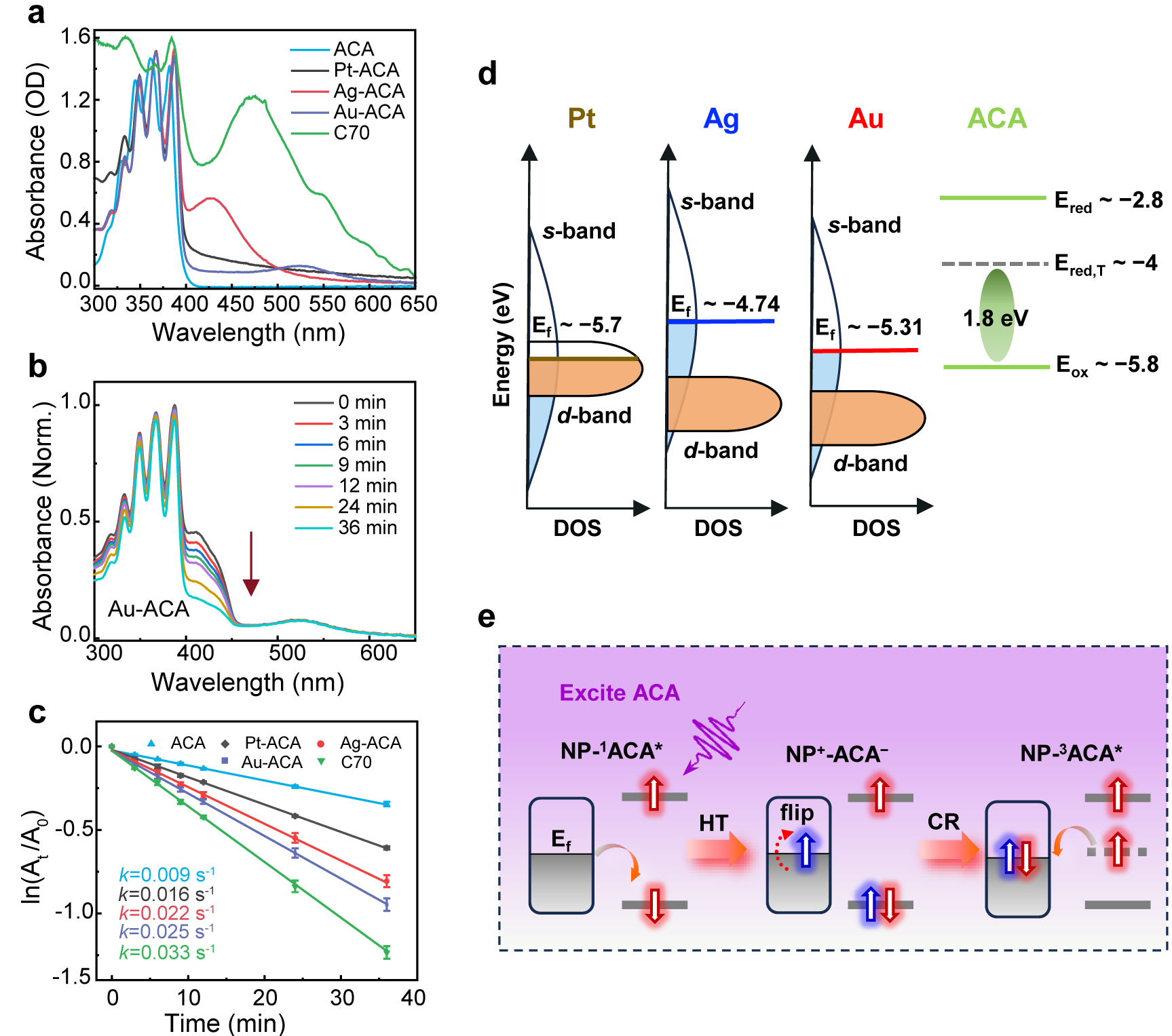
Figure 2. Quantum yield of singlet oxygen and mechanism of triplet-state generation in metal nanoparticle-ACA hybrid systems
This study expands the application of metal nanoparticles in the regulation of molecular excited states, reveals the principles of enhanced triplet-state generation, and provides new ideas for designing efficient photosensitive materials and their applications in antibacterial and photodynamic therapy.
This achievement is published online in the international journal Nano Letters under the title “Metal Nanoparticle Enhanced Molecular Triplet Generation for Singlet Oxygen Production and Antibacterial Application.” Zhanzhao LI and Ziwei XU, master’s students of the Class of 2023 in the Department of Materials Science and Engineering at SUSTech, are the first authors of the paper, and Jinhui ZHONG is the sole corresponding author. SUSTech is the first institution of the paper.
Paper Link: https://doi.org/10.1021/acs.nanolett.5c05126
Achievement 2. Anisotropic transport and regulation of molecular exciton-polaritons under strong coupling conditions
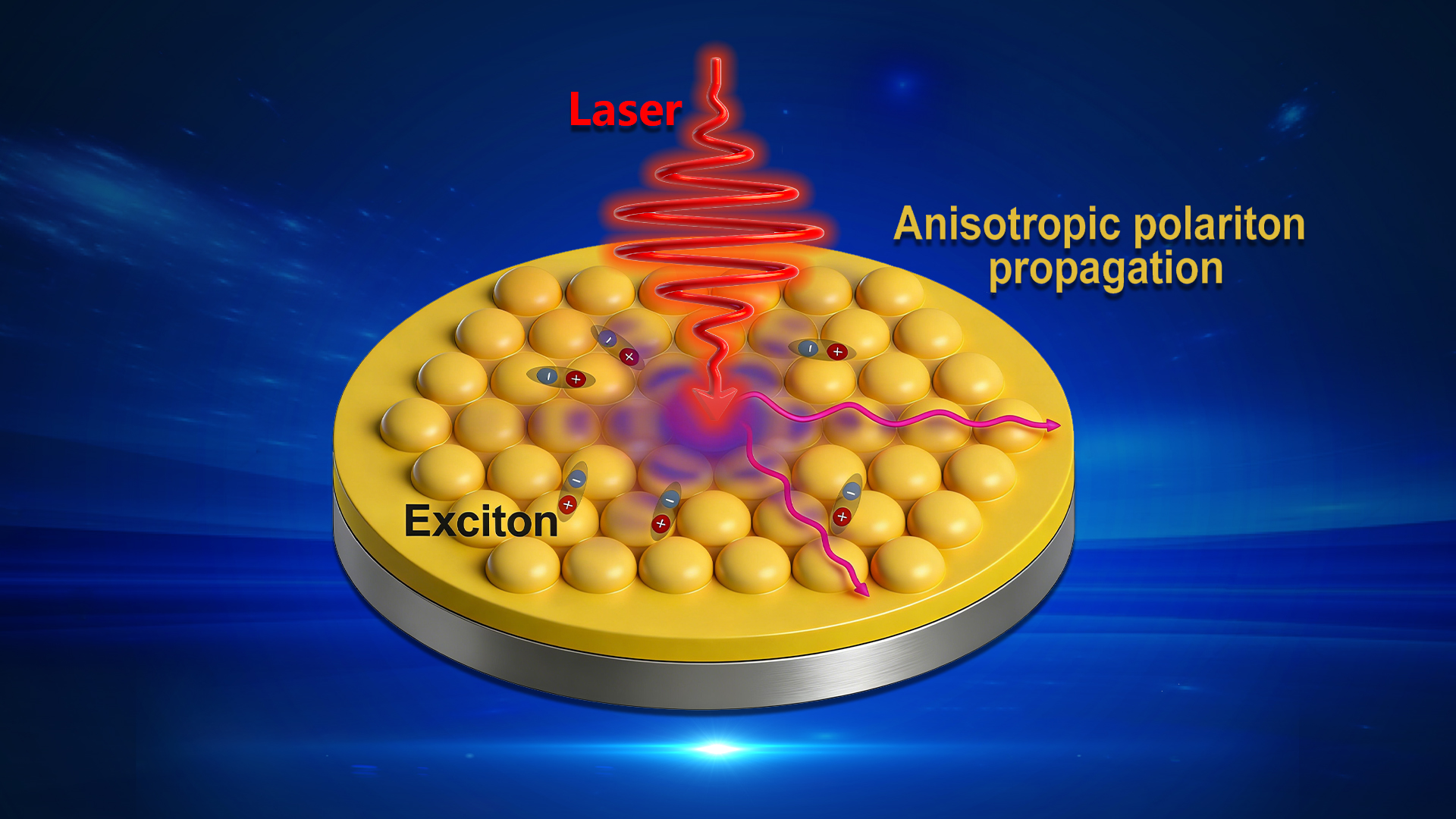
Exciton-polaritons are quasi-particles formed under strong light-matter coupling, being half-light and half-matter. Due to the inherent coherence of their photonic component, they can overcome exciton localization in organic molecules and achieve long-range coherent energy transfer. Actively controlling the propagation direction of polaritons according to demand remains a pressing issue in this field, which is crucial for expanding their applications in optoelectronic devices.
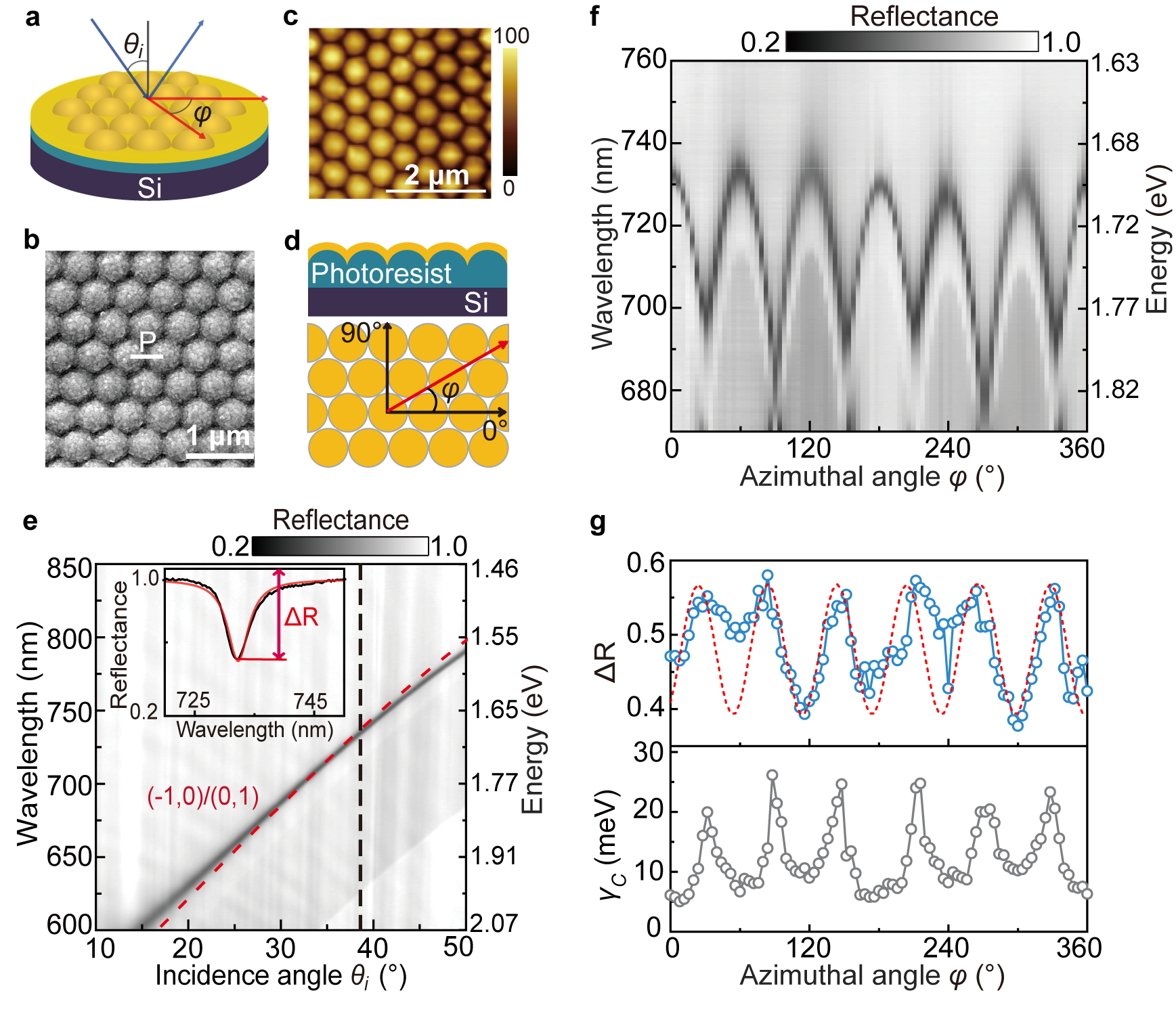
Figure 3. Hexagonal gold nanorod array and its anisotropic SPP modes
The research team used holographic lithography technology to prepare a hexagonal gold nanostructure array. The surface plasmon polariton (SPP) modes supported by this structure exhibit anisotropic dispersion relations, with their resonance energy, linewidth, and amplitude all periodically modulated by the orientation of the structure, laying the foundation for achieving directional control of coupling strength.
To achieve strong coupling between molecular excitons and SPP modes, the research team placed J-aggregate molecules on an array surface. The pronounced anti-crossing dispersion and Rabi splitting observed in angle-resolved reflection and photoluminescence (PL) spectra indicate strong coupling between excitons and SPP modes. By fitting with the temporal coupled-mode theory, the team found that the coupling strength exhibits significant azimuthal dependence. Using a self-built real-space photoluminescence imaging system with energy resolution and momentum selection capabilities, the team further revealed polarization-controlled polariton spatial coherent propagation, with propagation distances reaching up to 10 micrometers, far exceeding the diffusion length of conventional excitons. In addition, the propagation distance also shows azimuthal dependence consistent with the SPP dispersion relation and quality factor, achieving anisotropic spatial propagation with a contrast of 90%.
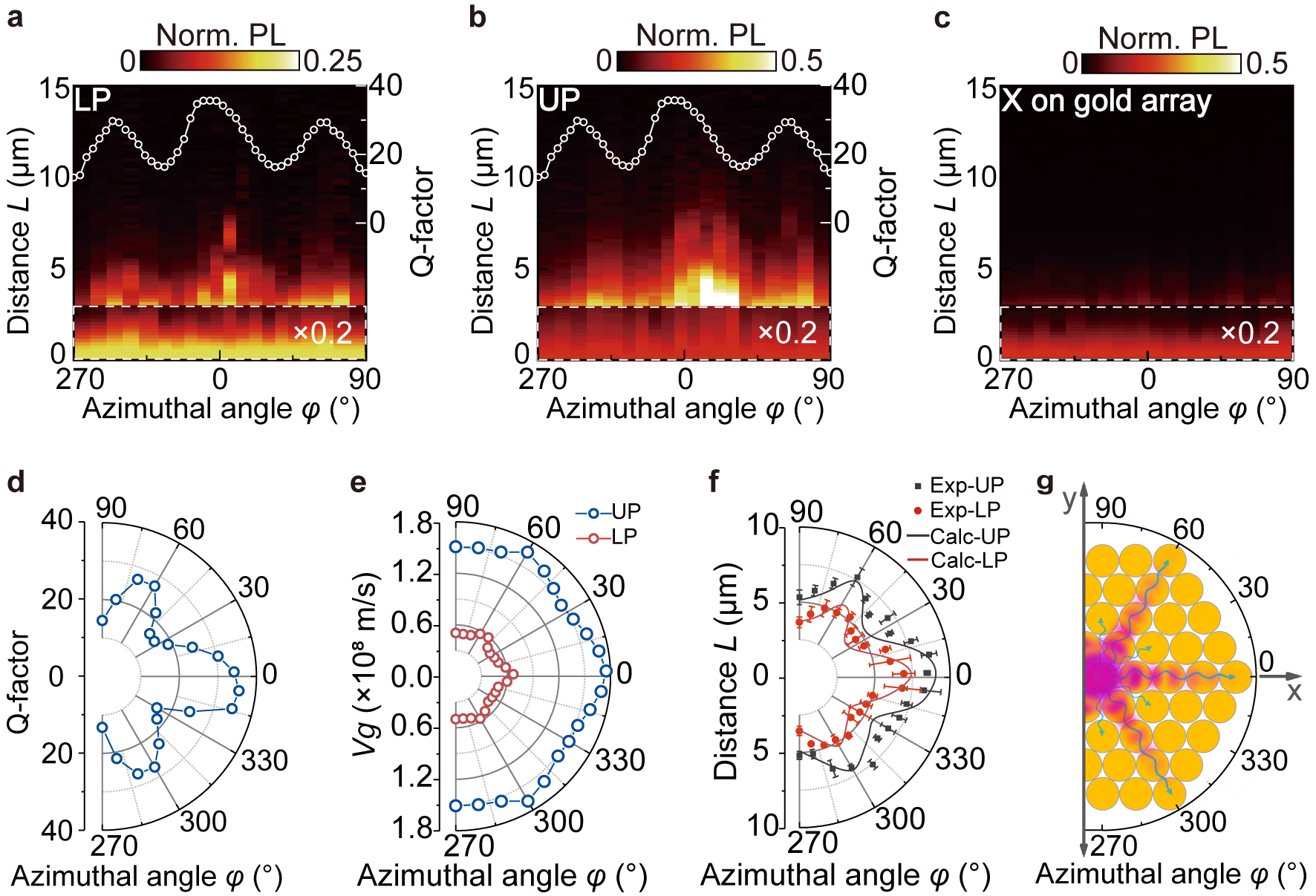
Figure 4. Anisotropic transport of polaritons
This study not only deeply reveals how the optical properties of cavity modes determine the transport behavior of polaritons, but more importantly, it achieves on-demand control of the energy transfer direction through engineered gold nanostructure arrays. This strategy opens up new avenues for the development of coherent and directional energy transfer devices for photovoltaics, photocatalysis, optical routing, and organic optoelectronics.
This achievement was published online in the international journal ACS Nano under the title “Directional Control of Strong Coupling Enables Anisotropic Propagation of Molecular Exciton-Polaritons.” Kaizhen LIU, a PhD student of the Class of 2023 in the Department of Materials Science and Engineering at SUSTech, is the first author of the paper, while Professor Bowen LIU from Lanzhou University and Associate Professor Jinhui ZHONG from SUSTech are the co-corresponding authors. SUSTech is the first corresponding institution for the paper.
Paper Link: https://doi.org/10.1021/acsnano.5c17969
Proofread ByNoah Crockett, Junxi KE
Photo By