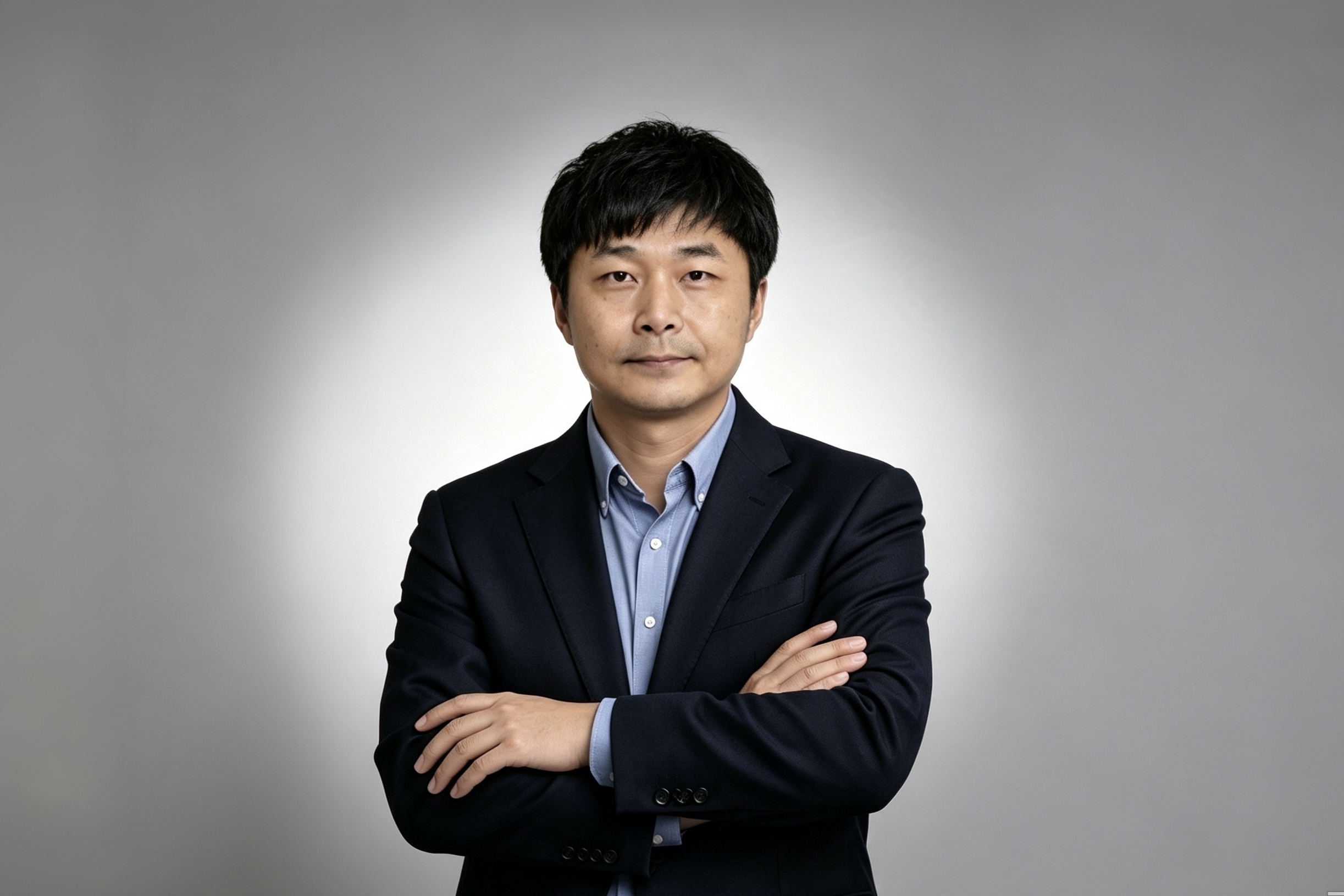
The first 2026 issue of the GSF Journal (ISSN 3734-8912), a bilingual quarterly hosted by the Greater Bay Area Science Forum (GSF), published an article titled “AI: Understanding the Challenges, Seizing the Opportunities” by Joseph Sifakis. Sifakis is a Turing Award winner, member of the French Academy of Sciences, the French National of Engineering, the Academia Europea, the American Academy of Arts and Sciences, the U.S. National Academy of Engineering, as well as a foreign member of both the US National Academy of Sciences and the Chinese Academy of Sciences. He also serves as the Director of the Sifakis Research Institute of Trustworthy Autonomous Systems and a Distinguished Visiting Professor at the Department of Computer Science and Engineering of the Southern University of Science and Technology (SUSTech). The full text is reprinted below:
AI: Understanding the challenges, seizing the opportunities
Since the beginning of this century, AI has marked a new era in the scientific and technological revolution, as well as a turning point in human history. Machines can now rival humans in the production and application of knowledge, opening up new perspectives in scientific and technological progress. However, it should be noted that despite impressive achievements, which culminated with the arrival of generative AI, AI is still in its infancy. An analysis of effective AI applications in the real economy leads us to conclude that they currently focus on assistants, such as ChatGPT and DeepSeek, which operate in question/answer mode. AI only provides us with basic elements, and the question that remains unanswered is how to assemble them to create intelligent systems that reach the level of human intelligence.
There are many fields of application in science, services and industry where the use of AI remains marginal. These areas have requirements for increased automation and reliability and modes of interaction other than conversational.
For scientific applications, we need systems capable of analyzing complex phenomena and understanding their dynamics and properties in various scientific fields, from medicine and life sciences, to climate and universe sciences. Artificial intelligence will radically change the way we create and apply knowledge. It is well known that humans have a limited capacity to observe and analyze phenomena that depend on a large number of independent parameters. Thus, scientific theories are relatively simple, with well-known limitations. Unlike humans, artificial intelligence is capable of analyzing multidimensional data that characterize complex biological, physical, and social phenomena.
We must strive to develop artificial intelligence for science, which requires investment and the development of an appropriate data infrastructure in different scientific fields. Human experts, working in collaboration with specialized AI systems, will be able to tackle complexity by discovering and, ultimately, formulating relationships that are inaccessible to the human mind.
We already have examples of how artificial intelligence is helping to improve weather forecasting and even predict earthquakes compared to forecasts using traditional methods, or the success of AlphaFold1 in predicting the three-dimensional structure of proteins.
Of course, the knowledge thus produced will only be empirical and will not have the validity of traditional scientific methods. Here, we must organize and support human-machine collaboration in order to maintain control over the processes of knowledge production, avoiding the creation of a “parascience” that would be produced and applied autonomously and uncontrollably by machines.
For industrial applications, we need to develop autonomous systems, such as those envisaged by the Internet of Things, for example autonomous transportation systems, smart grids, smart factories and farms, and autonomous communication systems. Autonomous systems are the most difficult intelligent systems to implement, as they are designed to replace operators in complex organizations. They are composed of agents, each pursuing their own specific goals while cooperating to achieve the overall goals of the systems of which they are a part. They can be considered the ultimate stage in the development of AI.
Current AI technologies are far from sufficient for achieving the autonomy vision, as demonstrated by the setbacks suffered by the autonomous car industry. The promise of fully autonomous cars by 2020, despite substantial investment, has not materialized.
The vision of autonomous systems is disrupting traditional systems engineering. It requires combining the traditional development methods that we have applied to ICT with data-driven AI techniques. The latter have inherent limitations in terms of their explainability and reliability. Building reliable intelligent systems that integrate unreliable AI components leads to hybrid solutions that must be scalable and adaptable. In particular, these require linking symbolic and non-symbolic knowledge, such as sensory information and models used for decision-making. Their development must seek a compromise between accuracy at design time and resilience at run time. Systems must be able to evolve through regular or exceptional updates.
Furthermore, we currently have no techniques for assessing the reliability of AI systems. Traditional model-based validation techniques, which can guarantee high reliability, are no longer applicable due to the inherent complexity and heterogeneity of these systems. We need to develop new rigorous validation techniques based on testing and simulation that go far beyond current random testing. Finally, the lack of reliability guarantees must be compensated for by the use of knowledge-based monitoring techniques.
The current limitations of AI are due to several factors, including the biased emphasis on conversational technologies fostered by the strategy of tech giants, which promotes their adoption by the general public. Big Tech companies are engaged in a frantic race, relying on a brute-force and questionable approach that considers current solutions to be sufficient to achieve human-level intelligence and that it is mainly a question of scale. They are thus pushing for gigantism, which requires colossal investments in energy-intensive infrastructure. It is clear that this strategy aims to occupy the field through a blitzkrieg and eliminate competing companies, or even countries, that do not have the same investment capacity.
AI opens up new possibilities, and it is up to us to use it for the good of humanity. To do so, we must use it sensibly and control the risks it presents. Unfortunately, there is currently no technical framework for assessing the impact of these risks. We must distinguish between the myths that super-intelligent machines will inevitably dominate humans and the real risks.
With computers and artificial intelligence in particular, humans are competing with machines for the production and application of knowledge, which, in my opinion, is a turning point in human history. This interaction with artificial intelligence will lead to a division of labour that we must understand and control. While muscle power was necessary for the survival of primitive man, it is no longer necessary today thanks to the use of levers and mechanical means. The same will be true with the use of artificial intelligence. However, something is changing qualitatively. The weakening of muscle strength is not tragic, while the weakening and alteration of our mental abilities will significantly alter one of the most important characteristics of human beings: the ability to choose and act autonomously, exercising their free will with a sense of responsibility and sound judgment.
This is why it is important to regulate the use of artificial intelligence, especially when it is used by young people who need to learn to think and cultivate their creativity and responsible action skills. The purpose of education is to train the mind. If you want to exercise your body, is it enough to send a robot to the gym to do the exercises for you? We should regulate the use of artificial intelligence in education and encourage the development of tutoring agents that do not provide ready-made solutions, but rather act as coaches for athletes.
The lack of agreement on a regulatory framework to control the risks associated with AI products, is a serious obstacle to the use of AI in critical decision-making processes. Safe AI is a global concern and been the subject of activities organized by the United Nations, as well as a series of world summits. Unfortunately, there is still no consensus on a concrete and realistic global regulatory framework, as the positions of the main stakeholders differ on what are the risks associated with the use of AI, what can and should be regulated, and how this be achieved in practice. These divergent positions are reflected in particular in the profound disagreement between the European Union and the United States on AI regulation.
As demonstrated by history, open ecosystems and international cooperation are fundamental accelerants for technological progress. Openness of AI tools and platforms would greatly contribute to breakthroughs in system interoperability and integration. Leveraging international collaboration, is also essential to reach agreement on a regulatory framework to control the risks associated with AI products.
In this context, China is very well placed to develop a more reliable AI that is better adapted to the needs of the real economy, particularly to achieve the long-awaited transition to autonomous systems. China has a solid industrial and scientific base and a unified domestic market, which can provide huge amounts of domain-specific data, enabling the development of cutting-edge industrial and scientific applications in the field of AI.
China is creating its own vision of AI, which is different from that of Big Tech companies. The vision has a global scope for building intelligent systems and infrastructure encompassing all sectors of economic life. It is particularly reflected in the creation of the ecosystem around the “Guangdong–Hong Kong–Macao Greater Bay Area (GBA)”, which is arguably the most important project for China’s next phase of economic development. This project has the potential to become a dominant global innovation center by integrating capital, talent, manufacturing muscle, and political will.
China’s vision can create synergy and mobilize a critical mass among the sectors concerned in order to develop specific infrastructures and data platforms that will contribute to the development of trustworthy autonomous AI. Its realization should enable China to balance the strategic game of AI, and join forces with like-minded countries to regulate and develop AI in a way that reconciles the imperatives of development and safety in the interest of society.
Proofread ByJunxi KE, Noah Crockett
Photo By