Associate Professor Yu XIA and his team from the School of Environmental Science and Engineering at Southern University of Science and Technology (SUSTech), along with collaborators, published a research paper in Nature Water under the title “Coupling Filter Mating with Nanopore Selective Sequencing Expands Capturable Conjugative Plasmid Recovery in Biological Wastewater Treatment Systems.” The research team combined filter mating with nanopore selective sequencing technology, allowing them to enrich conjugative antibiotic-resistant plasmids in wastewater treatment systems directly from total DNA of the transconjugants without having to extract plasmid DNA separately. This significantly expands the range of detectable antibiotic-resistant conjugative plasmids and provides a new method for tracking the potential spread of resistance genes.
Wastewater treatment plants gather all sorts of microbes, making them hotspots for the exchange of antibiotic resistance genes. Conjugative plasmids can carry these resistance genes between bacteria, so figuring out their composition and distribution is key to understanding how antibiotic resistance spreads during wastewater treatment. Conventional plasmid extraction can be biased due to extraction bias and kit preferences, and low-abundance plasmids are often drowned out by massive amounts of chromosomal sequences, making it hard to fully capture and identify some plasmids with transfer potential.
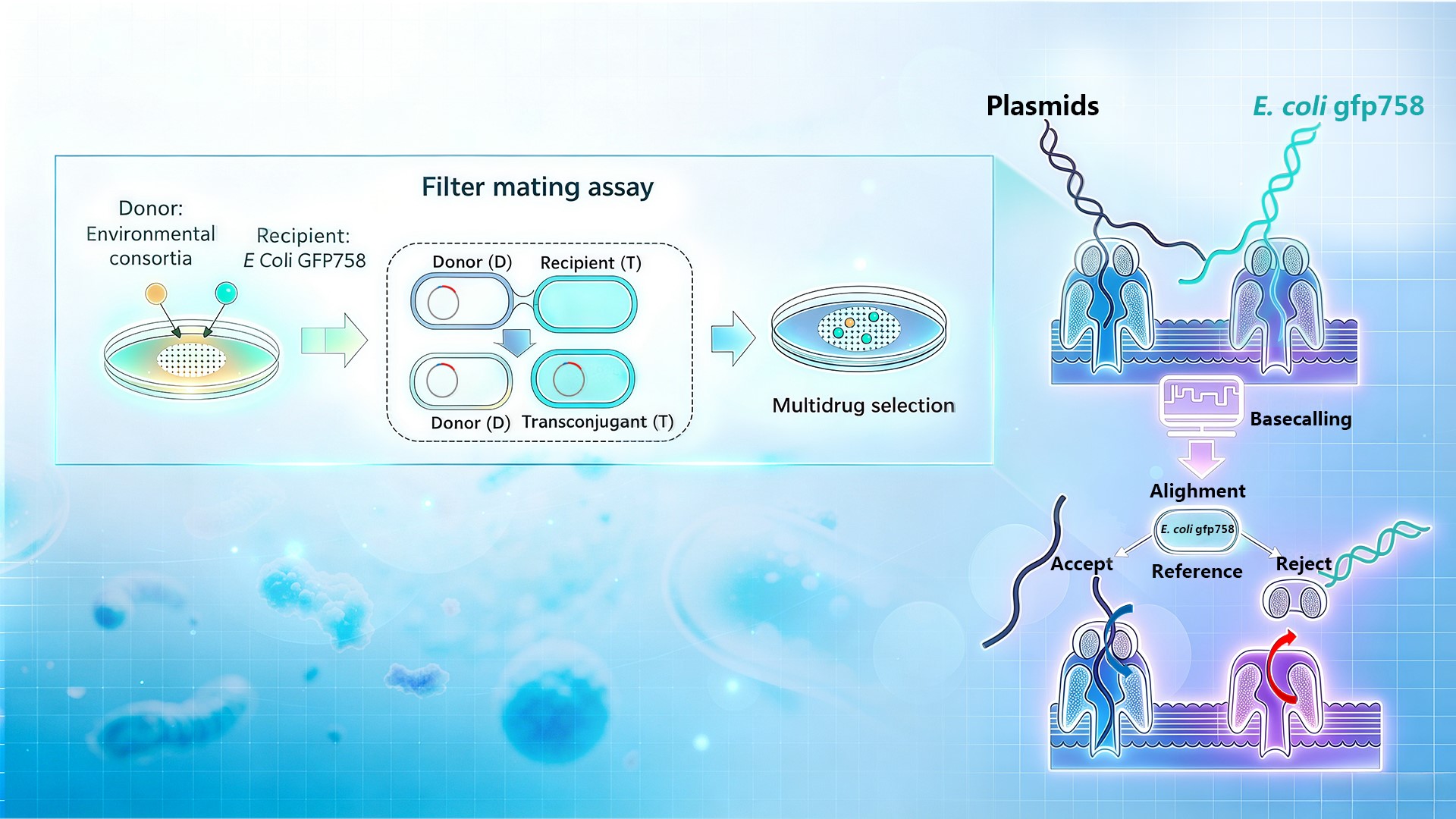
The research team combined the targeted capture ability of filter mating with the real-time read selection capability of nanopore selective sequencing, creating a workflow called Filter Mating-Nanopore Selective Sequencing (FM-NSS). Using fluorescently labeled E. coli as the recipient, they captured conjugative plasmids actually transferred from the wastewater microbial community via filter mating. Nanopore Selective Sequencing was then used to eject reads from the recipient cell genome in real-time, directly enriching target plasmids in the total DNA and skipping the step of extracting plasmid DNA separately. The team applied this workflow to samples from influent, anaerobic sludge, anoxic sludge, and activated sludge at a municipal wastewater treatment plant in Shenzhen, and analyzed them in combination with plasmid typing and resistance gene annotation.
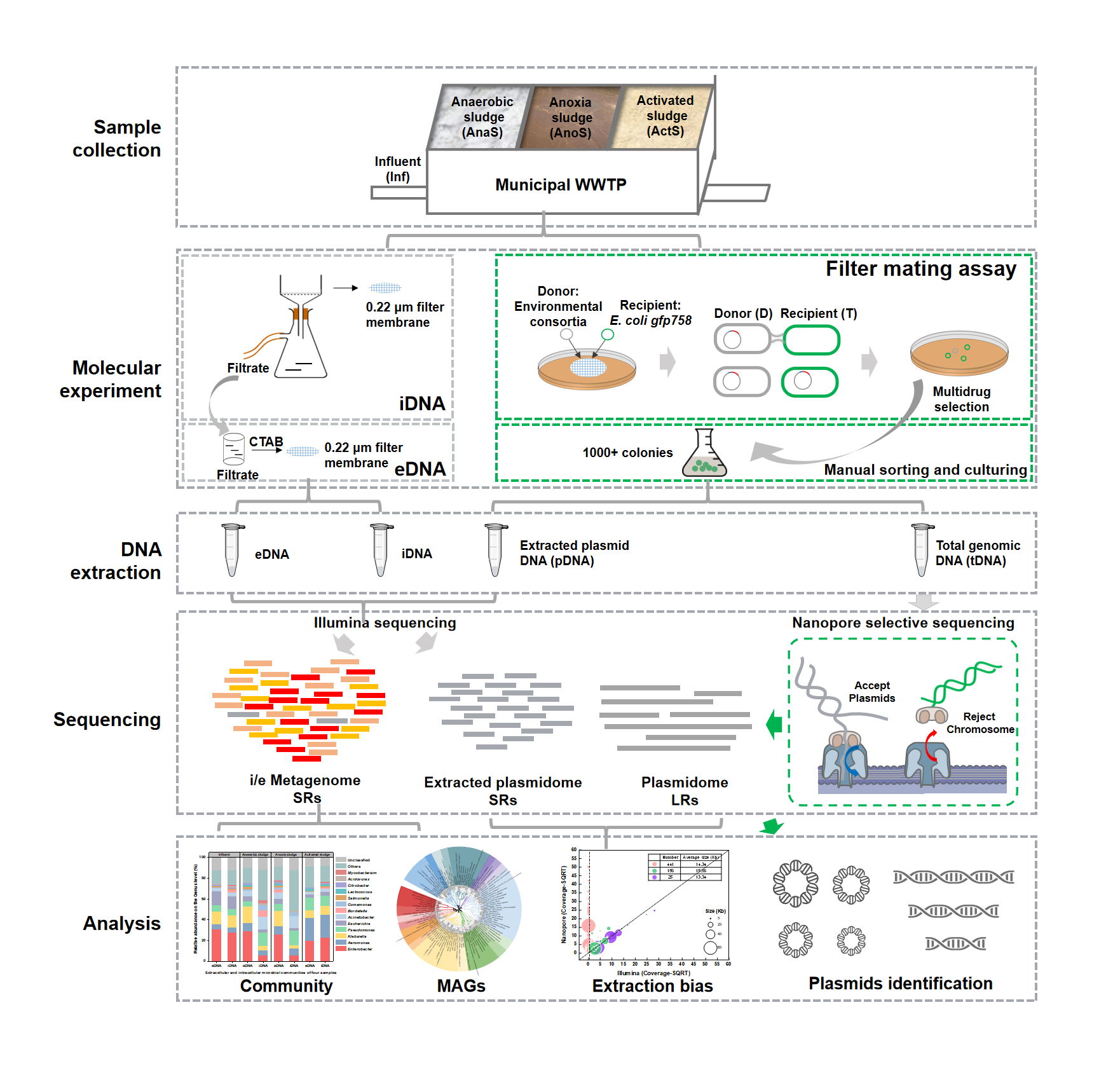
Figure 1. FM-NSS study workflow. Using wastewater microbial communities as donors and E. coli marked with green fluorescence as recipients, membrane conjugation was carried out. After screening and pooling the positive transconjugants, total DNA was extracted. Nanopore selective sequencing was used to reduce reads from the recipient chromosome, providing long reads for plasmid assembly. Meanwhile, plasmid extraction sequencing and metagenomic sequencing of intracellular and extracellular DNA were performed for method comparison and ecological analysis.
Using about 1.1 million plasmid reads, 622 non-redundant plasmid sequences were co-assembled, with an average length of 24.21 kb and a maximum length of 202.80 kb. In comparisons within the same conjugant pool, 441 sequences were not detected by conventional plasmid extraction sequencing workflows. At the same time, 87.93% of short reads from the extraction sequencing data could be mapped to the FM-NSS assembly results, indicating that this workflow expanded the recovery range while still covering a large portion of previously detectable sequences.
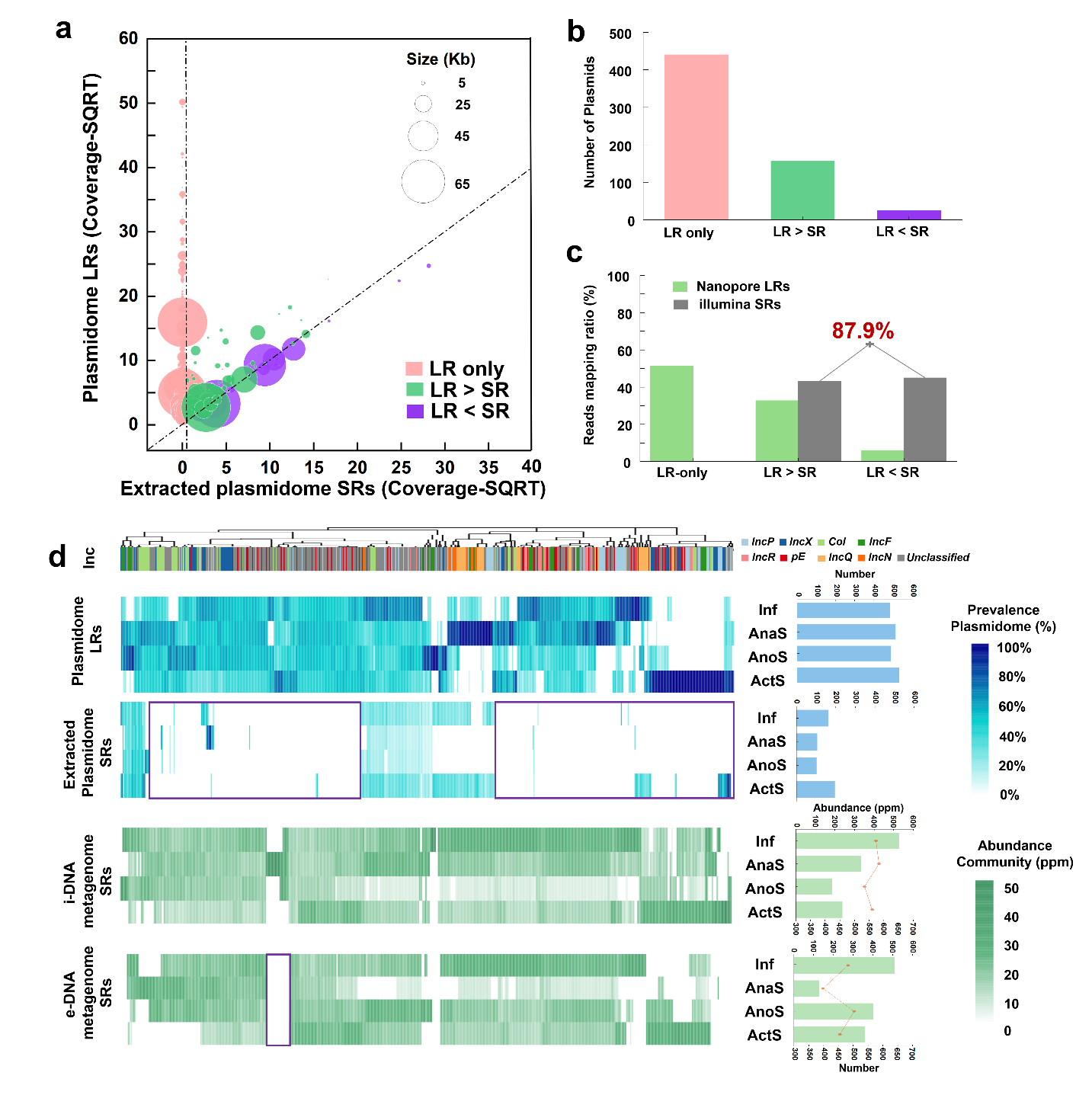
Figure 2. Detection of plasmid sequences under different sequencing workflows. (a) Comparison of coverage between FM-NSS long reads and plasmid-extracted short reads; (b) Number of sequences in different detection categories; (c) Alignment ratios of assembled plasmid sequences for the two types of sequencing data; (d) Distribution of 622 non-redundant plasmid sequences across different treatment stages and sequencing datasets. LR represents long reads, SR represents short reads; Inf, AnaS, AnoS, and ActS represent influent, anaerobic sludge, anoxic sludge, and activated sludge, respectively.
Further analysis revealed that plasmids detectable at different treatment stages differ in composition and function. The study identified 440 core plasmid sequences detected in all four sample types, and 32 sequences detected only in activated sludge. The unique plasmid profile in activated sludge co-occurred with higher predicted microbial growth potential. The study also analyzed the associations between mobility types, incompatibility groups, and resistance genes at the plasmid population level: 375 plasmids could be assigned to specific incompatibility groups based on replicon sequences, and the association network showed that MOBQ was widely linked with various resistance genes, while IncP plasmids were strongly associated with β-lactam resistance genes such as OXA-58 and TEM-176.
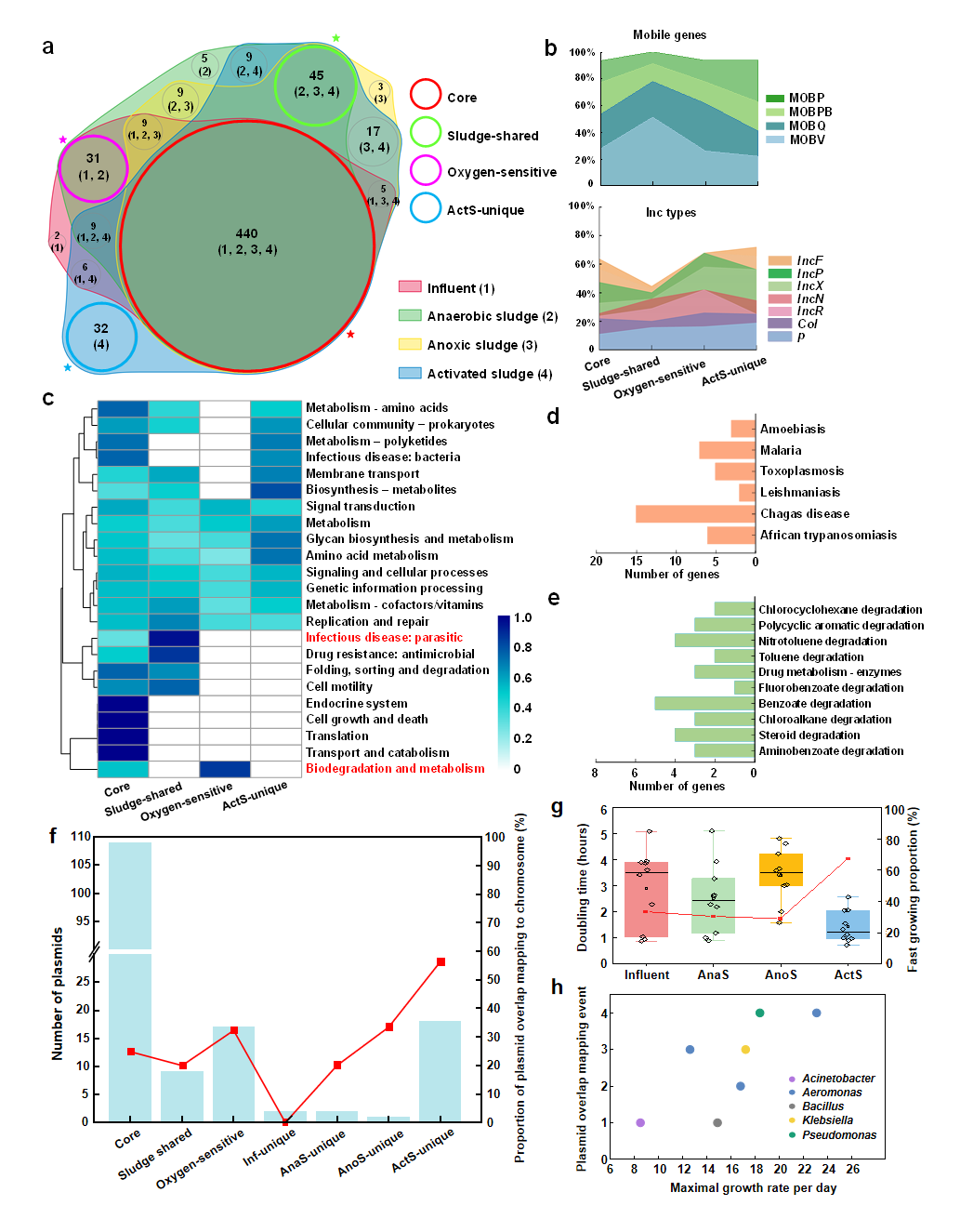
Figure 3. Plasmid composition and functional characteristics at different stages of biological treatment. (a) Shared and unique distribution of plasmid sequences. (b) MOB types and incompatibility groups of different plasmid components. (c–e) Functional annotation and distribution of some pathway-related genes. (f) High-overlap alignment between plasmid sequences and bacterial genomes. (g, h) Predicted microbial growth potential and related alignment features. Disease-related pathway tags are part of sequence functional annotation and do not mean the corresponding pathogens were detected or pathogenic ability confirmed.
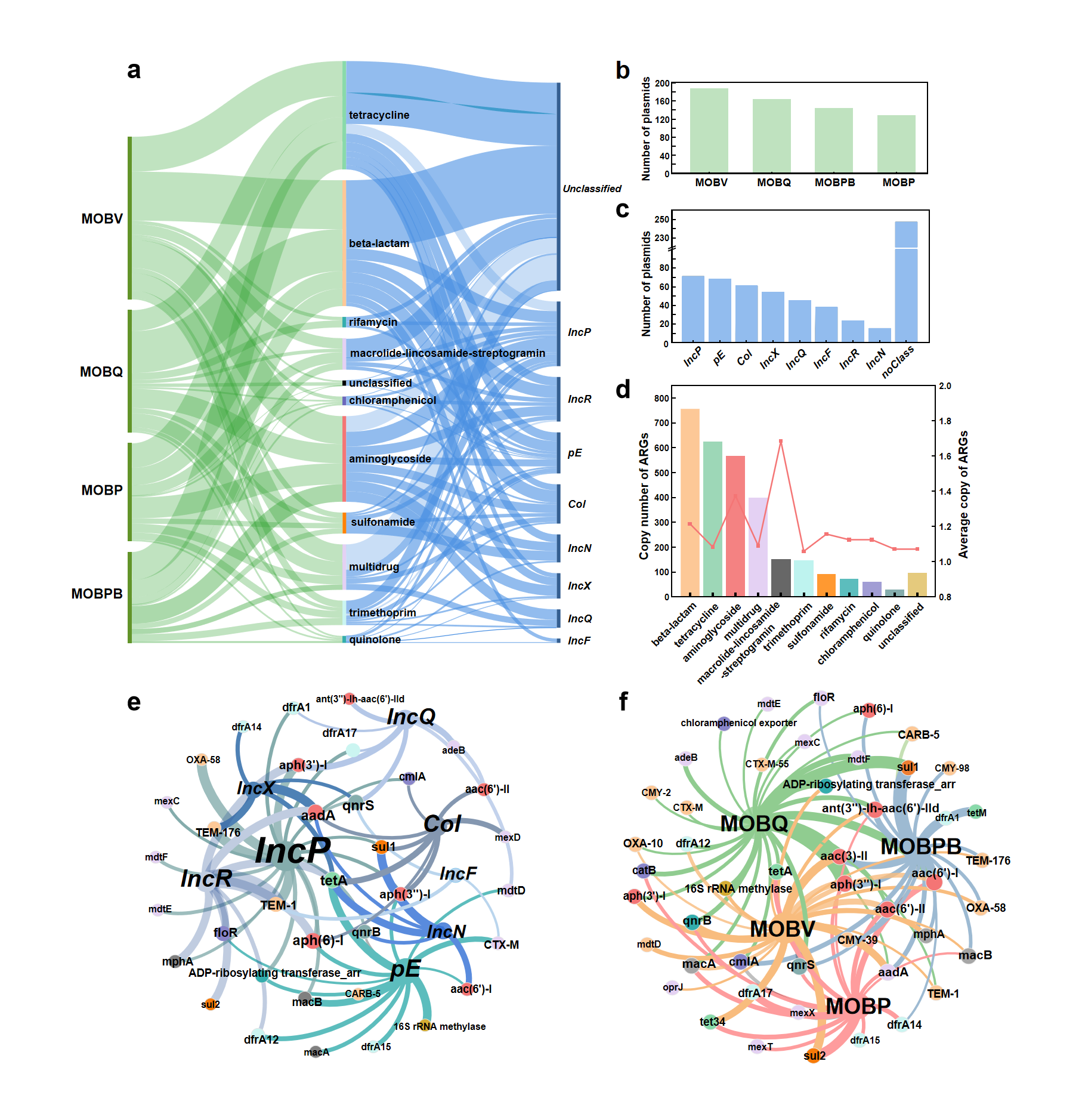
Figure 4. Associations between plasmid mobility types, incompatibility groups, and antibiotic resistance genes. (a) Overview of the associations among the three genetic features. (b, c) Distribution of the number of MOB types and incompatibility groups. (d) Number and average copy number of different resistance gene categories. (e, f) Statistical association networks between incompatibility groups, MOB types, and resistance gene subtypes. The network connections indicate associations found in the analyzed plasmid sequences and do not represent directly verified transfer pathways.
This study links experimentally capturable plasmids with selective sequencing, reducing the impact of chromosomal background on sequencing resources and eliminating the need to separately extract plasmid DNA. It also identifies more plasmid sequences that conventional methods often miss, providing a richer sequence base for tracking mobile resistance elements in wastewater treatment systems. It should be noted that the FM-NSS captures a selected set of plasmid components, and its scope is influenced by filter mating conditions, recipient compatibility, and selection conditions, so it does not encompass all plasmids present in the wastewater environment.
The first author of the paper is Yuxi YAN, a PhD jointly trained by SUSTech and Harbin Institute of Technology. The corresponding author is Yu XIA, and the first affiliation is SUSTech.
Paper Link: DOI: 10.1038/s44221-026-00695-w
Proofread ByNoah Crockett, Junxi KE
Photo ByYan QIU