On October 23rd, at the invitation of Ke LIU, Dean and Chair Professor of the School of Innovation and Entrepreneurship at the Southern University of Science and Technology (SUSTech), Yong CHEN, Academician of the Chinese Academy of Engineering, a member of the Standing Committee of the China Association for Science and Technology, and Chairman of the Guangdong Association for Science and Technology, visited the School and delivered his SUSTech-TCL Innovation and Entrepreneurship Lecture, titled “Energy Transition and Biomass Research Innovation in the AI Era,” focusing on innovative ideas, cutting-edge industry trends, and practical case studies.
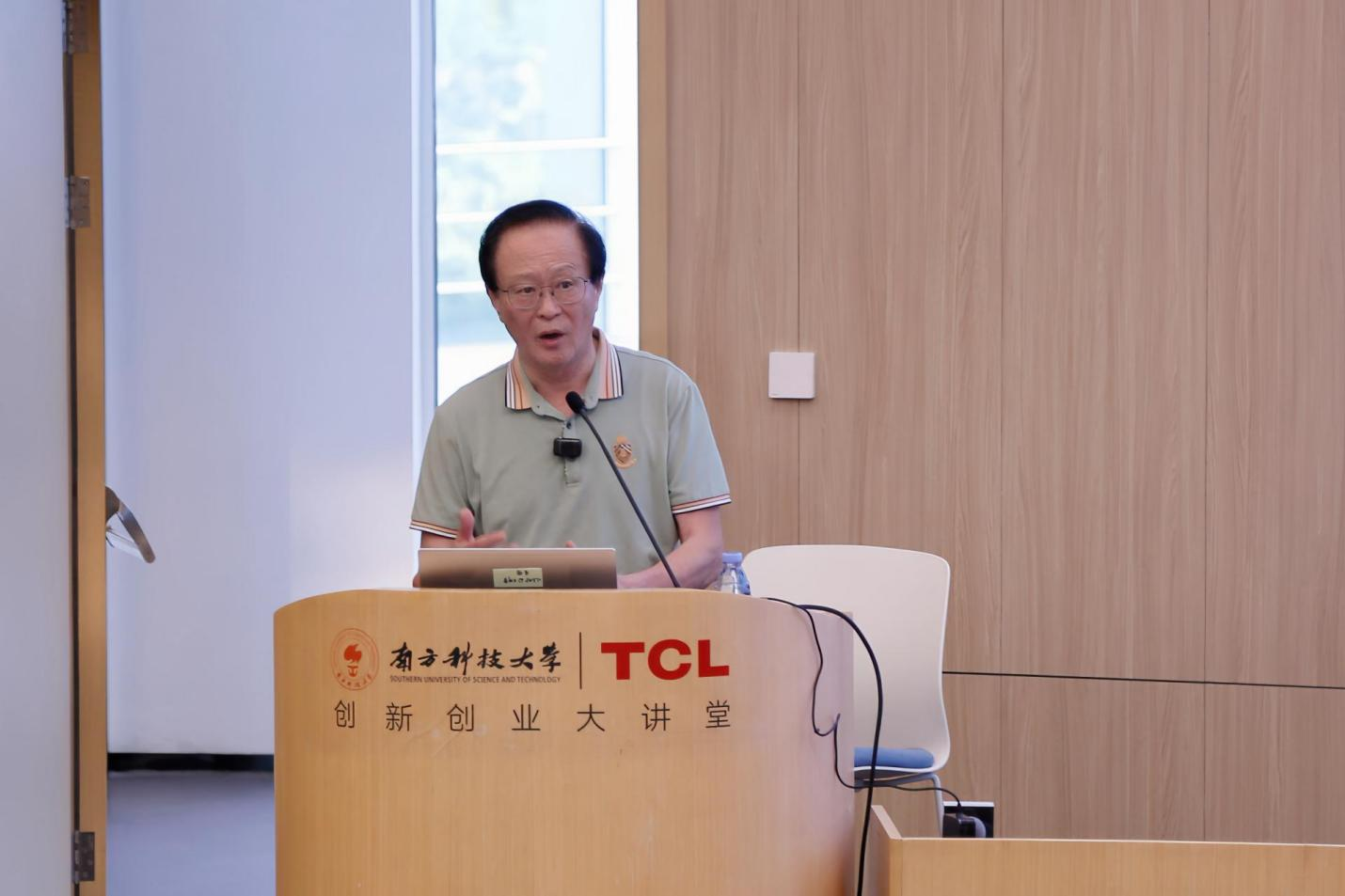
Academician CHEN, an expert in energy and environmental engineering, is engaged in theoretical research and engineering technology development for the energy recovery and resource utilization of organic solid waste, promoting the integration of energy, environmental protection, and new rural construction. He has published over 420 papers and holds more than 90 authorized patents. His accolades include two Second Prizes of the State Scientific and Technological Progress Award, four First-place Prizes for provincial and ministerial-level science and technology awards, and in 2012 received the Ho Leung Ho Lee Foundation Prize for Scientific and Technological Progress, among others.
During the lecture, CHEN stated that building a strong nation in science and technology requires continuous innovation, and the key to innovation lies in a shift in mindset. Citing practical cases from Yucun Village in Zhejiang and Desheng Village in Hebei, he illustrated that innovation comes from the iterative updating of development concepts. By shifting mindsets to revitalize existing resources, it is possible to enhance industries and urban-rural landscapes, thereby driving coordinated development in surrounding regions.
Focusing on the energy transition in the AI era, CHEN pointed out that the AI wave will promote changes in the energy field from multiple dimensions. First, the strategic significance of energy conservation becomes more prominent. AI industry development requires continuous power and cooling for computing centers, and energy is a crucial foundation for AI development. AI can empower process optimization, equipment operation control, energy system scheduling, and smart grid construction, improving energy efficiency. Second, the development of the AI industry is also reshaping the research paradigm in energy. The “AI+ experiment” model, by creating frameworks and models, building virtual laboratories, and then correcting with real experiments, greatly improves R&D efficiency. In addition, the role of energy will be repositioned accordingly. In the future, power supply will rely more on new energy sources such as hydropower, nuclear power, wind, and solar power, while traditional fossil energy will focus more on chemical products and fuel production, and biomass resources will see greater development opportunities.
In his message to SUSTech students, CHEN emphasized that innovation is rooted in practice, and development concepts need to be constantly updated based on real needs. He hopes students can combine learning and research with practical demands, putting innovative concepts into practice through continuous exploration and technological breakthroughs.
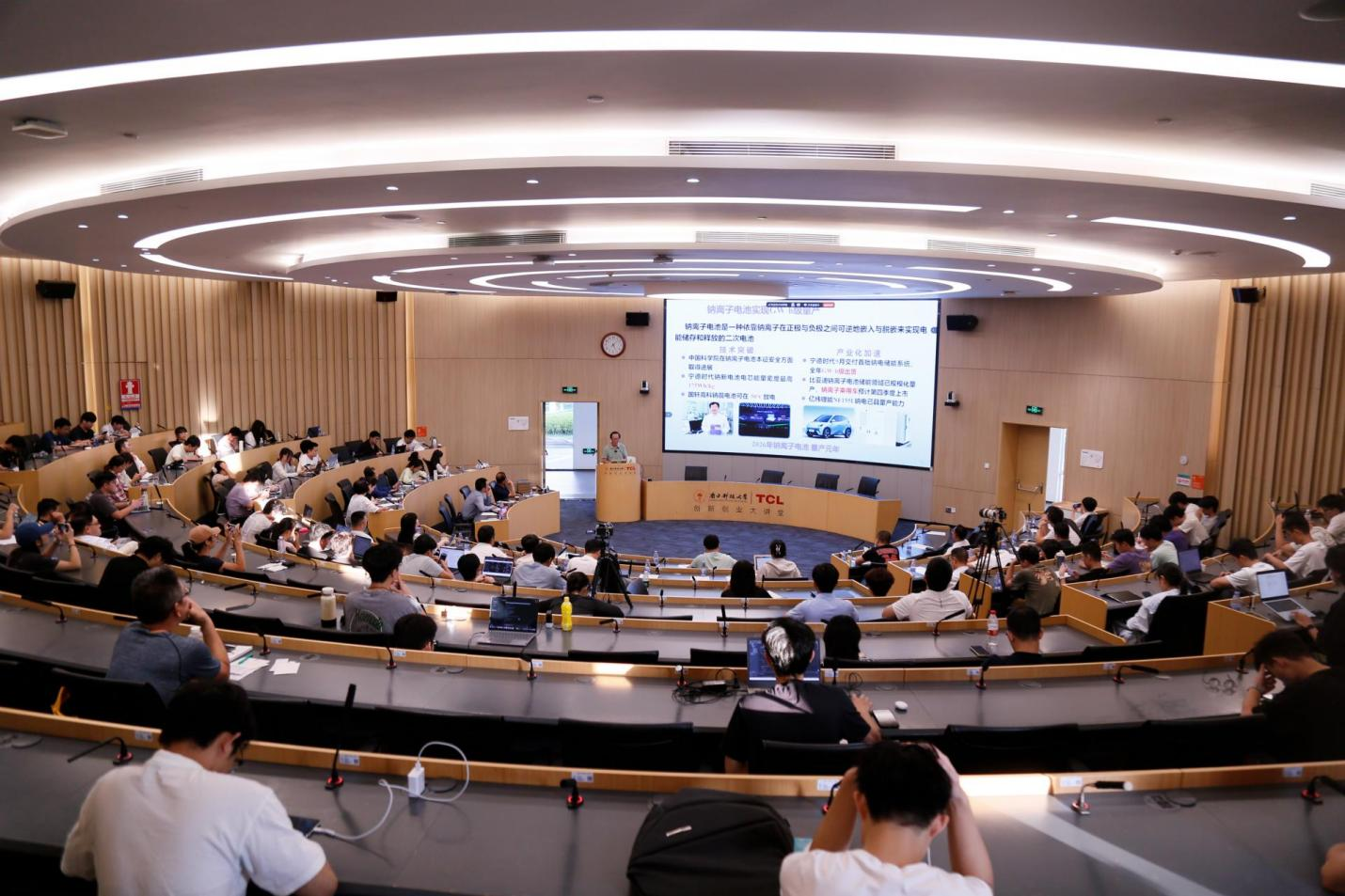 Lecture Scene
During the interactive session, CHEN shared insights on issues such as the industrial implementation of biomass, the commercialization of solid-state batteries, and wind-solar-storage energy solutions.
Proofread ByRong XIA, Junxi KE
Photo By