On March 25, 2026, the National Natural Science Foundation of China announced the “China’s 2025 Top 10 Scientific Advances” at the opening ceremony of the 2026 Zhongguancun Forum Annual Conference. The research achievement “Innovative Method for the Large-Scale Fabrication of Flexible Ultra-Flat Diamond Films” has been selected, featuring Associate Professor Kwai Hei LI from SUSTech’s School of Microelectronics and other members of the inter-institutional joint research team.
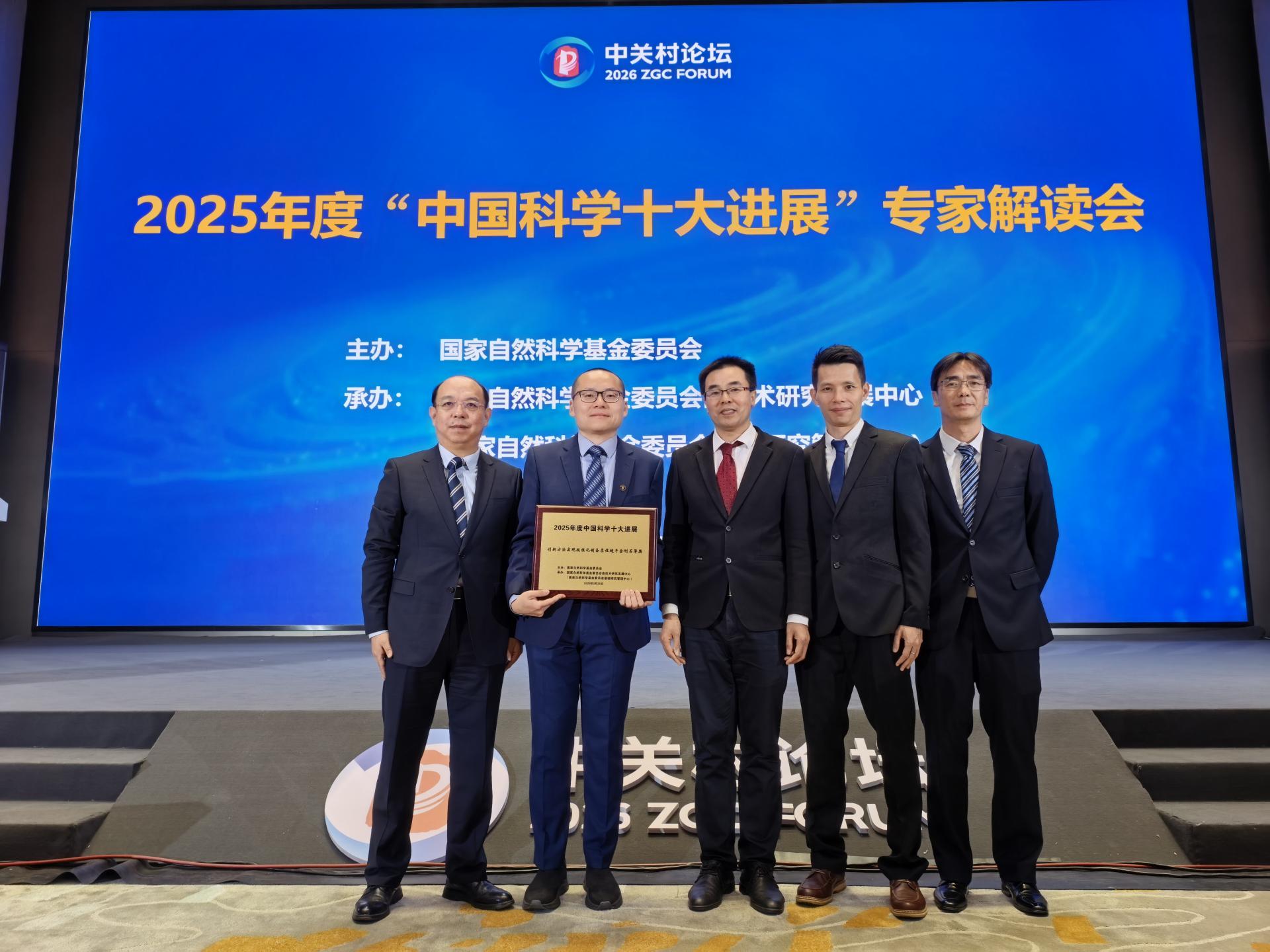
Kwai Hei LI (second from the right) takes a group photo on-site with members of the research team.
Diamond, due to its extremely high hardness, excellent carrier mobility, high dielectric breakdown strength, outstanding thermal conductivity, and wide bandgap characteristics, is known as the “ultimate semiconductor material” and has significant application potential in numerous fields. However, traditional fabrication techniques have long struggled to achieve large-sized, ultra-smooth diamond films at scale, which has become a key bottleneck restricting their industrial development.
To tackle this challenge, a joint research team led by Associate Professor Zhiqin CHU and Professor Yuan LIN from the University of Hong Kong (HKU), Associate Professor Kwai Hei LI from SUSTech School of Microelectronics, and Researcher Qi WANG from the Dongguan Institute of Opto-electronics Peking University (PKU-IOE) successfully developed a new method for scalable fabrication of large-size, ultra-smooth, and ultra-flexible diamond films. The related findings were published in the journal Nature under the title “Scalable production of ultraflat and ultraflexible diamond membrane.”
Based on an asymmetric model of the film growth interface, the research team innovatively proposed an “edge-exposed detachment” method, achieving inch-scale, ultrathin, ultra-smooth diamond films in a “one-step process,” reducing the preparation time from dozens of hours in traditional processes to just a few seconds. This significantly improves fabrication efficiency and reduces costs. The resulting submicron-thick films combine sub-nanometer roughness with 360-degree bendability. Their ultra-flat surfaces are highly compatible with existing CMOS processes and endow diamond materials with flexibility that traditional bulk diamond lacks. This technology provides a feasible pathway for large-scale production of high-quality diamond films and is expected to accelerate their industrial application in fields such as electronics and photonics.
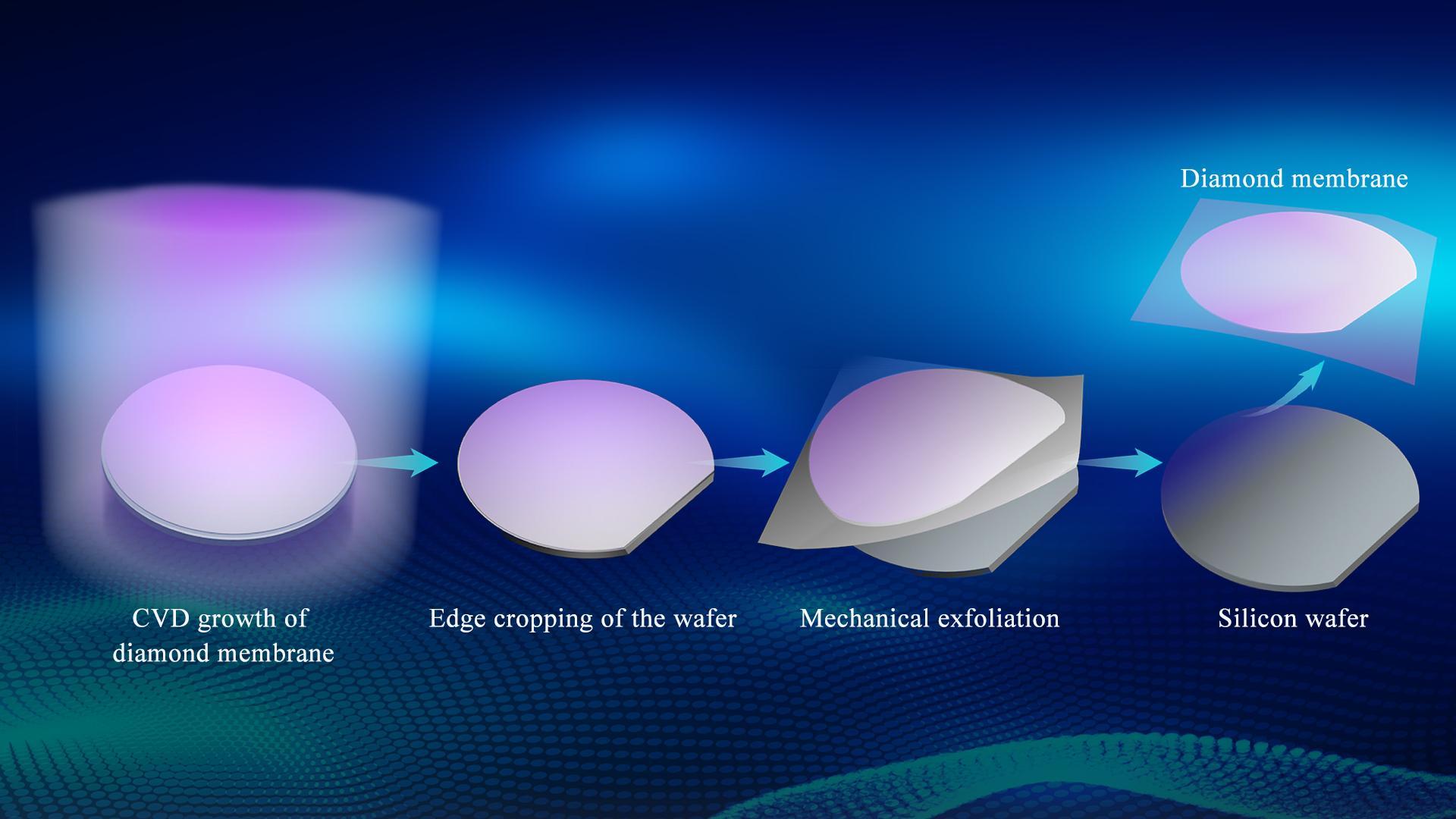
The introduction to the “Top 10 Scientific Advances” selection points out that this method is expected to accelerate the application of diamond thin films in next-generation high-performance electronic devices, flexible optoelectronic devices, and quantum technology. The main institutions responsible for this achievement are the HKU, SUSTech, and PKU-IOE, with the main contributors being Zhiqin CHU, Yuan LIN, Kwai Hei LI, and Qi WANG.
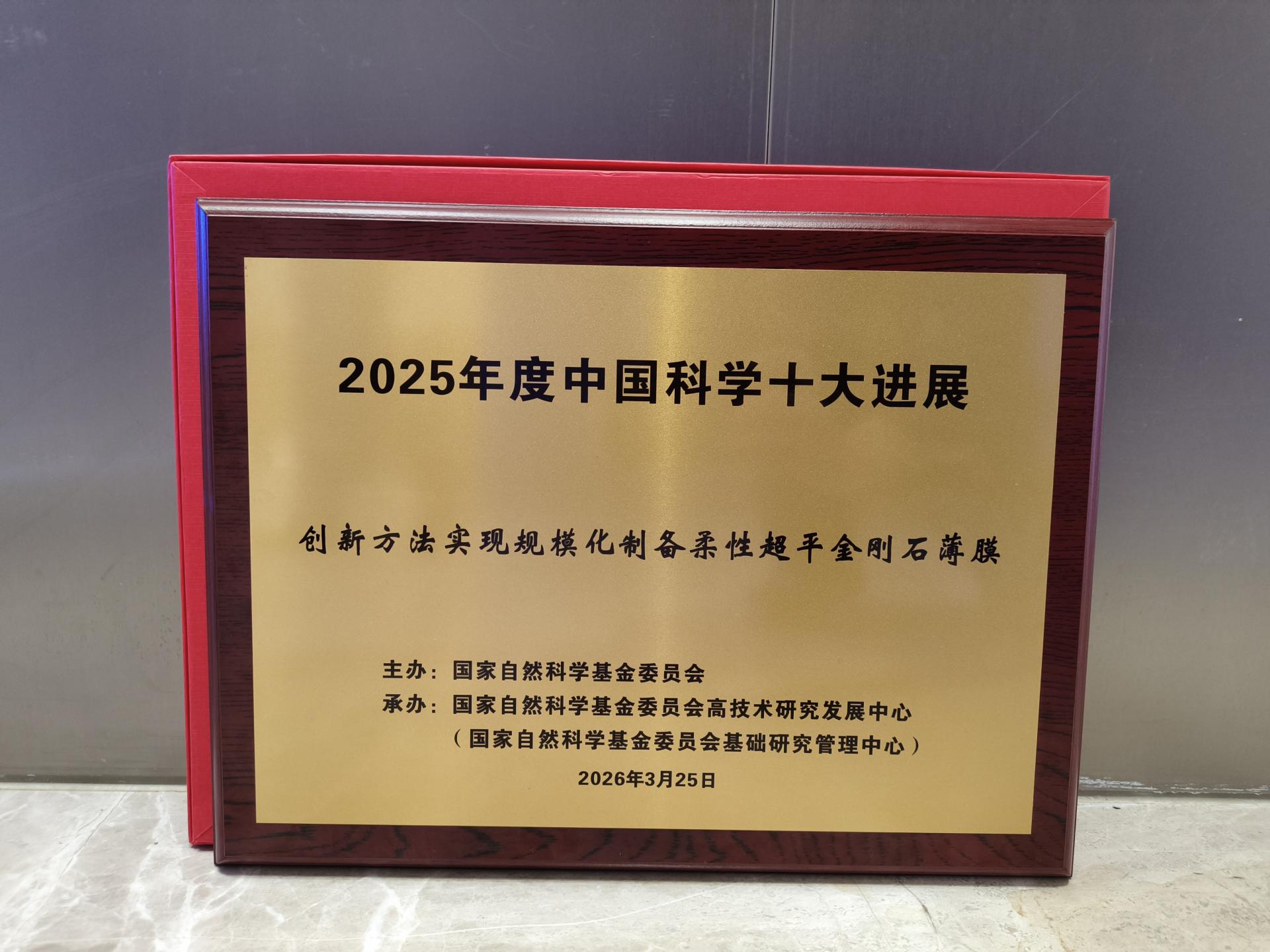
The 2025 selection for the “Top 10 Scientific Advances” is organized by the National Natural Science Foundation of China and undertaken by the High-Tech Research and Development Center of the NSFC (NSFC Basic Research Management Center). First, over 150 experts from relevant academic fields select 30 candidate advances from more than 600 recommended basic research achievements. Then, more than 3,000 experts, including over 480 academicians of the Chinese Academy of Sciences and the Chinese Academy of Engineering, vote online with real-name verification to select the final 10 advances, which are determined after review. Since its inception in 2005, the selection event has been successfully held 21 times, with a total of 212 basic science research achievements selected (11 advances were selected in both 2005 and 2007), becoming a flagship event showcasing the annual major achievements in China’s basic research field.
This is the fourth time SUSTech’s achievements have been selected for “China’s 2025 Top 10 Scientific Advances.” Previously, our team’s research results were selected in 2019, 2020, and 2023.
Link to this research news article: https://newshub.sustech.edu.cn/en/html/202412/44917.html
Proofread ByBi LIU, Junxi KE
Photo BySUSTech School of Microelectronics